
How to Track HRV on Wearable Devices for Heart Health
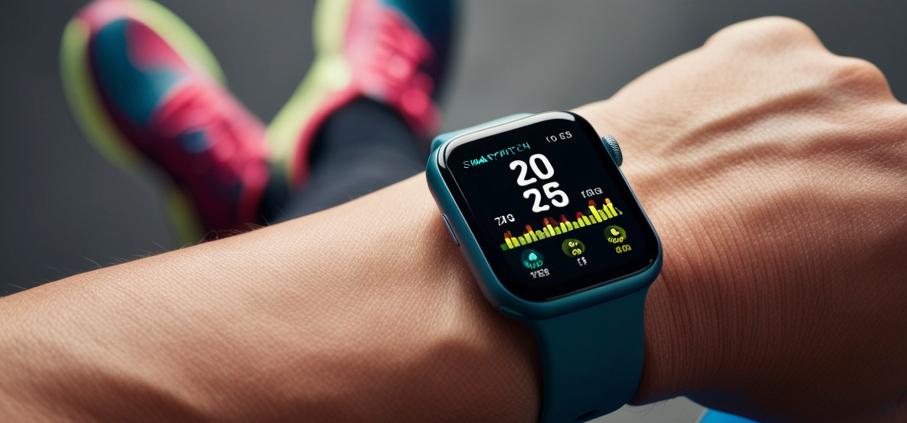
If you have a smart watch, you might have seen the HRV measurement and asked yourself, “Is this useful to track for cardiovascular health?” or “Is it just another confusing piece of data?”
Cardiologist Sahar Naderi, MD, says, “Yes, monitoring HRV gives a sense of the stability of an individual’s autonomic system, an important component of cardiovascular health.”
What is HRV and Why is it Important for Heart Health?
HRV (heart rate variability) measures the tiny fluctuations in time between consecutive heartbeats. It isn’t the same as your heart rate; rather, it reflects subtle beat-to-beat changes, often measured in milliseconds. There isn’t an exact number that defines “high” vs “low” HRV since the measurement is relative; each person has a different baseline from which to compare.
In the past, HRV was tracked primarily in individuals who had already experienced major cardiac events such as heart attack or heart failure. Today, HRV has moved into the consumer space as a potential reflection of autonomic balance and recovery. For example, athletes often use HRV trends to gauge readiness and whether their training load is appropriate, especially when they are not recovering well. Separately, many people also track heart rate recovery (how quickly heart rate comes down after exercise), which is another marker of cardiovascular fitness.
But even if you’re not a professional athlete, you can track HRV measurements on your smart watch as one lens on the health of your nervous system, which has a direct impact on the heart. For example, if you are chronically operating from your sympathetic nervous system (fight-or-flight), HRV often trends lower and your heart rate may run higher, which over time can increase cardiovascular risk.
Luckily, we can take actions to raise our HRV (i.e., support parasympathetic activity and overall autonomic balance) and bring our nervous systems into better equilibrium. A stronger parasympathetic response compared to a weaker sympathetic response allows for faster recovery, improved cardiovascular fitness, and better overall stress management. Improving HRV suggests the body is becoming more resilient, better rested, and more capable of handling physical and mental stress.
“HRV represents a snapshot of how balanced your autonomic nervous system is: the sympathetic response that energizes you and the parasympathetic response that brings you back to equilibrium,” says Dr. Naderi, Director of Women’s Heart Health at Kaiser Permanente in San Francisco. “HRV is generally viewed as a representation of how ‘steady-state’ your nervous system is; especially when tracking your HRV over time versus evaluating your daily performance.”
How to Track HRV
HRV is highly individualized and varies based on age, sex, fitness level, and genetics. Also, a healthy heart does not beat at perfectly regular interval like a metronome. Instead, there are variations in heart rate, which illustrate the heart’s ability to be flexible and adapt to the environment. Therefore, there is not an ideal HRV measurement that would apply to everyone.
“Since there’s no optimal HRV value, rather than trying to achieve a ‘high’ HRV number, it’s more useful to identify your own baseline and track your progress over time to see if your heart is becoming more resilient, which increases your capacity to handle physical and mental stress and reduces your risk for cardiovascular disease,” says Dr. Naderi.
Steps for Tracking HRV:
To measure your HRV, you can track a daily reading using a wearable device.
- Immediately upon waking up in the morning (while remaining lying down in bed and before caffeine or food), write down your HRV value and take this measurement for 5 days in a row to establish a baseline average.
- Then take this measurement once per week at the same time and position for 1 to 3 months, focusing on upward or downward trends rather than daily fluctuations.
- An improvement in HRV is indicated by a higher weekly or monthly average compared to your baseline, indicating better nervous system balance and a more resilient heart.
Signs of Improvement:
- Higher HRV average from one month to the next
- Increased emotional stability, revealing nervous system balance
- Faster heart rate recovery after intense exercise
How to Improve HRV measurements
Exercise is one of the quickest ways people notice changes in HRV, either increasing or decreasing—which can be confusing. Dr. Naderi notes that HRV can dip after harder training, but what matters is context and trend. A short-term dip can be normal; a sustained drop may signal inadequate recovery or overreaching/overtraining. It’s also natural for heart rate to rise during exercise, so it can help to look at HRV alongside other signals like how you feel, sleep quality, and heart rate recovery.
“What matters is context and trend line: a temporary decrease can occur, but if you are seeing no improvement in your HRV over multiple weeks, you may be exercising too vigorously too quickly or failing to allow adequate recovery,” says Dr. Naderi.
Dr. Naderi advised caution against falling into the “0-to-100” trap; especially for those who are sedentary and suddenly begin high-intensity workouts.
“If you are completely inactive and you begin high-intensity interval training without a gradual progression, you may see adverse impacts on your HRV,” says Dr. Naderi. “I recommend gradually increasing your level of intensity, as opposed to going from 0 to 100.”
The American College of Cardiology and the American Heart Association recommend the following general exercise goals for most adult populations:
- 150 minutes (2.5 hours) of moderate-intensity cardio per week (brisk walking, biking, jogging, swimming)—intensity where you can still speak clearly even if you’re “huffing and puffing.”
- Two to three days of strength work (she describes “isometrics,” meaning weight-training-type effort that’s sustainable for your level).
“When you’re exercising, rather than chasing a higher HRV with high-intensity workouts, build capacity, protect recovery, and let the HRV trend inform how you should approach your next workout,” says Dr. Naderi.
Lifestyle Behaviors that Impact HRV
- Positive Factors: Regular, moderate intensity exercise; consistent quality sleep; good nutrition; and stress management techniques (e.g., meditation, deep breathing).
- Negative Factors: Overreaching and overtraining while exercising; alcohol consumption; poor sleep; high stress; and illness.
“Tracking HRV isn’t the only thing we should be doing for heart health, but it can be part of many lifestyle behaviors we take for cardiovascular health,” says Dr. Naderi. “You don’t want tracking your HRV to be another thing that causes you stress, but it can serve as another tool for your overall mind and body well-being.”

