
Like to Sauna? Research Shows it May Have Cardiovascular Benefits
By Sophie Burnet, BS and Sharon Brock, MS, MEd
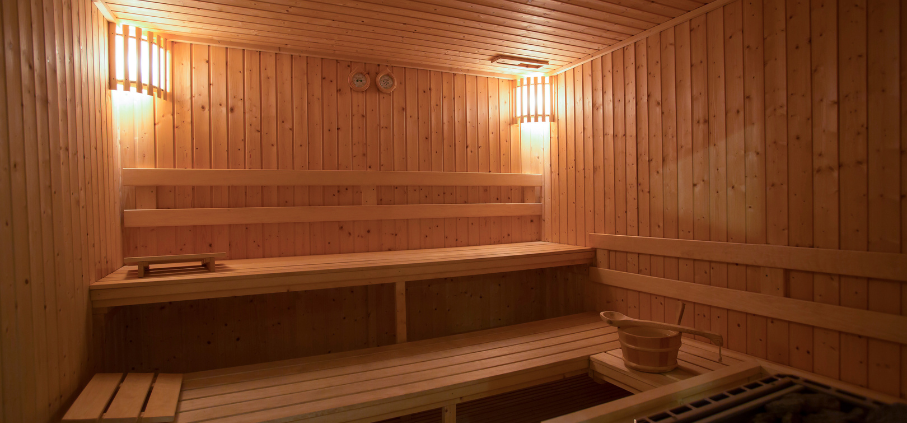
We know that sitting in a sauna can be relaxing, however, research shows that sauna bathing may also be beneficial for cardiovascular health. For example, studies have shown that combining regular exercise with sauna use may improve blood pressure regulation, reduce cholesterol in men and in women, reduce the risk of fatal coronary heart disease and improve overall cardiorespiratory fitness.
“It’s exciting that studies are showing improvements to various markers of health when combining regular exercise with sauna use,” says Earric Lee, PhD, researcher at the Montreal Heart Institute, who is currently conducting a long-term study on cardiac rehabilitation with regular sauna use.
What is Happening in the Body During Sauna Use?
Due to homeostasis, our bodies are continually working to keep our internal conditions within a balanced and regulated range. For example, the heat of the sauna causes blood vessels to dilate and run closer to the skin’s surface to facilitate sweating and cooling down the body’s temperature. Vasodilation (widening of the blood vessels) improves cardiovascular health through increases in blood flow and decreases in blood pressure.
“Vasodilation does not directly reduce the risk of heart attack; however, it improves blood flow and oxygen delivery and decreases blood pressure and cholesterol build up, therefore indirectly reducing heart attack risk,” says Dr. Lee.
Dr. Lee explained that the benefits of sauna occur due to hormesis, a process in which a low dose of a stressor elicits beneficial adaptive responses in the body. Strength training is an example of gaining muscular strength via hormesis since we intentionally strain our muscles when we lift weights, prompting the repair—and hence, strengthening—of muscle tissue. Also, when we gradually increase the weight of our training sessions over time, our muscles grow stronger in a way that is safe and sustainable.
“We can think about sauna use in the same way that we think about strength training—gradually increasing the hormetic stressors [i.e., the heat and the amount of time spent in the sauna] could steadily improve the elasticity of our blood vessels and blood flow over time,” says Dr. Lee.
How Long Do I Sit in a Sauna for Cardiovascular Health?
Dr. Lee says there is not enough research to establish a protocol that would be appropriate across-the-board since individuals respond to saunas differently, much like everything else in our environment. However, he does have preliminary recommendations based on his current research studying how sauna use improves cardiovascular health among heart attack survivors.
Dr. Lee’s current research involves a 12-week study comprised of adult patients with coronary artery disease. These patients are undergoing cardiac rehabilitation two-to-three times per week and go into a sauna following each rehabilitation session. During the first week, participants sat in a sauna with a temperature of 185 to 194 °F for 5 minutes, followed by a 5-minute break, and then another 5 minutes of sauna. Each week, one minute was added to the time spent in the sauna (the temperature did not change), which will accrue to two, 15-minute sessions in the final week. Dr. Lee will take measurements of blood pressure, fluid loss, and core and skin temperatures during the first and the last sessions.
Dr. Lee says the amount of sauna use should be informed by one’s health goals. For example, if you’re just aiming to relax, sitting in a sauna for 5 minutes is sufficient. However, if you have high cholesterol or elevated blood pressure, you may want to sit until you start sweating, which is an indicator of vasodilation. For these goals, Dr. Lee recommends 1 – 3 sessions per week with a temperature between 160 – 195 degrees F.
Goal Time spent in sauna
Relaxation 5 – 10 minutes
Cardiovascular Health 15 – 20 minutes (exit soon after sweating)
Dr. Lee says that a continuous uninterrupted duration of 30 minutes should be the max amount of time to spend in a sauna for cardiovascular conditioning and for safety reasons. A break or a pause for a cold shower and/or time in ambient temperatures is essential, as staying in longer than 30 minutes could be detrimental and cause dizziness and/or muscle fatigue.
If you’re new to saunas, Dr. Lee recommends that you start with 5-minute sessions and gradually work your way up to 15 to 20 minutes as your body adapts. Like lifting weights, you need to add a bit more stress (i.e., more heat or more time spent in the sauna) every couple of weeks to continually challenge the cardiovascular system.
“It’s difficult to recommend a one-size-fits-all protocol since everyone responds to sauna use differently,” says Dr. Lee. “In any case, you need to listen to your body to make sure you feel okay. The moment you feel light-headed, dizzy, nauseous, or unusual heart sensations, you should exit the sauna, no matter what your goal is.”
Who Should Avoid Sauna Use?
Dr. Lee says sauna use is generally safe for healthy adults, and the main risk is fainting because when vasodilation occurs, blood pressure drops. Also, people with the following health conditions should avoid sauna bathing or consult a healthcare provider before use:
- Age 70+ with low blood pressure (to prevent fainting)
- Unstable angina (unstable chest pain)
- Recent heart attack
- Regular arrhythmia
- Left Ventricular Ejection Fraction (LVEF) ≤40%
- Chronic Heart Failure
- Poorly controlled high blood pressure
- Taking medication that affects the body’s ability to regulate temperature (e.g., antidepressants, antihistamines, diuretics)
- Pregnancy
- Breastfeeding
- Severe diabetes (which reduces the capacity for the body to cool down)
- Kidney disease
- Epilepsy
Tips for Sauna Safety
If you don’t have any of the conditions listed above, and are a generally healthy adult, Dr. Lee shares the following recommendations for safe sauna use:
- DO NOT go in the sauna if you have consumed alcohol or drugs.
- DO NOT go in the sauna if you aren’t feeling well.
- DO NOT go in completely fasted and/or dehydrated. (Be sure to drink at least 8 ounces of water before, during, and after each sauna session.)
- DO NOT be in the sauna room alone if you are just starting out. (Having someone else around can be helpful during emergencies.)
- DO listen to your body. (If you’re starting to feel light-headed, exit the sauna to prevent fainting.)
- DO start slow and gradually build heat tolerance. (Start with 5 minutes and add 1 – 2 minutes every 4 – 5 visits until reaching 15 – 20 minutes).
“To maintain strong cardiovascular health over time, it’s important to adopt the lifestyle behaviors of engaging in regular cardiovascular exercise, eating a low-fat diet, and managing stress effectively,” says Dr. Lee. “The research is showing that we can add the enjoyable experience of sitting in a sauna to that list for long-term cardiovascular health.”

