
By Sophia Fay, BS and Sharon Brock, MS, MEd
More than half of Americans will experience a musculoskeletal complaint at some point in their life, making joint pain one of the most common health challenges we face. From everyday aches to acute sports-related injuries, many people are looking for options that can help them stay active without resorting to surgery.
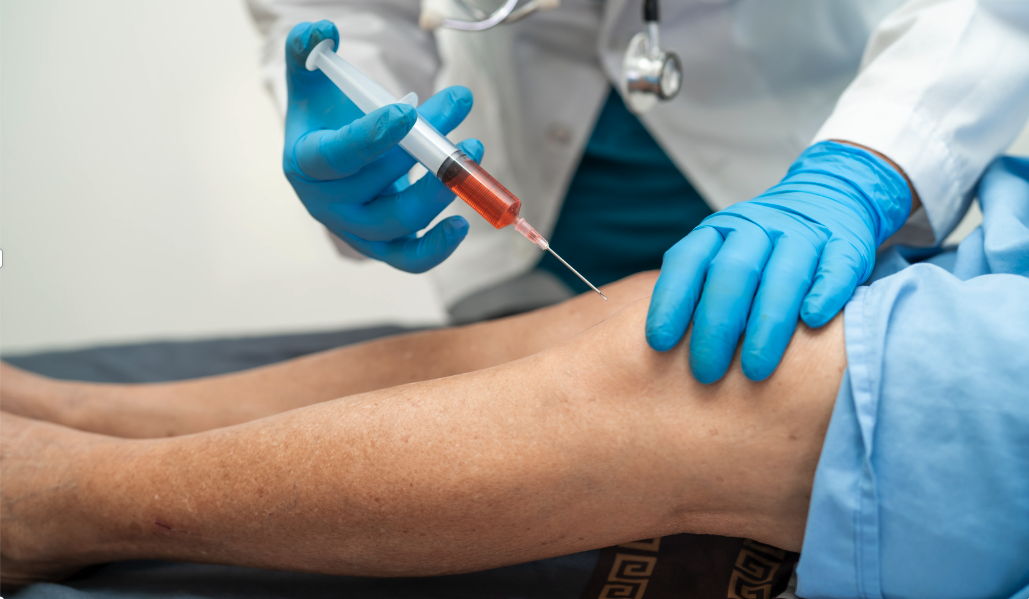
That’s where injections can come into play. Biologic injections are injections made from living things. Ortho-biologic injections are biologic therapies that treat the musculoskeletal system, such as joint pain. Orthobiologic injections typically harness substances from the patient’s own body and then injecting them into painful joints to stimulate or enhance healing.
These therapies are gaining attention because injections are minimally invasive, offer a faster recovery time compared to surgery, and are often promoted by sports medicine clinics, regenerative medicine centers, and even high-profile athletes. Over the past decade, research on orthobiologics has grown. Recent studies have attempted to investigate how lifestyle interventions like diet, exercise, and sleep may boost results.
“There is promise with orthobiologic therapies; however, with rapid popularity comes plenty of hype—and not all of it is backed by research,” says Matt Kaufman, MD, Stanford PM&R Chief Resident and part of the research team for the study, Optimizing orthobiologic therapies with exercise, diet, and supplements.
“There’s a lot of misinformation about injections for joint pain, and the clinical marketplace is full of mixed messages, so it’s important to have honest conversations about what these therapies are and what they can—and can’t—do,” says Dr. Kaufman.
What Causes Joint Pain and How It’s Treated
The two most common culprits behind chronic joint pain are osteoarthritis and rheumatoid arthritis. Both of these conditions can affect any synovial joint, but knees, hips, shoulders, elbows, and fingers are most often affected. Symptoms include pain, stiffness, and reduced range of motion caused by narrowing of the joint space.
Osteoarthritis (OA)
OA is a wear-and-tear condition where cartilage—the smooth tissue that cushions and lubricates joints—gradually breaks down. This degradation can result from repetitive stress, increased body weight, or past injuries. Because cartilage doesn’t regrow naturally, once it’s gone, it’s gone. Sometimes, the body tries to compensate by forming bone spurs (osteophytes), which can cause additional discomfort by creating bone-on-bone contact.
Rheumatoid arthritis (RA)
RA is an autoimmune condition where the immune system mistakenly attacks cartilage, causing inflammation and breakdown through a different mechanism.
A Stepwise Approach to Care
Treatment for both OA and RA usually starts conservatively with physical therapy to strengthen the muscles around the joint, thereby offloading the load from the bones to the muscles. If physical therapy isn’t available to the patient or it doesn’t effectively reduce pain, often times the next step is for doctors to suggest orthopedic injections, such as steroids, hyaluronic acid, or platelet-rich plasma.
If injections fail, surgery, such as knee or hip replacement, may be considered as a last resort. Both injections and surgery are elective, meaning the patient makes the decision based on pain tolerance, activity goals, and quality of life.
“Along with physical therapy as the first step for my patients, I also recommend lifestyle modifications, such as exercise, sleep, and nutrition recommendations to reduce joint pain and inflammation,” says Dr. Kaufman.
Types of Injection Therapies for Joint Pain
Non-biologic Injections
Non-biologic injections are manufactured in a laboratory rather than being sourced directly from the patient.
- Corticosteroids (steroids): Reduce inflammation by calming the immune response. Inexpensive, quick to act, and backed by decades of research—but frequent use can accelerate cartilage loss. Relief typically lasts about three months.
- Toradol: A non-steroidal anti-inflammatory injection, used less often than steroids, with shorter-lived results.
- Hyaluronic acid (HA): HA is thought to lubricate and protect joints and offers pain relief for about five months. If not covered by insurance, the cost can be as high as $3,000 per injection.
Orthobiologic Injections
These treatments use a patient’s own biological materials to promote healing and reduce inflammation; therefore, the efficacy of these treatments may be influenced by the patient’s health and lifestyle.
- Platelet-rich plasma (PRP): This injection consists of concentrated platelets (extracted from the patient’s blood) that release growth factors that trigger short-term inflammation, which kickstart anti-inflammation healing processes in the joint. Relief may last six to nine months, and the cost ranges from $500–$2,000 per injection.
- Bone marrow aspirate concentrate (BMAC) and micro-fragmented adipose tissue (MFAT): These are stem cell–related therapies that involve extracting bone marrow or fat from the patient, processing it, and re-injecting it into the joint. These treatments are more invasive and lack sufficient research to back up claims. At Stanford, these injections are typically only offered in research settings, but some orthopedic clinics perform them as part of routine clinical care. Generally, they are only considered when PRP doesn’t provide adequate relief.
To date, two high-quality studies, one out of Ohio State comparing PRP to MFAT, found no differences at one year, and another out of Emory in 2024 showed none of the three orthobiologic injections (PRP, BMAC, or MFAT) were superior to another, or to corticosteroids, in terms of effectiveness.
“There are many injectables to choose from, so the key is matching the type of injection to the patient’s joint health, goals, and budget,” says Dr. Kaufman. “Steroids are fast, cheap, and effective in the short term, but they come with the risk of accelerating cartilage loss, so I think of them as a way to get through the next couple of months or delay surgery. For younger, more active patients with healthier joints, orthobiologics like PRP may make more sense—especially if insurance won’t cover hyaluronic acid.”
Additionally, Dr. Kaufman advises being wary of injectables that claim to regrow cartilage or prevent joint pain in the future.
“There are no approved injections—including stem-cell-based therapies and PRP—that have been shown to regrow cartilage or restore lost joint space reliably,” says Dr. Kaufman. “These injectables should only be used to reduce pain in people who already have joint pain, and not as a preventative measure.”
Things to Consider Before Trying Orthopedic Injections
- Keep costs in mind: PRP, MFAT, and BMAC are expensive and often not covered by insurance. Some insurance plans cover HA, but not all.
- Results may vary: Patient responses to orthobiologic treatments can vary widely, and researchers still don’t fully understand why. Differences in overall health, physiology, the severity of the joint conditions, and other unknown factors can influence the effectiveness of these therapies.
- Consider before repeating: If one injection doesn’t work, repeating it in the same joint is not recommended. It’s better to try a different therapy.
- Understand potential risks: PRP may cause temporary pain during the “ramp-up” phase; steroids can speed degeneration of cartilage; infection risk is minimal, but still a possibility for all injections. PRP and HA are generally less damaging to the cartilage compared to steroid injections.
- Who may benefit most: Patients with mild-to-moderate OA, who are in good health and lead an active lifestyle, tend to respond best. Patients with severe bone-on-bone arthritis tend to respond less favorably to injectables because the cause of the pain is mechanical, rather than based on an inflammatory issue.
“These treatments aren’t foolproof—there are plenty of times when you do everything right and it still may not work,” says Dr. Kaufman. “If a PRP injection doesn’t help in a particular joint, I tend to avoid repeating it there. I don’t want patients spending another $2,000 for the same poor result.”
Lifestyle Factors That May Boost Success
While not definitively proven, combining injections with certain lifestyle modifications, such as exercise, nutrition, and taking specific supplements, may improve outcomes. Here are some strategies to consider:
How to prepare for a platelet-rich plasma (PRP) injection:
- Perform short, high-intensity workouts before getting your blood drawn.
- Follow a low-inflammatory index diet (i.e., rich in whole, unprocessed foods) to help reduce inflammation.
- Avoid platelet-inhibiting supplements, such as magnesium, fish oil, vitamin E, and vitamin C. If you’re currently taking these supplements, consider pausing them for the week before and after the injection.
How to prepare for MSC therapies like BMAC and MFAT injections:
- Maintain a healthy BMI by staying active and eating a low-inflammatory index diet
- Consider taking these supplements: curcumin, resveratrol, flavonoids, glucosamine, and vitamins C and D.
“From my perspective, lifestyle factors can positively impact all of these injections,” says Dr. Kaufman. “Just getting the injection may not be enough. A lot of the time, I use injections to get someone over the hump so they can fully participate in physical therapy or return to their other favorite activities faster, which is where more progress can happen and people can go back to enjoying their lives.”
If you’re considering any changes to your health regimen, diet, or supplements around the time of an injection, be sure to consult with your physician or treatment provider. Orthobiologic injections can be valuable tools for managing joint pain when used appropriately—but Dr. Kaufman says they are not “magic bullets”.
“The best results come when injections are part of a comprehensive plan that includes lifestyle medicine, physical therapy, and realistic expectations,” says Dr. Kaufman. “These injections can help reduce pain so that you can start exercising again, but the only things shown to improve joint health are lifestyle-based interventions, such as staying active, maintaining a healthy weight, and managing inflammation.”


