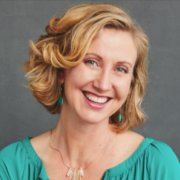
By Sharon Brock, MEd, MS

Stanford psychiatrist Douglas Noordsy, MD, is a physician who literally walks his talk. For the last 40 years, he has woken up at 6 a.m., drank a glass of water, and gone for a run, often with his dog.

“Living a healthy lifestyle has always been an integral part of my life. I share lifestyle interventions [such as daily exercise] with my patients because these practices have worked for me,” says Dr. Noordsy, Head of the Stanford Lifestyle Medicine Cognitive Enhancement pillar.

As a practicing psychiatrist for more than 35 years, editor of the book Lifestyle Psychiatry, and founder of the Stanford Lifestyle Psychiatry Clinic, Dr. Noordsy has played an integral role in incorporating lifestyle medicine into traditional psychiatry care. Dr. Noordsy’s research interests at Stanford include medication and the impact of exercise and nutrition for individuals with schizophrenia and bipolar disorder. He is currently Director of the Lifestyle & Sports Psychiatry special initiative in the Department of Psychiatry.

“With lifestyle psychiatry, clinicians utilize three methods of care—psychotherapy, medication, and lifestyle interventions,” he says. “This three-pronged approach helps us to be more effective physicians, and patients have a better chance at achieving their best outcomes.”

Northeastern Roots

Doug Noordsy always knew he wanted to be a physician. Initially thinking he would go into primary care, he shadowed his family’s doctor as a high school student in Syracuse, New York. As an undergraduate, he took pre-med courses at St. Lawrence University, a small liberal arts college in upstate New York.

“In my junior year, I took the ‘Introduction to Psychology’ course and I fell in love with it,” he says. “I was particularly interested in those with significant disorders such as schizophrenia—I was intrigued by how they thought. So those early experiences drew me into psychiatry.”

In the 1980s, he attended medical school at Washington University in St. Louis, Missouri. During this time, neuroscience and psychopharmacology were becoming more advanced, which led to debate among mental healthcare professionals about the relative merits of pharmaceuticals over psychotherapy.

“We learned about psychotherapy and medication, but lifestyle medicine wasn’t on the table at that time,” says Dr. Noordsy. “There was discussion about the importance of social support, but we didn’t consider how other aspects of lifestyle affected mental health, such as exercise, nutrition, and mind-body practices.”

After completing his residency at Dartmouth-Hitchcock Medical Center in New Hampshire, he served as a Professor of Psychiatry at the Geisel School of Medicine for 25 years. At Dartmouth, he was also the Director of Psychosis Services and an Investigator in the Psychopharmacology Research Group.

“At Dartmouth, there was an emphasis on treating patients in a collaborative, recovery-oriented way rather than a paternalistic approach,” says Dr. Noordsy. “It was important in my early development to be trained in a model of care that was respectful of the wishes and preferences of the patient.”

Leading a Movement

Dr. Noordsy was ahead of his time regarding the connection between lifestyle medicine and mental health. As a medical school student, he managed his own mental health using lifestyle practices such as daily exercise, healthful nutrition, and quality sleep. He found benefit with these practices and shared them with his patients.

“At first, I was shy about sharing my experiences because they weren’t evidence-based at that time. It’s counter-academic to share things with patients from your own life that are not supported by clinical trials,” he says. “But over time, the evidence caught up.”

Indeed, over the last 15 years, research on lifestyle medicine has shifted the narrative from personal anecdotes to gaining attention and respect within the medical community. Specifically, Lifestyle Psychiatry has moved from something psychiatrists recommended softly to valid, evidence-based medicine.

In the fall of 2015, Dr. Noordsy came to Stanford to join the Department of Psychiatry & Behavioral Sciences, which was building a team for student-athletes. Many of the athletes wanted to minimize medication exposure, so he continued to recommend lifestyle interventions as options to support their mental health.

In 2019, Dr. Noordsy coined the term “Lifestyle Psychiatry” by publishing a book with that title. This book is a curation of research from around the world detailing the evidence on lifestyle practices in psychiatry. In 2020, he opened the Stanford Lifestyle Psychiatry Clinic. In 2024, the president of the American Psychiatric Association (APA) promoted lifestyle interventions as a core component of psychiatric treatment, bringing this approach into the mainstream.

In his 35-year career, Dr. Noordsy has been a member of the Schizophrenia International Research Society, the International Early Psychosis Association, the American College of Lifestyle Medicine, and a fellow of the APA. He received the Exemplary Psychiatrist Award from the National Alliance on Mental Illness in 2001 and the Excellence in Leadership Award from the Stanford Department of Psychiatry and Behavioral Sciences in 2018.

Although Dr. Noordsy is a nationally acclaimed psychiatrist, his most significant source of pride is his influence on how psychiatric care is delivered. For severe disorders, psychiatry has had a long history of authoritarian care in some settings. With lifestyle psychiatry, where patients choose from a menu of lifestyle practices as part of their treatment plan, the care model shifts from “the doctor knows all” to one where the psychiatrist collaborates with their patients, respects their wishes, and takes a whole-person approach.

“What I’m most proud of is being part of a movement toward empowering and engaging patients to participate in their own health and well-being, rather than just be compliant to their doctor’s instructions,” says Dr. Noordsy. “I’m proud to be part of a new approach to care that promotes mental health by fostering relationships, savoring nutritious meals, and experiencing the beauty of nature at sunrise.”

By Maya Shetty, BS

Bruce Feldstein, MD, BCC, is a distinguished chaplain, physician, and educator at Stanford, renowned for his unique influence in healthcare that bridges the realms of spirituality and medicine. His work is motivated by a desire to inspire a more holistic and compassionate approach to healing. Presently, he serves as a guiding light for the Stanford Lifestyle Medicine Gratitude and Reflection pillar, seamlessly integrating the essence of human existence into the broader field of lifestyle medicine.

“Within healthcare, I see lifestyle medicine as a pathway to recognize the human dimension of living that reflects the essential nature of being human itself,” says Dr. Feldstein. “Through this perspective, we appreciate the human experience with a more comprehensive embrace.”

One of the remarkable aspects of Dr. Feldstein’s work is the emphasis on an individual’s humanity. As an Adjunct Clinical Professor of Medicine at Stanford, he surpasses the boundaries of traditional medical education by bringing forward  an understanding of human beings as biological, linguistic, and historical beings who are fragile, interdependent, and mortal. His educational focus includes caring for structural human concerns such as meaning, purpose, connectedness, belonging, and dignity.

At Stanford, he has taught courses that encompass these principles, such as “Spirituality and Meaning in Medicine” and “Physician Self Care and Well-being.” He also teaches “The Healer’s Art,” created by Rachel Naomi Remen, MD, and “Reflection Rounds,” in which medical students, physicians, and chaplains gather to reflect on their inner life experiences. “Reflection Rounds” is now a subject of doctoral dissertations supervised by Dr. Feldstein. He also mentors students, residents, physicians, and chaplains across the country, as well as teaches and gives talks on spirituality and medicine globally.

Humble Beginnings

Born in Detroit, Michigan, Dr. Feldstein’s journey has taken him through diverse experiences in music, medicine, and spirituality. He reminisces, “I’ve been in medicine since I was 2 years old, when my father’s drug store burned down and he went to medical school. As a child, I would join him on countless house calls and hospital rounds.”

Dr. Feldstein attended the University of Michigan, taking advanced pre-medical courses while earning a Bachelor of Science in music focused on theory, analysis, and history.

“Experiencing music can bypass our intellect and touch the core of our meaning and being. There is a healing power in music,” he says. This deep connection to music resonates in his life today as a chaplain, incorporating singing into his spiritual care for its healing energy, meaning, and ritual.

He completed his undergraduate education in just two years, earning membership in Phi Beta Kappa and receiving numerous awards. Remarkably, he was accepted into medical school at the University of Michigan at the age of 20.

His childhood experience of religion, like many assimilating immigrant Jewish families, was oriented around private family gatherings rather than lived publicly or professionally. Yet, Dr. Feldstein was drawn to spiritual and religious experiences throughout his medical education and clinical practice. As a medical student, he witnessed a Christian physician in a small Michigan town emergency room who offered a prayer from his pocket-sized Bible while caring for his long-time patient. Initially, Dr. Feldstein was taken aback, but soon understood the immense comfort this act provided to the patient. Through many moments such as this, he began to recognize the spiritual dimensions of medicine.

Emergency and Disaster Medicine Physician

After graduation from medical school, Dr. Feldstein volunteered as a physician in the pediatric ward of a Cambodian refugee camp on the Thai border. It was the winter of 1979 – 1980, in the aftermath of the genocide and famine that killed one-quarter of the Cambodian population by the country’s Prime Minister, Pol Pot. There, he saw indescribable suffering and horror, as well as the unforgettable human will to live. He also witnessed equanimity and power among the people due to their Buddhist practices. Unavoidably, he began to recognize the crucial importance of the spiritual-humanistic dimensions of human life and how they were missing in Western medicine.

Upon returning to the US, Dr. Feldstein practiced emergency and disaster medicine for 19 years. During this time, he spent a two-year sabbatical with Fernando Flores, PhD, who introduced him to the essential nature of language in medicine, helped him appreciate what it is to be human (ontology), and the power of incorporating these understandings into healthcare, clinical medicine, and everyday life. Flores remains one of Dr. Feldstein’s lifelong teachers.

Shifting from Physician to Chaplain

In 1998, he faced a life-altering injury that rendered it impossible to carry on as an emergency physician. Exploring different career avenues, he became a visiting scholar at the Stanford Center for Biomedical Ethics, mentored by Ernlé Young, PhD. He also ventured to Jerusalem to study Jewish religion and ethics, then returned to Stanford where he discovered a deeper sense of his life’s work as a chaplain.

He completed the residency program in Clinical Pastoral Education to become a spiritual care professional in 2000. He was still serving those in pain and suffering, but now offering comfort and healing from an emotional and spiritual perspective. As a chaplain who was previously an emergency physician, “I had the distinct impression I was bridging two worlds.”

In 2000, he also established the Jewish Chaplaincy Services (JCS), a program dedicated to providing spiritual care and guidance to hospital patients, their families, and caregivers at Stanford Medicine. This involved training spiritual-care volunteers and, as a physician who is a chaplain, contributing to the integration of spirituality into the practice and profession of medicine through education.

Since 2001, as an Adjunct Clinical Professor at the School of Medicine, Dr. Feldstein has developed and taught an award-winning curriculum on spirituality and well-being for medical students and faculty. He received the John Templeton Spirituality and Medicine Curricular Award and was the first recipient of the Isaac Stein Award for Compassionate Care presented by the Stanford Health Care Board of Directors. He is recognized as a Board Certified Chaplain by Neshama: Association of Jewish Chaplains, the professional association for Jewish chaplains worldwide, where he was a past president.

In his multifaceted roles as a leader in lifestyle medicine, chaplain, professor, and director of JCS, Dr. Feldstein remains dedicated to nourishing the souls and minds of the Stanford community.

“Stanford’s commitment to including the spiritual dimension of medicine resonates with my core belief that understanding the essence of being human enhances the ability to address pain and suffering and promote healing in a more profound way,” he says.


By Carly Smith, BS, MPH

Stanford Lifestyle Medicine (SLM) is pleased to welcome Sharon Brock, MEd, MS, as the new program manager and lead writer/editor. With a master’s degree from Columbia University journalism school and 17 years of experience as a science journalist, Brock brings a wealth of editorial knowledge to the position and is committed to the overall goal of growing the program with enhanced content across all platforms. 

“I am excited to be at Stanford Lifestyle Medicine,” says Brock. “I’m incredibly inspired by the researchers of SLM. I believe their work is essential for the future of medicine and I’m honored to be part of this movement.”

In addition to improving content quality, Brock works closely with the team’s research fellows. As a team under Brock’s leadership, they produce social media posts, blogs, and newsletters that translate complex scientific research into language that is understandable and practical for the general public.

“Lifestyle medicine has traditionally been neglected in modern medicine, but with the help of Stanford researchers and this great team of writers, we can make it more mainstream and accessible for everyone,” says Brock.

Brock grew up in Los Angeles and graduated from University of California, Santa Barbara in 1999 with a bachelor’s degree in the biological sciences and a master’s degree in education. After teaching high school biology in the Bay Area for five years, she moved to New York to earn a second master’s degree in journalism from Columbia University.  

For the past 17 years, Brock has been working as a health and medical editorial professional, including a writing position at UCSF and as the editor-in-chief of the USC Keck Medicine magazine KeckMD, which highlights the work of USC physicians and researchers. She hopes to similarly collaborate with Stanford’s team to share their research findings and innovations in the field of Lifestyle Medicine. 

In addition to being an editorial professional, Brock is also a UCLA-certified mindfulness teacher and bestselling author of the book The LOVEE Method: Mindfulness Meditation for Breast Cancer. Following a breast cancer diagnosis in 2018, her training in mindfulness helped her navigate the year-long journey of chemotherapy treatments and surgeries with greater strength. 

When the mindfulness practices not only served her emotionally, but also physically–she had minimal side-effects from chemotherapy–she saw it as her duty to publish a book providing mindfulness tools for other women facing this diagnosis. In 2021, her book became a bestseller and was featured on Good Morning America, and it continues to serve as a mental health resource for women going through breast cancer treatment across the country.

“It was a very challenging time, but I asked myself, ‘How can I turn this pain into purpose? How can I use this experience to serve others?’” says Brock. “Although writing this book was a lot of work, when I receive emails from women I’ve never met saying this book was their greatest source of support while going through cancer, it makes it all worth it.” 

Brock was thrilled to find this position at Stanford Lifestyle Medicine, which is a great fit with her education and editorial experience. Also, as evidenced by her book, Brock is aligned with the mission of the program to educate and empower the general public with actionable lifestyle choices to enhance health and wellbeing. 

“The other day, a researcher on the team spoke about a study where meditation and gratitude practices supported women going through cancer treatment, as shown by blood test results,” says Brock. “As the researcher spoke, I smiled and thought to myself, ‘I’m in the right place.’”


No Content Available