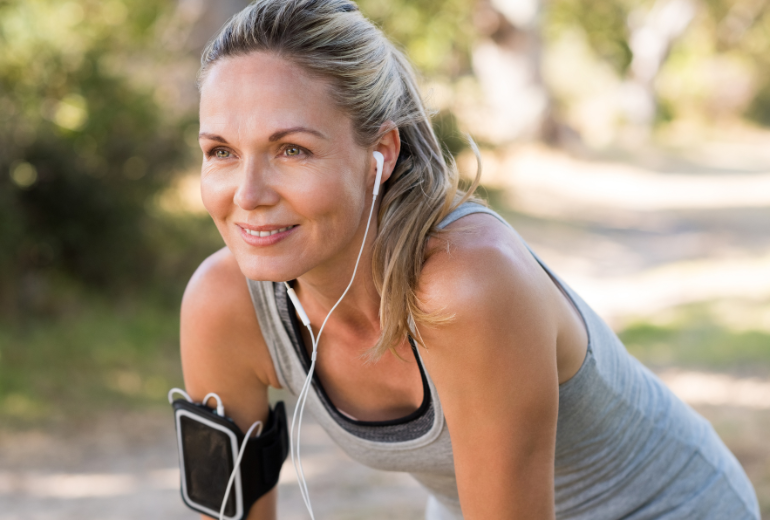
‘All it takes is a quick walk’: how a few minutes’ exercise can unleash creativity – even if you hate it
Do you have your best ideas while running to the bus stop, or walking the dog? You’re not alone. Researchers are finding remarkable links between movement and blue-sky thinking
March is Colorectal Cancer Awareness Month! In this episode of Scrubcast, host Rachel Baker interviews Dr. Cindy Kin, an associate professor in Stanford University’s Department of Surgery.
Michael Fredericson, Professor of Orthopaedic Surgery at Stanford, discusses the types of injuries they are seeing the most, and the benefit of the exercise versus the risk of injury.
Lifestyle psychiatry can play an important role in helping patients establish healthy behaviors and habits that both help prevent and treat mental illness.
At first glance, the dual roles of physician and chef may seem like an unlikely pairing. But for Carlie Arbaugh, MD, Chef, it was the parallels she found in the culinary arts and surgical care that drew her to each.
If you’ve seen a loved one take a bad fall – like my mother did a few months ago – you know the importance of muscle strength.
Muscle mass peaks in our 30s and then starts a long, slow decline. Muscle-loss, also called sarcopenia, affects more than 45% of older Americans, especially women.
The headlines are compelling, with phrases like, “The Obesity Revolution,” and “A new ‘miracle’ weight-loss drug really works.” The before-and-after pictures are inspiring. People who have struggled for decades to shed pounds are finally finding an effective strategy.
The last few years saw breakthroughs in treatments for obesity, with new weight-loss medicines dominating recent news reports. The medicines, semaglutide (Ozempic, Wegovy) and tirzepatide (Mounjaro, Zepbound), work by slowing stomach-emptying and decreasing appetite. They’re usually administered by weekly injection.
From Finnish saunas to Korean ice tubs, these spas specialize in the practice of alternating between intense heat and intense cold.
Many travelers have experienced the warming pleasures of a steamy soak at a Japanese onsen (hot spring) or a heated Turkish hammam. But they may not have jumped into the world of contrast bathing—the practice of alternating between intense heat (hot tubs, saunas) and intense cold (polar bear-style plunges or ice baths).
While many people may want to increase their muscle mass primarily to improve physical fitness, some are also after a more attractive physique.
Glutes, triceps, obliques and chest muscles are all desired. Biceps are, too. But often the most buzzed about muscle region that people are after is abdominal muscles. Men in particular frequently chase the chiseled six-pack, only to find that getting it is easier said than done.
After working as an emergency medicine physician for 19 years, including at Stanford, Bruce Feldstein suffered an injury that made it impossible for him to continue. With the encouragement of other medical professionals, he began to consider, and then pursue, chaplaincy. Two decades later, Feldstein has served as a hospital chaplain longer than he worked as a physician.