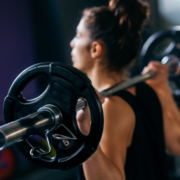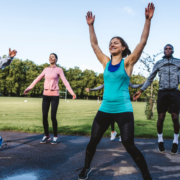
High-Intensity Interval Training (HIIT) is an intense workout that effectively boosts aerobic capacity and overall health in a shorter amount of time than traditional workouts. 

Former pro-athlete, celebrity trainer, and founder of Platinum Fitness, Peter Park, recommends HIIT workouts for his clients at every fitness level. He suggests one-to-two HIIT workouts per week, in addition to three-to-four days of low-intensity cardio exercise, such as walking or biking for 20 minutes to an hour. 

“Cardio workouts build endurance while HIIT builds muscle strength and higher-end aerobic capacity,” says Park, author of Foundation Training: Redefine Your Core, Conquer Back Pain, Move With Confidence and Rebound: Regain Strength, Move Effortlessly, Live Without Limits.

HIIT Routine

Park has 23 years of experience training elite athletes and has designed the following HIIT routine:

Warm up: Perform five reps of the exercises in the graphic at a slow and controlled pace, modifying as needed, and repeat.

Main set: Perform eight reps of the exercises at a faster pace with minimal rest between each exercise, then take a 45-second rest. Repeat with nine reps, then 10 reps for a total of three cycles.

Exercise Details:

  1. Body weight squats: Perform squats to parallel while extending your arms fully as you descend. Ensure you engage your core and maintain proper posture throughout the movement. Aim for a complete range of motion, focusing on squeezing your quads, core, and glutes at the top of each repetition. Maintain a steady tempo while staying in control.
    • Modification: Sit in a chair and stand back up.
  2. Push-ups: Keep your core engaged and maintain proper posture while performing push-ups. Maintain a controlled tempo and form.
    • Modification: Perform the push-ups on your knees, or against a wall or table.
  3. Jumping jacks: Stay smooth and controlled throughout the movement.
    • Modification: Stand with your feet hip-width apart and perform the jumping jack movement with your arms only.
  4. Stand-ups (aka Burpees): Begin by lying on your stomach on the floor with your hands at chest level. Jump your feet forward, contracting your abdominals, and stand up quickly. Return to the lying position and repeat the process.
    • Modification: Press hands into floor and step back into a high plank position, then step forward and return to a standing position.

Tips for HIIT at Every Fitness Level

Beginner: For individuals just starting out, focus on incorporating intense periods of exercise lasting at least one minute into one’s regular training routine. For example, one could speed up sections of a morning walk or finish a workout with a burst of all-out effort. Don’t worry if you become breathless and have trouble speaking – this is how you’re building your aerobic capacity!

Intermediate: Individuals who already participate in regular exercise but are relatively new to HIIT should focus on incorporating two-to-three HIIT workouts per week into their regular exercise regime. Any exercise modality can be turned into an IT protocol as long as one can push themselves into near maximal or maximal exertion. To optimize benefits, research suggests higher intensities and longer intervals are best. 

Advanced: In well-trained individuals, intense exercise is necessary to generate additional improvements in exercise performance and overall health. To achieve these benefits, extremely high-intensity sprint interval training (SIT) or long-interval HIIT at least three times per week may be necessary. 

Important Considerations

Prepare your body before engaging in HIIT: The intense nature of HIIT can be problematic for individuals with weaker musculoskeletal systems or chronic health issues. Additionally, healthy individuals unfamiliar with this workout type also risk injury. So, remember to build up your capacity for this workout by gradually incorporating periods of higher intensity into your regular exercise routine.

“Pushing your body to its physiological limits without proper training can lead to injuries, compromising your overall health and performance,” says Park. 

Don’t perform interval training every day: While it may be enticing to engage in HIIT daily due to its wide-ranging benefits, this workout can strain the body and hinder physical adaptations when performed too frequently. Instead, opt for one-to-two HIIT sessions per week and mix them with low-intensity activities such as walking or yoga for active recovery. 

Have fun: While incorporating HIIT into your exercise regimen, remember to prioritize your safety and comfort, but also do your best to make it enjoyable so that you stick with it. “HIIT workouts are much more fun with a training partner, says Park. “So, grab your spouse, friend, or co-worker and help each other get out of your comfort zone!”


By Peter Park, CSCS, BS & Maya Shetty, BS


By Carly Smith, BS, MPH

Stanford Lifestyle Medicine (SLM) is pleased to welcome Sharon Brock, MEd, MS, as the new program manager and lead writer/editor. With a master’s degree from Columbia University journalism school and 17 years of experience as a science journalist, Brock brings a wealth of editorial knowledge to the position and is committed to the overall goal of growing the program with enhanced content across all platforms. 

“I am excited to be at Stanford Lifestyle Medicine,” says Brock. “I’m incredibly inspired by the researchers of SLM. I believe their work is essential for the future of medicine and I’m honored to be part of this movement.”

In addition to improving content quality, Brock works closely with the team’s research fellows. As a team under Brock’s leadership, they produce social media posts, blogs, and newsletters that translate complex scientific research into language that is understandable and practical for the general public.

“Lifestyle medicine has traditionally been neglected in modern medicine, but with the help of Stanford researchers and this great team of writers, we can make it more mainstream and accessible for everyone,” says Brock.

Brock grew up in Los Angeles and graduated from University of California, Santa Barbara in 1999 with a bachelor’s degree in the biological sciences and a master’s degree in education. After teaching high school biology in the Bay Area for five years, she moved to New York to earn a second master’s degree in journalism from Columbia University.  

For the past 17 years, Brock has been working as a health and medical editorial professional, including a writing position at UCSF and as the editor-in-chief of the USC Keck Medicine magazine KeckMD, which highlights the work of USC physicians and researchers. She hopes to similarly collaborate with Stanford’s team to share their research findings and innovations in the field of Lifestyle Medicine. 

In addition to being an editorial professional, Brock is also a UCLA-certified mindfulness teacher and bestselling author of the book The LOVEE Method: Mindfulness Meditation for Breast Cancer. Following a breast cancer diagnosis in 2018, her training in mindfulness helped her navigate the year-long journey of chemotherapy treatments and surgeries with greater strength. 

When the mindfulness practices not only served her emotionally, but also physically–she had minimal side-effects from chemotherapy–she saw it as her duty to publish a book providing mindfulness tools for other women facing this diagnosis. In 2021, her book became a bestseller and was featured on Good Morning America, and it continues to serve as a mental health resource for women going through breast cancer treatment across the country.

“It was a very challenging time, but I asked myself, ‘How can I turn this pain into purpose? How can I use this experience to serve others?’” says Brock. “Although writing this book was a lot of work, when I receive emails from women I’ve never met saying this book was their greatest source of support while going through cancer, it makes it all worth it.” 

Brock was thrilled to find this position at Stanford Lifestyle Medicine, which is a great fit with her education and editorial experience. Also, as evidenced by her book, Brock is aligned with the mission of the program to educate and empower the general public with actionable lifestyle choices to enhance health and wellbeing. 

“The other day, a researcher on the team spoke about a study where meditation and gratitude practices supported women going through cancer treatment, as shown by blood test results,” says Brock. “As the researcher spoke, I smiled and thought to myself, ‘I’m in the right place.’”


No Content Available

Many people believe running is bad for your knees, but this commonly-held belief is not backed by solid evidence. Let’s take a closer look at the research and unravel the truth behind this myth.

A recent study explored the public’s perception of running and knee joint health–the findings were surprising. Around 29 percent of the general public believed that frequent running is harmful to the knees, and a significant 54 percent thought the same about running long distances. 

Interestingly, a different picture emerged when comparing these perceptions with those of healthcare providers. A greater proportion of healthcare providers actually viewed regular running as beneficial for knee health. 


“Despite the prevailing beliefs, current evidence finds that recreational running is not a risk factor for knee osteoarthritis. In fact, it has been found to be quite the opposite–running can be good for your knees.”  – Corey Rovzar, PhD, DPT, and postdoctoral fellow at the Stanford Prevention Research Center.


Studies have shown that recreational runners have a knee and hip osteoarthritis (OA) prevalence that is three times lower than that of sedentary non-runners. Competitive runners showed an even more impressive four-fold reduction in knee and hip OA prevalence. These results are due to the fact that regular running strengthens the muscles around the knee joint and supports overall joint health. Running also plays a vital role in maintaining healthy cartilage and bone density, which are crucial for knee function.

Considerations for Individuals With Pre-Existing Knee Conditions

If you have a pre-existing knee condition, such as knee OA, running may exacerbate symptoms because the cartilage in the knee has broken down, leaving less cushioning around the joint. Cartilage does not have the ability to regenerate and while running can maintain cartilage health, it can not bring it back once it’s gone. If you struggle with knee OA, opting for lower-impact exercises, such as walking, cycling, or swimming, is advisable. Consulting with a healthcare provider or a physical therapist can help you develop a safe and effective exercise routine that works specifically for you. 

Guidance For Inexperienced Individuals

Michael Fredericson, MD, the Director of the Lifestyle Medicine Program and PM&R Sports Medicine at Stanford, cautions against taking up running after the age of fifty without prior experience. According to Dr. Fredericson, “You need to get fit to run, rather than run to get fit, and this becomes even more important after the age of 50. If you’re just starting out, begin with general conditioning that targets hip and core muscles and slowly build up your running.”

It’s time to put this myth to rest. Running is not bad for your knees; in fact, it can be healthy for them! If you do not suffer from a pre-existing knee condition and are generally fit, let’s embrace the evidence and remember that running, when done responsibly, can contribute to healthier and happier knees. So, lace up those running shoes and hit the pavement with confidence, knowing that you’re taking strides toward a stronger and more resilient you!


By: Corey Rovzar, PhD, DPT, Maya Shetty, BS, & Michael Fredericson, MD


Sources:

  1. Esculier J-F, Besomi M, Silva D de O, et al. Do the General Public and Health Care Professionals Think That Running Is Bad for the Knees? A Cross-sectional International Multilanguage Online Survey. Orthopaedic Journal of Sports Medicine. 2022.
  2. Alentorn-Geli E, Samuelsson K, Musahl V, Green CL, Bhandari M, Karlsson J. The Association of Recreational and Competitive Running With Hip and Knee Osteoarthritis: A Systematic Review and Meta-analysis. J Orthop Sports Phys Ther. 2017 Jun

What is our circadian rhythm?

Our circadian rhythm is our internal clock, keeping us on track for many of our day-to-day activities. When we go to sleep and when we wake up the following morning are the most common activities that people associate with our circadian rhythm, though there are many more things that it influences (metabolism, mental and physical performance, immunity, etc.). This sleep-wake cycle can be influenced by various stimuli throughout the day, but it is most heavily influenced by changes in light exposure. Light is considered the major “zeitgeber” or stimulus that helps our body to understand when to do certain activities like sleeping and waking. This means when we are exposed to light, especially bright light like sunlight, has a big effect on our sleep-wake pattern. 

Sunlight’s effect on circadian rhythm

“Many people today are working remotely or are in offices with little natural light exposure. Many of these same people may tend to struggle with sleeping at night and are unaware of how a few changes to their lifestyle may help them begin to improve their sleep. Finding lifestyle habits to prioritize early morning and daytime sun exposure can help to improve sleep later that night,” says Jamie Zeitzer, PhD, Stanford University Professor and member of the Stanford Lifestyle Medicine sleep team. 

Even going outside for 30 minutes can help. In the morning, sunlight helps to tell your circadian clock what time it is. In the afternoon, sunlight helps to make the clock stronger. At any time of day, getting sunlight means that the artificial light to which you are exposed at night will have less of an impact. Whether it is taking the dog out for a morning walk or finding time to bask in the sun over lunch, spending a little more time outdoors during the day can help regulate our internal clock and is the first step in a healthier relationship with sleep. It’s a win-win!

By: Carly Smith, BS, MPH(c)


Sources:

  1. Hoffmann et al. Aerobic Physical Activity to Improve Memory and Executive Function in Sedentary Adults without Cognitive Impairment: A Systematic Review and Meta-analysis“. Journal of Preventative Medicine Reports. Sep. 2021.

It is generally understood that exercise is good for our physical bodies, but did you know that exercise can also improve cognitive performance? One such benefit of aerobic exercise specifically is its ability to enhance our memory. There have been a multitude of studies designed to investigate the nuances of this exact phenomenon, including a recent systematic review and meta-analysis.

Aerobic Exercise Improved Performance on Memory Tests

The analysis reviewed nine different studies with patients aged 50 years old and older. Six of the studies used exercise regimens that follow the U.S. Department of Health & Human Services recommendations for aerobic physical activity. These guidelines suggest that all adults should engage in at least 150 minutes of moderate aerobic exercise (like brisk walking or cycling) or 75 minutes of vigorous aerobic exercise (like jogging or dancing) on a weekly basis. In the studies, the type of exercises varied from brisk walking to swimming, but all that met the U.S. guidelines reported “significant and large” effects. It is important to note that the duration of the studies ranged from three months to one year, each with its own unique breakdown of how to meet these total weekly minutes. 

In order to study the link between exercise and memory, there are several  memory tests that scientists can use to test the different aspects of our memory. While most of the included studies chose to observe changes in working and logical memory (important for reasoning and decision-making), some used tests to observe the changes in spatial and episodic memory (remembering information like names, places, and colors). The results of the overall meta-analysis concluded that there was a strong relationship between undergoing aerobic exercise and improvements in memory. 

What is BDNF?

Dr. Doug Noordsy, Head of Cognitive Enhancement at Stanford Lifestyle Medicine, hypothesizes that aerobic exercise improves memory by releasing Brain-Derived Neurotrophic Factor (BDNF), which was discussed in the analysis. BDNF is a protein that is released due to the widening of the blood vessels (systemic vasodilation) that occurs during physical activity. Once this protein reaches our brain through the bloodstream, it aids the longevity and growth of healthy neurons, which are vital for learning and memory processes. Also, exercise turns on specific genes that activate neurotrophic factors like BDNF, allowing us to create additional BDNF as we exercise throughout life. 

So, next time you catch yourself recalling an old story or trying to match a name to a face, remember to move your body and get your heart rate up!


By: Carly Smith, BS, MPH(c)


Sources:

  1. Hoffmann et al. Aerobic Physical Activity to Improve Memory and Executive Function in Sedentary Adults without Cognitive Impairment: A Systematic Review and Meta-analysis“. Journal of Preventative Medicine Reports. Sep. 2021.

When was the last time you laughed? Do you remember the way it made you feel? Many people note that laughter can heal the soul, but what about other aspects of our health? From boosting your mood to enhancing social connectedness, laughter is one of nature’s feel-good remedies, and it has a positive clinical relevance in the treatment of mental, physical, and physiological conditions.

Recent reviews of randomized-controlled trials report reduced levels of stress, anxiety, depression, and fatigue when patients underwent laughter and humor-based interventions. Certain studies have even found humor to be beneficial in improving people’s ability to focus and remember different aspects of lectures, conversations, etc. Furthermore, the opportunity to share a laugh with other people helps to build stronger bonds and deeper connections, fostering a greater sense of belonging and helping crush feelings of social isolation and loneliness.

When our team reflected on how laughter could be used as a tool for a healthy lifestyle, it was agreed that laughter is much more than just a sound. Sometimes even just thinking of a time that you let out a big belly laugh is enough to brighten your mood and ease some of the stress from your body. Seeking opportunities to laugh and engage with others in such a lighthearted fashion may just be the tool many of us should embrace to lead happier and healthier lives. So, we encourage you to take a moment to relive the last moment you left out a laugh and reflect on the different ways it helped you at the time.

“Let laughter be our song. Listen for laughter. Enjoy. Chuckle. Smile. Laugh. Try it sometime, and see for yourself. “

– Dr. Bruce Feldstein, MD, BCC, Head of Gratitude & Reflection Pillar


By: Carly Smith, BS, MPH(c)


Sources:

  1. Stiwi K, Rosendahl J. Efficacy of laughter-inducing interventions in patients with somatic or mental health problems: A systematic review and meta-analysis of randomized-controlled trials. Complement Ther Clin Pract. 2022 May

Sleep, a fundamental element of human biology, plays a crucial role in various physiological processes. A good night’s sleep is essential for immune function, cognitive performance, emotional well-being, and overall physical health. Exercise is another critical lifestyle factor with tremendous potential to improve your health. Regular physical activity has numerous benefits, from reducing the risk of chronic diseases to improving mental health. However, could exercise improve your sleep?

Impact of Resistance Exercise on Sleep

A 2017 review found that “chronic resistance exercise improves all aspects of sleep, with the greatest benefit for sleep quality” in individuals with sleep problems. In this study, Kovacevic et al. employed a systematic review methodology by conducting an electronic database search of randomized controlled trials. Many studies fit the criteria, but three acute resistance exercise studies, seven chronic resistance exercise studies, and three combined aerobic and resistance exercise studies met the researchers’ inclusion criteria and were analyzed for sleep outcomes. The primary finding from this review was improvements in sleep from chronic exercise; these improvements were “moderate-to-large, and commonly affected overall sleep quality, sleep latency, sleep efficiency, mid-sleep disturbance, and daytime dysfunction”. In comparison, the primary medications prescribed to improve sleep quality had “only small-to-moderate effects on sleep quality” and instead have “adverse effects such as rebound insomnia, depression and anxiety, cognitive impairment, and an increased risk of falls, cancer, and overall mortality” if used in the long-term. Kovacevic et al. call for further research and more data on aerobic exercise but cites an earlier paper that noted how aerobic exercise could improve sleep quality.

Furthermore, their work highlighted how “higher intensity and greater frequency of training offer greater sleep benefits”. More specifically, the chronic resistance exercises studied that had the most benefits included machine-based resistance exercise, circuit training, and resistance bands for an average duration of 14 weeks total with approximately 60 minutes per session. Studies with high exercise intensity as compared to low-to-moderate intensity, and with a frequency of 3 days/week as compared to 1-2 days/week, had a larger beneficial effect on sleep quality.

The review presented another pathway by which exercise could improve sleep; exercise improves levels of anxiety and depression, both of which deeply affect sleep — “notably, exercise has been shown to be an effective treatment for major depression and sleep disturbance is one of the core symptoms of depressive illness” and “the majority of chronic studies included in this review reported significant improvements in neuropsychological outcomes”.

Impact of Aerobic Exercise on Sleep

Additional research has also shown the further benefits of aerobic exercise for people with established sleep disorders. One study showcased how “4 months of aerobic exercise training in a sample of older adults with insomnia significantly improved sleep quality while also reducing daytime sleepiness and depressive symptoms”. Another study found that “12 weeks of moderate-intensity aerobic and resistance exercise resulted in a 25% reduction in OSA [obstructive sleep apnea] severity”. Lastly, studies have even shown that the circadian rhythms disrupted in neurodegenerative disease can be improved with exercise — “exercise has proven to be a low risk and beneficial intervention to improve overall health and sleep disorders in AD [Alzheimer’s disease] and PD [Parkinson’s Disease]”. In particular, “physical activity, even at low intensities, has been reported to improve sleep quality, reduce time to fall asleep, and increase the duration of sleep in the elderly… evidence indicates that exercise increases total sleep time and slow-wave sleep”.

We all strive for better sleep even if we do not have a known sleep disorder, and it could be within our grasp through a novel route. Exercising for an hour three times a week at high intensity with machine-based resistance exercise, circuit training, or resistance bands can improve your sleep quality and decrease issues in the day. Even once a week at a lesser intensity for 40 minutes showed beneficial effects! Sleep and exercise are significant pillars in lifestyle medicine, and it is fascinating how one affects the other. Rather than relying on medications that can have adverse effects, research suggest exercise is a natural way we can improve our sleep. While further research is needed, recognizing the interconnectedness of exercise and sleep as critical components of a healthy lifestyle is crucial.

By: Keshav Saigal, BS(c)


Sources:

  1. Kline, Christopher E. The bidirectional relationship between exercise and sleep: Implications for exercise adherence and sleep improvement.” American Journal of Lifestyle Medicine. 2014 August
  2. Kline, Christopher E et al. “The effect of exercise training on obstructive sleep apnea and sleep quality: a randomized controlled trial.” Sleep. 2011 December
  3. Kovacevic, Ana et al. “The effect of resistance exercise on sleep: A systematic review of randomized controlled trials.” Sleep Medicine Reviews. 2018 June
  4. Memon, Adeel A et al. “Effects of exercise on sleep in neurodegenerative disease.” Neurobiology of Disease. 2020 July
  5. Reid, Kathryn J et al. “Aerobic exercise improves self-reported sleep and quality of life in older adults with insomnia.” Sleep Medicine. 2010 October
  6. Yang, Pei-Yu et al. “Exercise training improves sleep quality in middle-aged and older adults with sleep problems: a systematic review.” Journal of physiotherapy. 2012 September

By Carly Smith, BS & Stacy Sims, MSc, PhD

Perimenopause is the three-to-five years of a woman’s life, leading into menopause, marking many changes in female body composition. Recent research has determined that the loss of lean, quality muscle, and fat gain are two common physical changes that many women face during this time. Our team highlights the importance of integrating regular strength and resistance training exercises to offset some of the physiologic changes of menopause. This is based on the vast body of research suggesting that maintaining muscle is critical for successful aging of the body and reducing the risk of injury as we get older.

As for what people should be doing during this period of life, there may be more benefits specifically for muscle composition from strength training than long, endurance exercise. One way to begin integrating this change is to prioritize lifting heavy – whatever heavy means to you. You should always remember to do what feels safe for you while still challenging your body and trying exercises that spread force throughout your body. To maximize the benefits for your muscles, research indicates that individuals that lift weights heavy enough to near failure in 4-6 reps see the largest gains in muscle strength when the exercise is maintained for 3-5 sets.  For women new to strength training, this type of training regimen may require some getting used to, so it is okay to gradually work toward this goal over time, and prioritize safety at first.

Dr. Stacy Sims, a member of the Stanford Lifestyle Medicine movement & exercise and nutrition pillars, advocates for this training regimen and encourages women to emphasize lifting heavy to reap the most benefits throughout the menopause transition.

“Overall, [we are] breaking the stigma that women need to prioritize long, endurance exercises and exclusively body weight work because they offer little benefits for body composition or lean mass during this time. Instead, lifting heavy (whatever that means to you) will help most during this transitional period,” says Stacy Sims, PhD, MSc, Exercise Physiologist.

Sources:

  1. Greendale et al. Changes in body composition and weight during the menopause transition. JCI Insight. 2019 March
  2. Schoenfeld et al. Strength and Hypertrophy Adaptations Between Low- vs. High-Load Resistance Training: A Systematic Review and Meta-analysis. Journal of Strength and Conditioning Research.  2017 December

Having a diverse microbiome is good for you, but how can we increase diversity in our digestive system through what we eat?

A 2021 study from Stanford University suggests that diets high in fiber and fermented foods might be just the ticket to increasing diversity in your microbiome and could even strengthen your immune system.

You may have heard of the concept of one’s microbiome—the diverse community of bacteria, fungi, viruses, and other microbes that live on our skin and inside of our bodies. The health and balance of our microbiome is critical to our own health. In healthy bodies, our microbiota helps us digest our food, stimulate our immune system, and provide us with other benefits. Each person’s microbiome is unique, with our first exposures to these microorganisms coming from our mothers during birth and through breastmilk and later affected by our environments, diets, and lifestyles [1].

The study followed two groups of participants, each prescribed to increase either their fiber or fermented foods consumption over a 17-week period. Participants in the fermented foods group saw increased microbial diversity at the end of the study period and decreased inflammatory markers. Inflammation correlates with a host of chronic diseases, so learning that we can decrease it while increasing our microbial diversity makes fermented foods a one-two punch. Participants in the high fiber group were observed to have increased capacity for digesting fiber, suggesting increased numbers of beneficial microorganisms but no significant increase in diversity [2]. Eating foods that are high in fiber AND fermented, such as sauerkraut or kimchi have the possibility of having all three benefits, increasing the diversity and number of beneficial microorganisms as well as decreasing inflammation.

In studies of immigrants to the United States, observed “westernization” of their microbiota has been correlated with loss of microbial diversity and functionality along with deteriorating health indicators such as weight gain and increased inflammation [3]. A healthy body goes hand in hand with a healthy microbiome. Why not try integrating high fiber fermented foods to give your body a boost?

By: HannahZoe Chua-Reyes, BS


Sources:

  1. National Institute of Environmental Health Sciences
  2. Gut-microbiota-targeted diets modulate human immune status
  3. U.S. immigration westernizes the human gut microbiome

Recently published in the Journal of Medicine & Science in Sports & Exercise, this randomized crossover study looked at the dose-response behavior in middle-and older-aged adults to prescribed walking during long periods of sitting.

The findings suggest that breaking up sitting time with 5-minute light-intensity walks every half hour can counteract the harmful effects of prolonged sitting.

While there is no specific amount of time spent sitting that puts you in harm’s way, we know that sitting more is worse for you. Thus, it is no surprise that getting up even for a light walk down the hallway every 30 minutes can be much more beneficial to your health. But how does this work? Compared to a controlled trial, walking for 5 minutes after every 30 minutes of sitting a day significantly reduced blood glucose levels. Similarly, systolic BP significantly decreased with 5-minute walks for every 30 minutes sitting & 1-minute walks for every 60 minutes. Along with glycemic and systolic BP responses, fatigue, mood, and cognitive performance all improved with the increases in walking time. Participants, overall, benefitted from more time spent walking. However, any walking break during periods of prolonged sitting is better than nothing!

Overall, this study highlights the importance of finding ways to become more active throughout the entire day, even if it is just for a few moments. There has been a rise in “actively sedentary” lifestyles, which involve engaging in approximately an hour of intense physical activity but spending the rest of the day sitting. However, both daily physical activity and moving throughout the day are essential for maintaining overall health. 

By: Carly Mae Smith, BS


Sources:

  1. Breaking Up Prolonged Sitting to Improve Cardiometabolic Risk: Dose–Response Analysis of a Randomized Crossover Trial