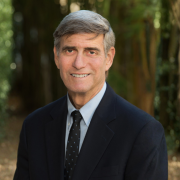




Marcia L. Stefanick, PhD has spent her career changing the way medicine understands both the differences and similarities in health across sex and gender. A professor of medicine at Stanford and a leading researcher in women’s health and sex differences, she has dedicated decades to advocating for the inclusion of women in clinical trials and challenging outdated medical norms. As a principal investigator in the landmark Women’s Health Initiative (WHI) and co-founder of Stanford’s Women’s Health and Sex Diversity in Medicine (WHSDM) Center, Dr. Stefanick has shaped public health policies and medical guidelines that continue to influence patient care all over the world.
“I’m interested in everything that relates to sex and gender across the life course,” says Dr. Stefanick. “My research has been very autobiographical—I first studied the menstrual cycle, then pregnancy complications, then midlife and menopause, and now aging.”
Born in Western Pennsylvania into a family of seven children, Dr. Stefanick developed an early curiosity about sex differences—wondering why puberty affected her brothers differently and why societal expectations varied by gender.
“I was always trying to figure out—when my brothers went through puberty, is that going to happen to me? Why do they get to do certain things, and I don’t? That made me interested in both biology and gender norms,” says Dr. Stefanick.
After spending a year in Germany as a Rotary International Exchange student, she pursued a degree in biology from the University of Pennsylvania, where she became interested in sex differences, particularly in primate behavior.
“When I graduated, I had hoped to study lowland gorillas in Africa, which led me to the Oregon Regional Primate Center. There, I became a research assistant in a sex hormone laboratory and developed a deeper interest in hormones and behavior and neuroendocrinology. This motivated me to pursue a PhD in Physiology with Julian Davidson at Stanford,” says Dr. Stefanick.
During graduate school, she realized she was not meant to be an animal researcher. Seeking a new direction, she connected with researchers at the Stanford Prevention Research Center (SPRC) who were focusing on physical activity and heart disease prevention.
At the SPRC, Dr. Stefanick’s research in the early 1990s primarily focused on body composition, weight loss, and exercise’s impact on cardiovascular risk. At the time, clinical trials were overwhelmingly conducted on men.
Her first two trials—one on exercise and HDL cholesterol and the other on diet, exercise, and weight loss—only included men because that was all that was funded. Frustrated by this, she refused to conduct another male-only study, successfully pushing for the inclusion of pre-menopausal and post-menopausal women in subsequent research.
“I told them, ‘I’m not doing another study without women. We have to include women in our research and not only study men’,” says Dr. Stefanick.
Her interest in sex and hormones led her to take on a National Institutes of Health (NIH) request for applications to study menopausal hormones and heart disease. At the time, doctors were widely prescribing menopausal hormone therapy (HT), often referred to as hormone replacement therapy (HRT), for older women despite a lack of research on its effects. Dr. Stefanick and her colleagues designed one of the first studies to examine these treatments.
This resulted in the Postmenopausal Estrogen/Progestin Interventions Trial (PEPI), published in 1995, which was the first clinical trial by the National Heart, Lung, and Blood Institute (NHLBI) conducted exclusively on women. “It was the first trial done by NHLBI that had only women in it,” says Dr. Stefanick with pride.
Dr. Stefanick’s PEPI trial laid the foundation for the Women’s Health Initiative (WHI)—the largest study of women’s health ever conducted. Launched in the 1990s, WHI enrolled nearly 162,000 women at 40 clinical centers nationwide to study menopausal hormone therapy, diet and cancer risk, and calcium and vitamin D supplementation.
WHI is still ongoing, and Dr. Stefanick serves as Principal Investigator of the Western Regional Center. “It’s the biggest study of women’s health ever done—and it’s still going on,” says Dr. Stefanick.
The WHI hormone trials, published in 2002 and 2004, challenged long-held medical beliefs. Doctors were prescribing menopausal hormone therapy for older women to prevent heart disease, but the study found that HT actually increased the risk of strokes, heart attacks, breast cancer, and dementia. Within a year of publication, HT prescriptions in the US dropped from 20 million to 6 million. “Doctors became afraid to prescribe hormones for menopause management. Women now ask, ‘Why won’t anyone treat my menopause symptoms?’ There are alternative estrogen therapies that don’t carry the same risks, but they remain underutilized,” says Dr. Stefanick.
Dr. Stefanick is currently leading the largest-ever study on whether physical activity prevents heart disease—a question that, despite decades of research, has never been definitively proven.
“We’ve never actually proven that physical activity reduces heart disease. All our data is based on surrogate markers—blood pressure, cholesterol, glucose tolerance—but we haven’t studied enough men or women (or nonbinary people) to say for sure,” says Dr. Stefanick.
Dr. Stefanick believes that one of the biggest problems in sex differences research is the overemphasis on sex hormones while ignoring other biological factors and broader sociocultural influences. “People tend to believe it’s all about estrogen and testosterone, but the biggest biological difference is probably the X chromosome. Every cell in an XX (female) body is different from every cell in an XY (male) body and some people have other variations of X and Y combinations,” says Dr. Stefanick.
For example, women have a stronger immune response than men, yet medical studies rarely adjust for these differences. Even in vaccine development, the COVID-19 vaccine was given at the same dose to men and women, despite evidence that women may need much lower doses.
“We don’t need to treat women like men. We are not men. We need to treat women like women—XX people with estrogen between puberty and menopause and with low estrogen after menopause, which may be over a third of our lives,” says Dr. Stefanick.
To address these gaps, Dr. Stefanick co-founded the WHSDM Center at Stanford, which serves as a hub for sex and gender research in medicine. The center funds studies, ensures that departments consider sex and gender in research, and promotes the inclusion of underrepresented groups in medical studies.
“Our goal at the WHSDM Center is to encourage researchers to study sex differences at every level—cells, tissues, animals, people, and populations,” says Dr. Stefanick.
Dr. Stefanick continues to advocate for more inclusive research in several key areas:
“Women are incredibly resilient,” says Dr. Stefanick. “Our culture doesn’t value women in the same way it values men, yet women persist. I just love women. Women are incredible.”


Bay Area native Cheri D. Mah, MD, MS has made a name for herself as the pioneer of bringing sleep medicine to professional athletes to enhance performance. Specifically, she is hired as a consultant to offer research-based sleep strategies for improved athletic achievement and help athletes beat jet lag while on the road.
Dr. Mah has worked in sleep research and consulting for more than 20 years and has racked up an impressive resume. She has worked with Formula One, military personnel, as well as gold-medalist swimmer and Stanford alumna Katie Ledecky for two Olympics. Dr. Mah has also worked with professional sports teams in the National Football League (NFL), National Basketball Association (NBA), National Hockey League, (NHL), and Major League Baseball (MLB), such as MLB’s San Francisco Giants for eight seasons and the NFL’s Philadelphia Eagles for multiple seasons.
“Applying sleep science with professional teams has been such a fun experience,” says Dr. Mah. “Working with the Giants, I developed a comprehensive sleep performance program for the players, staff, and organization. And, in 2017, I won a Super Bowl ring when I was working with the Philadelphia Eagles!”
Dr. Mah has also partnered with large athletic brands, such as Nike and Under Armour, to raise awareness about how sleep impacts athletic performance. She also collaborated with ESPN to produce the “Schedule Alert” project where Dr. Mah predicted when NBA teams were at highest risk of losing based strictly on their travel schedule. This prediction, aptly named the “Mah Score,” was based on a formula Dr. Mah created that considered many factors, such as direction of and amount of travel, recovery time, and potential for jet lag. For example, if a team from the West Coast was traveling after a night game to the East Coast after playing multiple consecutive games, Dr. Mah would predict that the West Coast team would be at risk of losing to an East Coast team that was better-rested and not jet lagged.
“I was nervous about this project because it could have been disappointing if the predictions were wrong, but in the end, they were 76 to 86 percent correct over three NBA seasons, which was very exciting,” says Dr. Mah.
As a rising freshman, Dr. Mah began conducting research with Dr. Wiliam Dement at Stanford, who is considered the founding father of the field of modern sleep medicine. Dr. Dement discovered the connection between dreaming and rapid eye movement, launched the first sleep clinic at Stanford, and started the popular course “Sleep and Dreams” in 1971, which is still offered today.
“The first sleep study I helped Dr. Dement with at Stanford, we were studying the effects of sleep extension in undergraduates. Several athletes were coincidentally in the study and I recognized that their athletic performance improved when they extended their sleep,” says Dr. Mah.
“Few others were studying sleep and athletic performance at that time. These early results were intriguing, and I was curious to understand more about interventions that could enhance sleep and performance. This ultimately set me on an unanticipated career path trajectory at the age of 17,” says Dr. Mah.
She continued working with Dr. Dement for the next 12 years throughout her undergraduate degree in biological sciences and psychology, master’s degree in biological sciences, and post-graduate years. Soon after earning her master’s degree, she launched her consulting business working as a sleep expert with athletes in the Bay Area.
“Dr. Dement had mentored everyone in the field of sleep medicine and I had the unique opportunity to be one of his last mentees during my years at Stanford in the early 2000s,” says Dr. Mah. “I’m so grateful for his mentorship. He has no doubt helped shape me to be where I am today.”
After seven years conducting athlete studies at Stanford and working as a consultant, Dr. Mah returned to medical school at UC San Francisco and subsequently trained in Internal Medicine at Kaiser San Francisco. Unfortunately, the COVID-19 pandemic hit while she completed her three-year residency at Kaiser Permanente Hospital in San Francisco.
“I was a senior resident when COVID-19 struck the Bay Area, admitting patients from the emergency room,” says Dr. Mah. “It was a very scary time to be in medicine, trying to figure out how to manage this virus we didn’t have enough information about.”
In 2021, she returned to Stanford for a fellowship in Sleep Medicine and continued her consulting business with professional sports teams. Whether it was the pandemic or the pressure of being a professional athlete, Dr. Mah emphasized to her clients the importance of having a consistent wind-down routine to calm the nervous system before bed.
“When things are uncertain or hectic, having a consistent wind-down routine, based on evidence-based sleep strategies, is something you can trust to calm your brain and body,” says Dr. Mah. “When my clients or athletes have a bad game or another stressor comes up, I tell them their wind-down routine can serve as a foundation to fall back on, something their brain and body are familiar with to prepare them for sleep.”
Along with her consulting business, Dr. Mah also serves as a sleep expert for various Silicon Valley technology start-up companies, including those developing sleep technologies and wearables.
Also, to honor her mentor, Dr. Dement, Dr. Mah is an Adjunct Lecturer for the “Sleep and Dreams” course at Stanford. “Dr. Dement passed away a couple of years ago and we miss him,” says Dr. Mah. “I’m still close with his family, and his daughter opens the class every year by sharing about her father and continuing his legacy, which is a really special touch.”
Lastly, Dr. Mah is also a new mom. She currently lives in Sunnyvale, California with her husband and 17-month-old son. “I know how essential sleep is and try to make healthy sleep practices a priority, but kids can be a wild card,” says Dr. Mah.
“I did not get the best sleep as a new mom this past year, but it is all about the small changes we can do to improve the sleep we get each day. Start with one change to get better sleep tonight to help you be your best tomorrow,” says Dr. Mah.


Many of us read about daily habits that can help us become our best selves—don’t scroll on your phone in bed, drink lemon water before coffee, do computer work from a walking desk—but Stanford University Social Health Researcher Steven Crane, MS, actually implements these health-promoting habits in his daily life. For example, every morning, Crane jumps into a cold plunge and meditates. After about ten deep breaths to calm his nerves and lower his reactivity to the discomfort, he easefully transitions into a hot tub to defrost. This morning routine clears his mind, awakens his body, and sets the tone for an equanimous, productive, and joyful day.
“My life’s work has focused on human flourishing. Specifically, on the behaviors that help people to flourish, and how to inspire people to adopt these behaviors,” says Crane, head of Stanford Lifestyle Medicine’s pillar on Social Engagement. “Much of my research is based on understanding intervention design, measurement of human flourishing at the physical and psychological levels, and what flourishing means with respect to human nature.”
Crane came to Stanford as an undergraduate in 2007. Although he was a Human Biology major, he took many classes in psychology and philosophy and became interested in the health benefits of human connection. In 2018, he pursued a master’s degree in Stanford’s Community Health and Prevention Research program where he wrote his master’s thesis on the experience of social connection throughout life and its connection to overall well-being.
“Given the state of social connection in the country, I realized how few people have the connections needed for overall well-being,” says Crane. “So I decided to dedicate my thesis to the topic of social connection and I worked with the Stanford Well for Life program analyzing social connection throughout the life course and how it affects people of different ages and genders.”
Along with being a student, Crane worked at the Stanford Boundaries of Humanity project from 2014 to 2023. Here, Crane and other researchers applied expertise in human evolution, biology, cognitive psychology, and information technology to reveal the impacts of advancing technology on humanity. The project offers public education and events addressing critical issues at the intersection of biotechnology and human identity.
“The focus of my work at the Boundaries of Humanity project was about human nature—defining who we are and how we flourish, especially in the ever-changing context of modern society with advancing technology and biotechnology,” says Crane. “I was there for nine years, so a big portion of my career was spent exploring those topics.”
In the spring of 2019, Crane joined the Stanford Behavior Design Lab, founded by leading behavior scientist and Stanford Lifestyle Medicine Director of Implementation BJ Fogg, PhD. Here, Crane led the Screentime Genie project to help people reduce their screen time, and co-taught Behavior Design for Social Health and Happiness courses at Stanford alongside Dr. Fogg.
Outside of Stanford, Crane started his own consulting company in 2020 called Synaptic Insights Consulting, with the mission of sharing principles of living that lead to greater wisdom, peace, and prosocial engagement. For the last four years, Crane has served as Head of Social Connection Science for a nonprofit called Sunny that promotes social well-being and helps people foster meaningful relationships.
“I feel really lucky that along the way I’ve been able to find professional opportunities aligned with my curiosities and interests,” says Crane. “These opportunities came into my life because I gave freely without expecting anything in return. Every opportunity I’ve benefited the most from resulted from something I did purely because I was interested in it and wanted to see it succeed.”
Crane grew up in rural northern Arizona until the age of 12. He then attended middle and high school in Tucson, Arizona. He grew up with two younger sisters and his parents, both public school teachers who fostered connection and curiosity in their children.
“Education was always really important growing up,” says Crane. “We had the 1985 World Book encyclopedias on our shelf, and anytime I was curious about something, my mom would walk me over to the shelf and open the encyclopedia with me to find the answer. This was before the internet, of course.”
In high school, Crane was very social and involved in several group activities like orchestra, volleyball, track, and the cross-country team.
“My high school years taught me that there was a place in the world for people like me with deep curiosity and a love of learning, and it is possible to be that sort of person and be deeply interconnected with bonds of love, care, and mutual support in a community of peers and mentors,” he says.
As an adult, Crane says that his ability to take calculated risks and “jump before the net appears” is based on confidence that his strong relationships will support him if he falls, as well as his daily meditation practice.
“I’ve been able to follow my curiosity and intuition and stay calm amid uncertainty because I know I’ll be okay if all sorts of things go wrong,” says Crane. “Meditation, specifically Vipassana courses, have given me an unshakable sense of fundamental ‘okayness’–an ability to weather whatever challenges might arise. I’ve benefited greatly from Buddhist meditation practices, communities, teachers, and texts. It’s such a wisdom-filled tradition.”
Although he has many professional accomplishments, Crane is most proud of the depth and quality of his relationships. “I work really hard to maintain meaningful relationships with a lot of people,” says Crane. “And my work is to teach others to do the same for their health, happiness, and well-being.”
Regarding the future, Crane may pursue a doctoral degree or write a book on social connection and behavior change. But for now, his more significant concern is living in alignment with his values of growing meaningful relationships and living in community.
Crane lives with his partner and two young children in a multi-family community in Los Gatos, California. “We moved here because we could see the value of establishing our family in a community setting, and how much better it would be to have children when other kids and adults are around,” he says. “It’s been fantastic. My kids are now 3 and 7, and I’m happy they have a childhood filled with curiosity and community, just like mine was.”


Like a Renaissance explorer, the insatiable curiosity of Jamie Zeitzer, PhD, drives him to explore big questions as a senior researcher and co-director of the Stanford Center for Sleep and Circadian Sciences. After 25 years of conducting sleep research, including groundbreaking studies on circadian rhythms and how light affects the brain, Dr. Zeitzer still enjoys navigating the uncertain waters of research and helping us all get a better night’s sleep.
“What drives me in research is the fact that I don’t like uncertainty and I don’t like being wrong, and I picked a profession where I’m literally wrong all the time,” says Dr. Zeitzer, Professor (Research) of Psychiatry and Behavioral Sciences.
“Usually, the most obvious path in research is based on incomplete information, and it ends up not being true. So, we ask, what can we learn from this? How can we reformulate this question in a way to disprove this theory and try again? As a researcher, I’m consistently wrong but because I hate being wrong, I’m driven to get to the bottom of these big questions and seek the truth with a capital T,” says Dr. Zeitzer.
Since millions of Americans struggle with disordered sleep, Dr. Zeitzer is constantly fielding questions as a public health ambassador. However, it’s often difficult for him to give a straight answer because a) he doesn’t want to be wrong, and b) there’s a lot of grey area when it comes to sleep research.
For example, the number of hours of sleep we need for good health is different for everyone. For some, six hours of sleep is sufficient while others need more than nine. To assess how much sleep someone needs, Dr. Zeitzer recommends monitoring how sleepy they feel during the day without skewing the results with caffeine.
“If I get pressed, I say, ‘Most people need seven hours per night’,” says Dr. Zeitzer, “but, since many of us caffeinate away our sleepiness, we aren’t making the accurate self-assessment about how much sleep we really need.”
Other factors that affect sleep amount and quality are shift work, behavior choices, household or family obligations (i.e. having infants or teens in the house) or having anxiety about sleep.
“If you’re a bad sleeper, I say, ‘Don’t worry about it,’ because worrying about it just makes it worse. Now you have inadequate sleep and anxiety,” says Dr. Zeitzer. “With consistent bad sleep, yes, there is a slight increased risk of diabetes, Alzheimer’s, injury or poor cognition down the line, but the thing that’s really going to kill you is anxiety. So, if we first reduce anxiety about sleep, then we can work in a positive way about getting better sleep.”
Even though millions of Americans struggle with sleep, others, such as many teens and 20-somethings, don’t prioritize sleep because they’d rather stay awake. Since there is delayed gratification related to the benefits of good sleep, many young people would prefer to stay out late with their friends or engage with technology into the night. Given the dopamine reward from receiving “likes” on social media or the stimulation of computer games, it’s more enjoyable for teens to stay awake on their phones rather than going to sleep.
“Growing up on Long Island in the 80s, I watched Star Trek every night, but by midnight, there was nothing on TV, so I went to sleep,” says Dr. Zeitzer. “But now, you can watch Netflix or play computer games all night because entertainment is optimized to never stop watching.”
Dr. Zeitzer is currently the father of three teenagers, so although he is working on several research projects, the one he is most excited about examines the sleep patterns of teens. He explains that two major factors are causing teens to go to sleep later—puberty causes the circadian system to shift to a later hour and entertainment is designed to make it more enjoyable to stay awake.
To address the circadian system so that teens feel sleepy at an earlier time, the research team uses lights that flash on a timer and shift the teenage brain into a different time zone. As a psychological intervention to promote behavior change, researchers also created videos with sleep information tailored for teens.
“We wanted the videos to be relatable and entertaining, so we came up with archetypes to represent three sleep patterns we find in teens,” says Dr. Zeitzer. “The night owl is named Otis, who doesn’t feel sleepy until 2:00 a.m. because of his circadian window. The mountain lion is Libby—she’s the alpha type who can’t turn her brain off. And the raccoon is named Rocky; he’s our gamer. Everyone loves Rocky—he plops on the couch after school, takes a nap, listens to EDM, then games all night.”
As an undergraduate, Dr. Zeitzer attended Vassar college in New York and received a diverse liberal arts education. Although he majored in biology, he took many English, philosophy, art, and medieval studies courses. He went on to attend Harvard University to earn a PhD in neurobiology and wrote his thesis on human circadian rhythms and how light impacts the circadian clock and regulates melatonin.
Dr. Zeitzer came to Stanford as a post-doc in 2001, achieved a faculty position in 2006, and has been running his own sleep lab for the past 18 years.
“I’ve been very fortunate that I’ve been able to explore a variety of scientific questions that I find intellectually compelling over the course of my career,” says Dr. Zeitzer. “I enjoy collaborating with other researchers who are experts in their field. My goal in science is not to have the highest-paid lab, but to get as close to the truth as possible—I would rather be close to the truth than anything else.”