Tag Archive for: nutrition

By Sharon Brock, MEd, MS

This blog is part of our Supplements newsletter. If you like this content, sign up to receive our monthly newsletter!

Stanford Lifestyle Medicine’s nutrition experts, dietitians, and supplement researchers recommend getting nutrition from your food rather than a supplement as much as possible. For example, rather than drinking water with greens powder for lunch, eating a salad with a variety of vegetables is recommended to ensure that you’re getting the nutrition you need in a form that’s bioavailable (still useful) in the body.

“You can’t supplement your way out of a poor diet,” says Rachele Podjenic, PhD, Stanford nutrition and supplement researcher. “Even though fruits and vegetables are technically in many greens powders, since these whole foods are no longer in their original structure, we don’t really know if the nutrients are bioavailable once they are absorbed. There are a lot of claims being made, but almost no data to support them. In my opinion, greens powders are just a waste of money.”

If you’re eating healthy but want to be sure you’re covering all your nutritional bases, our experts recommend taking a multivitamin, and perhaps a couple other supplements (like vitamin D and B12) for healthy aging.  Dr. Podjenic says that it’s important that every supplement you take be third-party tested by organizations such as ConsumerLab, US Pharmacopeia, and NSF International. 

“We need to see supplements as a supplement in our already healthy diet, not as a substitute for eating well,” says Dr. Podjenic. “If you’re already eating healthy and a blood test shows you’re still deficient in a particular nutrient, that is where supplements come in.”

How do we get nutrition from our food?

Below is a graphic listing common supplements with their food equivalents. We aren’t suggesting you stop your supplements altogether (especially if your doctor or dietician recommends them), but to recognize that when we eat whole foods, we consume these nutrients in a more bioavailable form.


By Carly Smith, BS, MPH(c) 

This blog is part of our Nutrition newsletter. If you like this content, sign up to receive our monthly newsletter!

Making a bowl that has a mix of veggies, protein, grains, and fats can ensure you’re eating a meal that has balanced nutrition. While the specific ingredients can be changed to fit your personal preferences, below is the basic structure Nutrition Scientist Marily Oppezzo, PhD uses to create her own bowls:

1. Make your bowl half vegetables:

  • Either raw or cooked, make vegetables the base of your bowl. While the exact measurement will depend on the size of your bowl, you can aim for roughly 1 – 2 cups of veggies.

2. Add your preferred protein:

  • On top of your vegetables, add about ½ cup chicken, fish, tofu, or beans of choice.

3. Throw in some salad greens:

  • In addition to your vegetables, throw in about 2 – 3 cups of your favorite leafy greens. This is a great way to increase the volume of your bowl without losing control of the total amount of calories.

4. Be wary of dressings:

  • Limit dressings and vinaigrettes to only 2 – 3 tablespoons as the primary ingredient is often sugar. As an alternative to traditional dressing, try adding some salsa or a drizzle of olive oil with some lemon.

5. Personalize your bowl:

  • This is the fun part! You can control the flavor of your bowl by topping it with fresh herbs, fruit, whole grains, avocado, and/or a handful of nuts and seeds. You may also want to add a scoop of pickled veggies or 1-2 hard-boiled eggs.

With time, creating your favorite bowl mixtures will become intuitive. Until then, we have prepared a graphic that you can screenshot or print to help you plan your bowls.

How to Enter: “Make Your Own Balanced Bowl” Contest!

-> Create your own Balanced Bowl

-> Write the title of your bowl (which includes your name, like “Sharon’s Super Salmon Bowl”) on an index card

-> Take a birds-eye-view photo of your bowl and title

-> Post the photo to your Instagram and/or Facebook page or story

-> Tag your photo @StanfordLifestyleMedicine

(Alternatively, you may email the photo to lifestylemedicine@stanford.edu to enter the       contest)

-> We will feature all the bowls on our Instagram and Facebook stories and select the BEST BOWL during the week leading up to the Super Bowl!


By Carly Smith, BS, MPH(c) 

This blog is part of our Nutrition newsletter. If you like this content, sign up to receive our monthly newsletter!

MOVE! is a weight management program offered to veterans by the U.S. Department of Veterans Affairs (VA). The program includes science-backed curriculum and practices adapted from the VA’s Whole Health program, an interdisciplinary and patient-centered program that empowers veterans to take control of their own health and wellbeing. 

“Research shows that nutrition is often more influential for weight loss than exercise,” says Stanford Lifestyle Medicine expert Robert Oh, MD, MPH, and Chief, Well-being Officer (CWO) at the Palo Alto VA. “A lot of things matter for weight loss and two big influences are diet and stress management, which is why we include the Whole Health educational model into our MOVE! program.”

“People may come for weight loss, but they stay when they realize how involved and influential the program can be for them to change their whole life,” says Michelle Truong-Leikauf, MS, RD, and MOVE! Program Coordinator. 

A Holistic Weight-Management Program

“Although the program is designed for weight loss, we look at the person holistically and focus on the aspects of health and weight loss that people can actually control and what they want to focus on,” says Dr. Oh, at the Palo Alto VA.

The MOVE! Program offers nutrition, fitness, and lifestyle medicine courses to veterans (both in-person and virtually) for comprehensive weight management. The program coordinates with health coaches and physicians to meet with veterans individually and in small groups to address their specific health needs.

“The program is really complex operationally, but the quality of care offered benefits from our team of experts all dedicated to one mission: giving people the best shot at success at reaching their goals,” says Truong-Leikauf. “Removing judgment and creating an environment that encourages people to talk about their concerns, their power, and the actions they have the power to take gives us the ability to meet people where they are at.”

The MOVE! program utilizes a tailored, person-centered approach that prioritizes sustainable lifestyle changes, giving the veterans a sense of control in their own health plan. While weight is the main measurement, healthy behaviors and goal setting are emphasized to produce continuous results in people’s lives and diets. 

“MOVE! emphasizes the same pillars of health as Stanford Lifestyle Medicine for people to focus on,” says Dr. Oh. “Weight is our measurement, but our health coach team works with the veterans to keep their actions going. So, even if people are not seeing results on the scale, they can see real changes in their diets and other established healthy habits to be proud of.”

Resources Available for Everyone

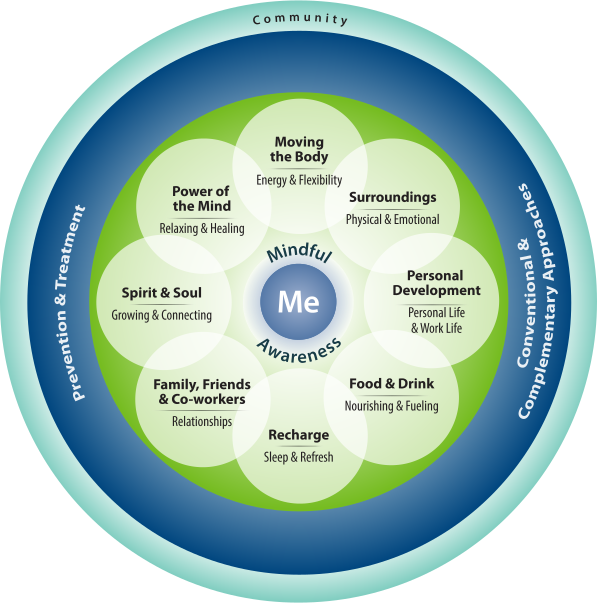
Although the MOVE! program is only available for veterans receiving care at the VA, their website has an abundance of resources freely available to all. Resources include episodes of the Fresh Focus Podcast, which discusses nutrition for veterans; the MOVE!11 Getting Started Questionnaire, which helps summarize one’s current health status; guided recipe videos and cookbooks approved by the VA Nutrition team, and much more. There are also educational resources to learn more about Whole Health’s “Circle of Health” model and testimonies from veterans describing how the MOVE! Program helped guide their weight loss journeys.

Circle of Health

Veteran Testimonials

On the MOVE! program website, people are greeted with hundreds of success stories and testimonials from Veterans that have chosen to share how the program impacted their lives. Dennis Pecorella shared that after years of trying different diet methods, he was matched with a MOVE! program dietician who made nutrition information easier to understand and incorporate into his life. With her help, he was able to create his own sustainable diet plan.

“MOVE! has not only led me to weight loss, but better health overall,” says Pecorella. “I take less medication, try to walk two miles every day, and always eat my vegetables!” 

Peter Johnke’s primary goal in the MOVE! program was to make eating and dieting a more mindful activity. With the help of the MOVE! team, Peter learned to consistently track his food and beverage intake for an entire year and continues to do so. This helped him gain more control over his diet and learn when to best incorporate healthier options. 

“If you are in a place that you need to change…the MOVE! program will help you to help yourself!” says Johnke. “Do your due diligence! Take care of yourself!” 


By Carly Smith, BS, MPH(c) 

This blog is part of our Nutrition newsletter. If you like this content, sign up to receive our monthly newsletter!

So, you want to start meal prepping in 2024? Perhaps this is related to a larger goal to lose weight, eat cleaner, or meet your nutritional goals. To set yourself up for success, you have bought a container for each day of the week and started to plan your week-by-week meals. Maybe you’re planning to make the Sunday morning farmers market and subsequent wash, chop, and prep of your vegetables part of this new-you routine?

Once we begin to break down this resolution, we can see that it is composed of many smaller action steps, which many people may not have the time to do. Busy schedules often do not mix well with New Year’s resolutions that require a lot of time and effort.

Stanford Lifestyle Medicine’s head of the Healthful Nutrition pillar, Marily Oppezzo, PhD, MS shares that you only need to make a few adjustments to your meal prep plans to set you up for success!

“For the New Years’ resolutions, you can have your aspirational goal, but start with the side quests that lead up to that lofty goal in the end,” says Dr. Oppezzo. “Even if your first goal is to eat just one vegetable today, you are learning consistency and making progress. Incorporating one healthy habit a day based on your situation helps you feel successful and see that little accomplishments build up with time.”

3 Meal Prep Tips

“Realistically, not everyone has three hours every Sunday to dedicate to meal prep,” says Dr. Oppezzo, Registered Dietitian with 20+ years of experience in nutritional coaching. “If you have the time, that is great, but I encourage people to always have a back-up plan for when they don’t. Instead of ditching your resolution, rely on pre-cut vegetables, frozen vegetables, and bagged salads and add them wherever you can during the week.”

1. Frozen IS Fresh

Many of us succumb to the belief that frozen fruit and vegetables are not fresh, but oftentimes they are just as fresh, if not more, than those bought in the produce aisle or at the farmer’s market. You may prefer to buy fresh produce, but frozen produce is a great option when trying to make healthy meals in a pinch. Since these fruits and vegetables are frozen and preserved upon harvest, they will still maintain their day-one freshness once cooked.

2. Drawers of Doom

Dr. Oppezzo recommends avoiding the “drawer of doom”, or the drawer in the refrigerator that you toss all your veggies in. It is common to forget about these items once they are discarded into a drawer, especially during a busy morning or when you’re tired after a long day at the office. Instead, Dr. Oppezzo recommends keeping your healthy options on display so that they can help remind you of your nutrition goals. Throw your fruits and veggies into transparent containers and keep them within view on the shelf, rather than the drawer of doom. You can put all your less-than-healthy options in this drawer since you’ll grab for these items anyways.

3. You Know You

Perhaps the most important part of your meal-prep regimen is to be realistic with yourself. You know your schedule, abilities, and preferences the best. Your meal prep practices can adjust to match the time that you have available each week. If you have a free Sunday, you can spend more time preparing your meals for the busy week ahead. If you’re catching up on life on Sunday, perhaps you could opt for making a larger batch of quinoa or brown rice between activities to have on hand throughout the next few days. If you only have time for a quick trip to the grocery store on Sunday, shopping for convenient but still healthy options is just as good of an option if it helps you stick to your nutrition goals.

Dr. Oppezzo recommends grabbing a few microwavable grains and your preferred pre-cut, frozen produce to greatly cut down on cook time. Having these convenient staples can help keep healthy meals a viable option when spending an hour to cook a healthy meal is not realistic. The goal is to make meal prep easy, convenient, and consistent, rather than being overly repetitive or overly strict and giving up by the end of February.

“It is not so much about how psychologically committed you are, but more about what your life is like right now,” says Dr. Oppezzo. “Once you have mapped out your availability, you know how to best adjust your behaviors to keep with your resolutions using the time that you actually have.”


By Cindy Kin, MD, MS, FACS

Our TeamDr. Cindy Kin is a colorectal surgeon, Associate Professor of Surgery at Stanford University, and a member of the Stanford Lifestyle Medicine Healthful Nutrition Pillar. She is also an active researcher focusing on the role of prehabilitation in mitigating surgery complications and exploring the application of “wearables” in both pre- and post-operative recovery. After completing her undergraduate education at Harvard University, she received her medical school degree at Columbia. She subsequently attended Stanford University for general surgery residency training and Cleveland Clinic for her colon and rectal surgery residency training. Following this, she returned to Stanford University to complete a master’s degree in health services research. Dr. Kin is passionate about increasing awareness of the profound influence of lifestyle medicine on surgical outcomes and actively advocates for its seamless integration into patient care.

As a colorectal surgeon, I’ve witnessed firsthand the undeniable connection between a well-balanced diet and overall health. In my clinic, the dietary patterns of my patients are pivotal factors impacting both their recovery from colorectal issues and the prevention of future complications. This commitment to balanced nutrition not only shapes my professional perspective but also influences how I approach nourishment within my own household. As a working mom of two young kids, I am always looking for simple, flexible, and healthy meals that allow the kids to exercise some choice. In this blog, I will share some of my favorites.

Breakfast: Overnight Oats

  1. Overnight oats have endless variations. The basic formula is 1 part oats + 1.5 parts water or milk of choice (I use soy or almond milk). You can also use yogurt for a portion of the liquid.
  2. Toss in a spoonful of chia seeds and a bit of sweetener like honey or agave, if desired. 
  3. Shake it up and leave it covered overnight in the fridge.
  4. The next morning, you can add whatever toppings you happen to have–fruit, seeds, nuts, nut butter, cocoa powder, chocolate chips, coconut shreds. I have found that if the kids get to pick their toppings, they’re more likely to eat them! (Also, whatever they don’t eat for breakfast is included in their snack box for school).

Low-Prep Lunch: Yuba Noodle Salad

  1. To create this quick and easy lunch, cut the yuba (tofu skin) into strips, and voilà, you have high-protein, high-fiber noodles that you don’t have to cook, but are delicious when lightly sautéed. 
  2. Make a sauce using whatever is in the fridge. I usually use a combination of tahini, miso, peanut butter, and rice vinegar. 
  3. Toss everything together with some veggies, such as cucumbers and carrots.

More-Prep Lunch: Chickpea Salad Sandwich

The garden veggie chickpea salad sandwich recipe from Peas and Crayons is a game-changer! For a slightly healthier twist, I swapped out the mayo for tahini dressing and it was delicious. 

Dinner: Rainbow Wraps (or as my kids call it, “Rainbow Dinner”)

  1. Mix a couple spoons of black rice (“forbidden rice”) into brown rice, and it comes out a lovely purple hue. 
  2. Cut up some red peppers, orange carrots, and green zucchini.
  3. Make crispy tofu yellow by tearing up chunks of firm tofu and tossing with turmeric, arrowroot starch, nutritional yeast, and garlic powder. Air fry the tofu for 10 minutes at 390oF.
  4. Blue is the hardest color to make, but for those rainbow purists out there, steep some butterfly pea flower tea and pour a bit of it over firm tofu strips while sautéeing them.
  5. Place the rainbow of prepared ingredients onto nori seaweed sheets and let everyone make their own wrap.
  6. Serve with dipping sauce such as miso or ponzu sauce, or whatever you have around!

Dessert: Brownies (high fiber and no added sugar–no way!)

I love this simple brownie mousse cake recipe from Feasting on Fruit that uses a few simple ingredients, such as dates, almond butter, and cacao powder– I make just the brownie cake part, without the mousse layer–it’s good on its own and super easy! 

For more information about the influence of diet on colorectal health, read our blog post titled The Impact of the Western Diet on Diverticulitis.

By Maya Shetty, BS

This blog is part of our Gratitude & Reflection newsletter. If you like this content, sign up here to receive our monthly newsletter!

As the holiday season approaches, many of us eagerly anticipate the joyous moments of togetherness, gift-giving, and, of course, indulging in mouthwatering dishes that have become synonymous with holiday celebrations. Whether it’s grandma’s famous pecan pie or Aunt Sally’s stuffing, these cherished holiday recipes bring with them a comforting sense of nostalgia that warms our hearts. However, there’s no denying that the generous spreads served during the holidays can take a toll on our health.

The good news is that you don’t have to sacrifice taste and tradition to make your holiday feasts healthier. In fact, we at Stanford Lifestyle Medicine believe it’s possible to transform your beloved recipes into delicious versions that nourish your body.

We also recognize the significance of celebrating the season with the foods we love. Our mission is to bridge the gap between these two priorities, demonstrating that health-conscious recipes can not only reduce sugar, cut down on saturated fats, and enhance nutritional value but also deliver flavors that rival the indulgent classics.

In this blog, we will provide you with expert insights, trusted recipes, and innovative ingredient swaps that will empower you to make healthy choices while still savoring the essence of the season.

Holiday Recipe Recommendations from a Physician Chef

c

xxx
Dr. Carlie Arbaugh is a Stanford surgical resident, chef, and member of our Healthful Nutrition Pillar. After graduating from Cornell University with a BS in Human Biology, Health and Society she attended medical school at Stanford School of Medicine and gained professional certifications in Plant-Based Nutrition and Culinary Arts. Dr. Arbaugh firmly believes that food plays a fundamental role in our health, community, and culture. This passion drives her commitment to exploring the harmonious blend of deliciousness and nutritiousness in our food choices. Delve deeper into Dr. Arbaugh’s expertise as she shares her recipe recommendations and ingredient swaps for the upcoming holiday season.

c

Stuffed Mushrooms

“For the past two holiday seasons, I’ve been whipping up a delightful dish that everyone has loved – stuffed mushrooms,” says Dr. Arbaugh. “Whether served as an appetizer or a side, it’s a naturally vegetarian gem, with the flexibility to go fully vegan. What’s more, it’s a breeze to prepare, requiring just a handful of simple ingredients.”

Dr. Arbaugh follows the New York Times Cooking recipe, making a healthy tweak by swapping out the butter for vegan butter or olive oil.

“In general, mushrooms stand as a healthful, naturally plant-based meat alternative, thanks to their ability to deliver that irresistible umami flavor!” she emphasizes.

Quinoa Stuffing

Dr. Arbaugh also recommends swapping traditional stuffing for quinoa stuffing. 

“It’s a nice whole grain alternative to stuffing made with bread (especially white bread) and you can boost the nutritional value and flavor by adding seasonal veggies, nuts, and dried fruits,” she states.

There are numerous recipes out there, including the nutrient-rich and fiber-packed creation found on Allrecipes.

Roasted Vegetables

“A simple way to add more plants to your holiday spread is by roasting some seasonal vegetables with a sprinkle of spices and herbs,” says Dr. Arbaugh.

A go-to favorite for Dr. Arbaugh is roasted butternut squash, like this example by Well Plated. Tossed with maple syrup, cinnamon, and rosemary, this recipe is infused with holiday flavor.

Seasonal Fruit Crisp

Seasonal fruit crisps and crumbles are another holiday favorite of Dr. Arbaugh. “Crisps and crumbles are a wonderful holiday dessert as they are primarily fresh fruit and use less flour, butter, eggs, and sugar than you would find in a cake or cookie,” she states.

When possible, Dr. Arbaugh recommends choosing fruits and vegetables that are in season. “Many people don’t actually know what is truly in season because so many of our grocery stores provide a lot of the same produce year-round and transport it in from other geographic locations,” she states. “Seasonal produce is often harvested at its peak ripeness, ensuring maximum nutrient content and flavor.”

Seasonal produce can vary across different regions of the US due to the range in climates. There are many online resources that can be used to track this information. For Bay Area residents, Dr. Arbaugh recommends the San Francisco Environment Department website.


Plant-Based Recipes From a Stanford Food Researcher

c

Jessica Hope, MSN, NP is a passionate advocate of plant-based diets, an impactful nutrition researcher at Stanford University, and integral member of our Healthful Nutrition Pillar. After studying at Princeton University, she gained her master’s at Vanderbilt University School of Nursing and became a nurse practitioner for the abortion clinic at Planned Parenthood in San Mateo. She went on to conduct nutrition research at the Stanford Prevention Research Center, the Division of Immunology & Rheumatology, and now at the Humane & Sustainable Food Lab where she serves as the research coordinator. Continue reading to discover Hope’s expert tips on crafting a more plant-based holiday spread.

c

c

Hope’s Family Recipe for Mashed Potatoes

Hope’s mashed potato recipe, a cherished family favorite each year, stands out for its ease and health-conscious approach. “This simple recipe is not only beginner-friendly but prioritizes health,” she says.“These are great leftovers, too, so I always make as much as I can fit into my biggest pot.” 

Hope also recommends mashing the potatoes by hand using a real potato masher for the best results. “To enhance the nutritional content and minimize the impact on blood sugar levels, try leaving the potato skins on as they add fiber and contribute to a more interesting texture and flavor,” she says. 

Ingredients

  • Golden/yellow organic potatoes
  • Unsweetened organic soy milk (I prefer Silk brand)
  • Salt
  • Organic Earth Balance butter (either sticks or whipped is fine)
  • Freshly ground pepper, optional
  • Fresh organic parsley, finely chopped, optional, for garnish

Directions

  1. Use a sharp knife to cut the larger potatoes into 6 pieces and the smaller ones into quarters. Put as many as you want to cook (my Aunt Emily’s recommendation was 2 potatoes per person) into a heavy pot. Then add enough water to just barely cover the top layer of potatoes. Bring to a boil. After it starts boiling, put a lid on the pot and turn the heat down to a lively simmer.
  2. Gather your other ingredients, and recruit someone with strong arms (in our family, my son is the designated masher). You’ll have enough time to set the table and/or get started on another dish.
  3. Keep an eye on the potatoes. You want to cook them until they are very tender when poked with a fork, but not so long that they start to fall apart. When they reach that point, drain out the water.
  4. Keep the potatoes in that same hot pot on the stove, but with the heat turned off. Immediately add Earth Balance butter. The amount is up to you; imagine how much butter you’d want on a small potato and then multiply that by the number of potatoes you used. Immediately begin mashing. After a minute, add only enough milk to moisten the potatoes so that they are easier to mash. Add a little salt, and pepper if using. After mashing for a while, it’s fine to add a little more milk if necessary to get the consistency you like.
  5. Once the potatoes are fairly smooth, taste to see if they need more butter, salt, or pepper. After transfering to a pretty serving bowl, top with a tiny bit of chopped parsley if desired. Enjoy!

The only caution Hope has with this vegan recipe is related to one ingredient—Earth Balance vegan butter. “While it is a healthier alternative to cow’s butter because it contains zero cholesterol and only half as much saturated fat, it is still equally high in calories and is not a whole food,” she says. 

Healthy Sweet Potato Swaps

Hope recommends using your go-to sweet potato recipes as a starting point for incorporating healthy ingredient swaps.

“Most sweet potato dishes can smoothly transition to whole-food plant-based versions that still maintain the flavor of your family’s traditional holiday recipe,” she states.

Explore Hope’s suggestions below for ingredient swaps that can seamlessly replace traditional components.

* To make homemade flax eggs, Hope recommends using the recipe from Minimalist Baker.

Pumpkin Pie Cups

Hope enthusiastically endorses the dessert creations by Feasting on Fruit, especially their six-ingredient pumpkin pie cups. The almond flour crust caters to a grain-free lifestyle, and the sweet potato and pumpkin provide fiber and beta-carotene. Additionally, the simplicity of the recipe ensures a hassle-free preparation while maintaining a focus on wholesome ingredients. 

More Resources

For more recipe inspiration, Hope recommends the three-course vegan and gluten-free holiday menu from Oh She Glows.