For most women, discussions about the pelvic floor are typically tinged with embarrassment. When our pelvic floor muscles (which form a hammock-shaped barrier across the base of the pelvis) are compromised, we can experience a variety of taboo-laden symptoms such as incontinence, constipation, and painful sex. Even though pelvic floor disorders affect twenty percent of women in the U.S. (and more than half of women over 80), many suffer in silence because they are too embarrassed to speak about them, even to their healthcare providers.
“It’s time for us to normalize the discussion,” says Brooke Gurland, MD, FACS, colorectal surgeon and member of the Stanford Medicine Pelvic Health Center. “We don’t talk enough about what happens to women in middle age and beyond. But just like menopause, we need to have more discussions about pelvic floor health with middle-aged women so they can potentially prevent incontinence in their advanced years.”
What is the Pelvic Floor?
Pelvic floor muscles act as a sling that holds the organs within the pelvis in place so they can function correctly. A woman’s pelvis includes organs that serve urinary (the urethra and bladder), reproductive (the vagina and uterus), and digestive (the rectum and intestines) functions.

Pelvic floor disorders (PFDs) occur when pelvic floor muscles and connective tissue are too weak, too tight, or don’t have the coordination to facilitate proper functioning of the pelvic organs. The most common PFDs are urinary incontinence, fecal incontinence, and pelvic organ prolapse (when a pelvic organ drops from its original position).
When Pelvic Floor Muscles are Too Weak
During menopause, women’s estrogen levels begin to decline, resulting in the reduction of muscle mass and decreased capacity for muscle to adapt and recover from strenuous exercise. Also, as we age, we often experience sarcopenia, a decline in muscle mass and function. Women between the ages of 40 and 70 typically lose approximately 25 percent of their peak muscle mass. At 75, a dramatic decline often results in the loss of around 60 percent of peak muscle strength and 30 percent of physical function.
“We need to remember that we are not just losing muscle mass in our arms and legs; our pelvic floor muscles also weaken with age,” says Dr. Gurland. “Just as we need to lift weights in midlife to stay strong and mobile as we age, we also need pelvic floor strengthening activities to potentially prevent PFDs in the future.”
Dr. Gurland’s recommendations for strengthening pelvic floor muscles to reduce incontinence:
- Physical Exercise – Regularly practice Kegel exercises or other exercises that strengthen the pelvic floor, such as Pilates. To perform a Kegel exercise, contract the muscles you use to stop the flow of urine, the muscles of the perineum (located between the vulva and anus), and the muscles around the anus. “The great thing about Kegels is that you can do them while working at your desk, and no one knows you’re doing them,” says Dr. Gurland. “If you’re having trouble identifying the pelvic floor muscles, I recommend putting a rolled-up washcloth underneath the perineum while sitting in a chair and then tightening and pulling up from there.”
- Nutrition – Get enough fiber, whole grains, leafy greens and protein to support a well-balanced diet and benefit overall muscle mass.
Along with age-related strength decline of the pelvic floor muscles, childbirth can also cause weakening. Dr. Gurland shares that in France, pelvic floor physiotherapy is part of post-partum care; however, in the US, that care is not standard and pelvic floor care isn’t addressed until after the patient has a problem.
“I want to send the message that we can be proactive about our pelvic floor health and not wait until something goes wrong,” says Dr. Gurland. “PFDs are more common than you think, and you should talk to your provider about what you can do now to reduce their severity as you age and improve the quality of your life into your 80s and 90s.”
When Pelvic Floor Muscles are Too Tight
Although we don’t want our pelvic floor muscles to be weak, we can also experience PFDs when they are too tight. Symptoms of tight pelvic floor muscles include constipation or difficulty emptying the bowels, anal fissure and hemorrhoids, difficulty urinating and painful sex. Chronic stress and trauma can contribute to the pelvic floor muscles being too tight
“People tend to know about strengthening the pelvic floor, but many don’t understand that it’s equally important to relax the pelvic floor muscles to urinate and defecate properly,” says Dr. Gurland. “For example, some people can’t go to the bathroom in public. They feel too anxious, which causes the muscles to tighten up. There’s a mind-body connection. When we are too stressed in the mind, we aren’t able to relax the pelvic floor muscles in the body.”
Dr. Gurland’s recommendations for relaxing pelvic floor muscles and relieving constipation:
- Stress Reduction – Take deep breaths and visualize breathing into your pelvic floor to relax these muscles before going to the bathroom. Try a full body scan.
- Elevate Feet – When sitting on the toilet, putting the feet onto blocks or a toilet stool can relax the rectal muscles so you can defecate without straining. “You want to avoid straining to prevent hemorrhoids and prolapse,” says Dr. Gurland.
- Toileting Time – Carve out time in the morning to relax the body and defecate before starting your workday. “I recommend waking up an hour earlier, having a glass of water, and relaxing so your body can go to the bathroom. If you’re waking up last minute and running out the door, your body doesn’t always comply,” says Dr. Gurland.
- Nutrition – Drink adequate water daily and consume enough fiber in your diet.
What is Pelvic Floor Physical Therapy?
Regarding our pelvic floor, we can take a cue from Goldilocks. We don’t want them too weak or too tight, so how do we get them “just right”?
“When we talk about pelvic floor health, we consider not only the tightness and weakness but also the coordination of the pelvic floor muscles,” says Dr. Gurland. “For proper rectal functioning, the muscles must be coordinated enough to ‘hold it’ until you’re in the right place, then relax when the time is right.”
Unfortunately, many common things can lead to a loss of coordination of the pelvic floor muscles, such as nerve damage caused by chronic straining, childbirth injuries, back surgery, and radiation.
To help patients have more pliable and coordinated pelvic floor muscles, or that “just right” level of competence in their bladder, bowel, or sexual functioning, Dr. Gurland refers them to a Pelvic Floor Physical Therapist who offers exercises to strengthen, relax, and retrain their pelvic floor muscles to contract properly. This therapy is also recommended for pregnant and postpartum women.
“It is important for the provider and patient to have a good relationship because the work is very personal,” says Julia Barten, DPT, Pelvic Rehabilitation Practitioner at the Stanford Pelvic Health Center. “It may take a few sessions to fully figure out proper control or coordination for pelvic floor muscles and sometimes multiple techniques are required to find the best treatment plan. It helps when there is good communication and the patient has an open mind to treatment recommendations, however, if a patient is not comfortable with a recommendation, it is always best to speak up so that the therapist can modify the program to something that is effective for the individual.”
Pelvic Floor Exercises
1) To strengthen pelvic floor muscles (to prevent incontinence, organ prolapse):
Before starting the exercise, Barten emphasizes the importance of isolating the pelvic floor from other muscles (such as abdominal or gluteal) when building strength. She recommends practicing long holds as well as quick squeezes to address endurance, coordination, and flexibility. Even with quick squeezes, she stresses the importance of full relaxation between each squeeze.
“Pelvic floor strengthening is more than just squeezes. To strengthen the muscles effectively, they must contract and relax within a full range of motion,” says Barten. “Complete relaxation between each contraction is necessary to effectively build strength.”
Barten recommends these videos for pelvic floor strengthening:
- Pelvic floor isolation: https://youtu.be/LZpovAEIjBU
- Pelvic floor endurance holds: https://youtu.be/mu57PQ5-S64
- Pelvic floor quick squeezes: https://youtu.be/tFi_iAVknnc
2) To relax pelvic floor muscles (to relieve constipation, painful sex):
“Pelvic floor relaxation can be very difficult to sense,” says Barten. “There are ways to gently stretch your pelvic floor with breath and yoga stretches. It is also possible to gently drop the pelvic floor or bear down to actively lengthen the muscles.”
Barten recommends these videos for pelvic floor lengthening and relaxing:
- Diaphragmatic breathing for pelvic relaxation: https://youtu.be/FrJowV5-k1I
- Pelvic floor drop: https://youtu.be/9tA1Hak7y9M
- Pelvic Relaxation Stretches: https://youtu.be/ULepx3e9frU
3) To increase coordination of pelvic floor muscles (to improve incontinence):
Barten says that coordination of pelvic floor muscles is best assessed with an exam and individualized recommendations, but home biofeedback devices (i.e. Kegel exercisers or trainers) can also be helpful. These devices can be purchased over the counter and inserted vaginally to improve a woman’s awareness and control over her pelvic floor muscles.
Lastly, Barten is passionate about breaking the stigma of talking about pelvic floor issues and enjoys creating musical videos to spread awareness about the pelvic floor and bring some humor to the topic. Here she sings about “The Kegel Routine” while parodying a song from the musical Hamilton.
By Yasaman Nourkhalaj, BS and Sharon Brock, MS, MEd
If you’re in your 50s, you might have noticed that simple tasks like getting up from the floor or cleaning the bathroom aren’t as easy as they used to be. For decades, women have been bombarded with messages about getting thinner. But around the age of 50, the focus should shift from losing weight to gaining strength. Building muscle isn’t just about looking strong – it’s about living strong and extending your longevity.
The Link Between Age and Muscle Mass
Starting around age 30, muscle mass begins to decline at a rate of about .5 percent per year. When we reach age 50, that rate increases to 1 to 2 percent per year, then increases again to roughly 3 percent per year starting at age 60. This attrition of muscle mass is especially critical for women because estrogen plays a key role in muscle and bone health. The reduction of estrogen levels during perimenopause and menopause accelerates the onset of sarcopenia (age-related loss of muscle mass) and osteoporosis making strength training even more essential as women age for long-term health.
The head of Stanford Lifestyle Medicine Healthful Nutrition pillar, exercise and nutrition scientist, and health researcher Marily Oppezzo, PhD, explains why strength training is essential for women over 50.
“An important thing we can do for our longevity is strength train. And that is true for every age—even if you start training at age 102,” says Dr. Oppezzo. “During menopause, declining estrogen levels directly impact muscle maintenance and development. This natural process can accelerate muscle loss–but here’s the good news: strength training can certainly help combat these changes.”
5 Strength Training Movements for Women 50+
According to Dr. Oppezzo, an effective strength training program should include exercises that have these fundamental movements:
- Push movements to strengthen the chest (example exercises: wall push-ups, push-ups with knees on the floor, chest presses with weights)
- Pull movements to strengthen the back (example exercises: resistance band rows, rowing machine)
- Squat movements to improve ability to sit and stand (example exercises: chair squats — option to wear a backpack with a bottle of water for increased weight)
- Hinge movements to protect your back during daily activities (example exercises: hip bridges, dead lifts with weights)
- Single-leg movements to equalize strength in both legs (example exercises: step-ups onto a raised platform, single-leg sit-and-stand from a chair)
Sample Strength Training Routine for Women 50+
Here is a sample strength training routine recommended by Dr. Oppezzo for women over 50 to be performed two to three times per week:
- Chest Press: While lying on a bench hold your dumbbells in both hands with bent elbows, and push weights straight up toward the ceiling. 3 sets, 8 repetitions.
- Resistance Band Row: Wrap a light-medium resistance band around a pole or your feet. Sit on the ground and pull back the bands in a rowing motion, keeping elbows close to the body and hands at the waist, squeezing the back muscles together. 3 sets, 8 repetitions.
- Chair Squats: Bring hands together at your chest and slowly sit into a chair with a neutral spine (don’t arch or round) and strong core. Touch your butt to the seat bottom, but do not sit all the way into the chair. Stand back up again. 3 sets, 8 repetitions.
- Deadlift: Stand with feet hip width apart. Hinging at the hips with a slight bend in the knee, and keep your back straight, shoulders neutral (not rounded or excessively arched). Engage your core. Slide the weights down the line of your thighs and legs only as far as you can go without rounding your back. Slowly exhale as you stand up. The power to stand up comes from driving your hips forward. Keep your weights close to your body the whole time. You can practice this by rolling a foam roller down your legs with your hands to practice good form. 3 sets, 8 repetitions.
- Step-ups: Set up a 1-foot-high platform (using a box or stairs) and step onto the platform with one leg and lower the body slowly. 3 sets, 8 repetitions.
*Dr. Oppezzo recommends that you perform the exercises without weights first to master proper form.
How to Get the Most Out of Your Strength Training Routine
How many reps you should do:
“Reps in reserve” is a way to estimate how close you are to your max effort. Once you learn the moves, you will want to train so your sets leave you with “2 reps in reserve”, meaning you stopped feeling like you could do 2 more repetitions in good form, but that’s it.
How to choose your weights:
- Start Light. Begin with a weight that feels easy. Use the first set to warm up and estimate what you will use for the exercise.
- Gradually increase the weight until you can do 8 and 10 repetitions with good form but high effort.
- Check in with yourself: If after you’re done, you could have done more than 2 repetitions in good form, increase the weight. But, if after you’re done, you could NOT have done 2 more repetitions, it may be too heavy. The sweet spot is: if after you’re done, you could have done just 2 more repetitions with good form, you’ve got the right weight for you right now.
“To get stronger, you need to slightly increase the difficulty of the exercises each time you do your workout,” says Dr. Oppezzo. “You’re not going to get stronger if you do the same thing every time.”
How to gradually increase the difficulty of the exercises over time:
- Increase the weight (e.g., When the 5-pound weights become too easy, increase the weight to 8 pounds, then 10 pounds, and so on).
- Add an extra set of the exercise (e.g., Rather than only 3 sets, add a fourth).
- Increase the number of repetitions (e.g., When 8 reps become too easy, increase to 10 reps, and then progress to 12. When you’re able to do 12 reps without too much effort, it’s time to increase the weight).
- Slow down the tempo for each rep, especially on the “eccentric” or lengthening part of the movement.
“Be sure to wait 24 hours between strength training sessions to prevent injury and allow for muscle repair and recovery,” says Dr. Oppezzo. “Don’t do heavy strength training of the same muscle group on back-to-back days.”
The Importance of Protein to Build Strength
Proper nutrition is crucial for muscle development, particularly adequate protein intake. When we are strength training, our bodies need the raw material that protein provides to build muscle mass. Research shows that adults should aim to consume 1.2 to 1.6 grams of protein per kilogram of body weight, which translates to roughly 80 to 100 grams per day. Protein can come from both animal and plant-based sources, and Dr. Oppezzo recommends consuming protein throughout the day rather than having just one high-protein meal.
“Building muscle effectively requires both consistent strength training and adequate protein consumption,” says Dr. Oppezzo. “In order hit that 80 to 100 grams per day mark, we should try to consume 20 to 30 grams of protein at every meal.”
Strength Training for Longevity
Strength training isn’t just about lifting weights, it’s about lifting your quality of life. Whether you want to keep up with grandchildren, maintain independence, or simply feel stronger in your daily activities, it’s never too late to start. “If starting a weight training regime feels overwhelming, start with ‘strength snacks,’ which are short bursts of exercise throughout the day. Start small and focus on consistency over intensity, and track improvements in daily activities rather than just numbers on weights,” says Dr. Oppezzo.
“Start where you are, use what you have, and celebrate every small victory along the way. Your future self will thank you for the strength you build today,” says Dr. Oppezzo.
By Nicole Molumphy
Many of you are familiar with the 10,000-steps-a-day walking trend, but you may not know where it originated. The idea of walking 10,000 steps per day did not come from scientific research; rather, it came from a marketing campaign for a pedometer ahead of the 1964 Tokyo Olympics. Since the Japanese symbol for 10,000 looks somewhat similar to a person walking (see image below), the pedometer was named Manpo-kei or 10,000 steps meter, and the 10,000-step-a-day walking trend was born.

We know walking is good for us, but what do researchers have to say about this 10,000 number? Is this the right number of steps? What are the health benefits of reaching this number?
A 2023 research study showed 8,000 to be the sufficient number of steps to yield significant health benefits. In this study, participants who took 8,000 steps or more on one or two days during the week showed substantially lower cardiovascular and all-cause mortality risk.
Stanford Lifestyle Medicine Movement and Exercise pillar member Corey Rovzar, PhD, DPT, puts the 8 and 10 thousand numbers into perspective. “What is more important than hitting an exact number is that you’re moving more throughout the day,” says Dr. Rovzar. “If looking at a pedometer and trying to hit 8,000 steps will help you move more, then it’s a great tool, but rather than fixating on an exact step count, I recommend you think about your day and envision opportunities to move.”
Rather than walking all 8,000 steps in one go, which would take about 80 minutes at three miles per hour, Dr. Rovzar recommends walking the 8,000 steps throughout the day, such as in the morning and evening and after each meal. For example, you could split the 8,000 steps (80 minutes of walking) into four, 20-minute walks. If you stick to the 10,000-step goal (100 minutes of walking), that breaks down to five, 20-minute walks. This recommendation is good news for those who sit at a desk since taking several short walks during the workday is a perfect way to take a break. “It is important to note that all steps count! Even a few steps to the bathroom or to another room contributes to this overall count,” says Dr. Rovzar.
Ideas on How to Meet Your 10,000 Steps Goal:
- Take the stairs instead of the elevator.
- Walk more during errands by parking your car farther away from your destination or getting off the bus or train a stop early.
- Walk more during your work day by taking a “walking meeting” or walking while on the phone.
- Walking after each meal can help with digestion, blood sugar management, and cardiovascular health.
- Walk every morning, evening, and during your lunch break. Even 10 to 15 minutes of walking can add up to 1,000 steps.
- Catch up with a friend by going on a walk instead of meeting for coffee.
- Use a step tracker to help you stay motivated and track your progress.
How to Get More Out of Your 10,000 Steps
If you’re already walking 8 to 10 thousand steps daily, you may be ready to take your walking to the next level. If so, Dr. Rovzar recommends adding modifiers to your walking routine to help you meet additional fitness goals, such as improving balance or building muscle.
Here are a few of Dr. Rovzar’s recommendations for intensifying your daily stroll and gaining more health benefits:
1) Cardiovascular (Endurance) Modifier:
Interval walking
Interval walking involves alternating fast and slow walking cycles. Researchers recommend five intervals of fast and slow phases, each lasting roughly three minutes. The effort expended should be 40 percent of your maximum effort for the slow phase and 70 percent for the fast phase.
2) Muscular Strength Modifiers:
Walk up and down hills or stairs multiple times
If you are looking for strength benefits, hills may become your new best friend. Walking hills or stairs not only has excellent aerobic benefits but also serves as a great form of strength training.
Add ankle and wrist weights or wear a weighted backpack
Another strength training modification is adding weight to your walk, either with ankle or wrist weights or by rucking. The term rucking originated during boot camp training and involves using weighted vests or backpacks while hiking or walking.
3) Balance Modifiers:
Take side steps
March (i.e., lift your knees as you walk)
Walk backwards
It is essential to perform balancing exercises as we age. Implementing side steps, marching, or walking backward are great ways to train your body to handle non-forward-facing movements, enhance joint mobility, and improve flexibility. Balance training is also an effective way to strengthen different muscle groups. For example, side steps engage your abductors, which are hip muscles involved in getting out of your car and transitioning out of bed in the morning.
4) Cognition Modifier:
Dual-task training
Cognition may also be enhanced with walking practices, like dual-task training. This practice involves performing a mental task while walking, such as talking to someone while walking, keeping step time to a metronome, or counting backward from 100. Combining the mental task with the physical action of walking forces the walker to increase concentration, which sharpens the mind and improves balance and stability.
Whole Body Health Benefits
In addition to the physical benefits walking offers, Dr. Rovzar says that walking improves mental clarity and well-being. Taking a step away from work and going on an outdoor walk can help you overcome mental roadblocks. Studies have found mental health benefits from walking outside in nature, including decreased cortisol levels, diastolic and systolic blood pressure, and pulse rate. While using a treadmill may be a great way to multitask and get in extra movement, there are considerable mental health benefits from taking a break outside, getting fresh air, and stopping to smell roses and pet dogs on your walk.
“We often strive to maximize our time working, but in reality, you might not be saving yourself time by omitting the breaks,” says Dr. Rovzar. “I recommend getting out of your work environment and going for an outdoor walk every couple of hours during the workday, even if it’s just five-minutes of movement to get your blood flowing.”
Practice of the Month:
Walk 5 Days per Week for 30 minutes with a Modifier
The US guideline for moderate physical activity is 150 minutes per week (which breaks down to five 30-minute brisk walks with a modifier per week). To ensure you’re improving muscle strength, balance, endurance, and cognition every week, Dr. Rovzar recommends assigning different modifiers to different days.
Sample Walking Routine (30 minutes per walk):
Monday: Walking up and down hills on Mondays (endurance)
Tuesday: Rucking (strength)
Wednesday: Incorporating intervals of side-stepping, marching, and walking backward (balance)
Thursday: Interval walking (endurance)
Friday: Adding ankle and wrist weights (strength) while counting backward from 100 with each step (cognition)
If a 30-minute walk seems too daunting, Dr. Rovzar suggests starting with 10 minutes of walking and incrementally working your way up to 30 minutes daily. “Much of this comes down to goal setting,” she says. “If you set too lofty of a goal, it becomes unachievable, but if you break your goal down to an amount that seems feasible and perhaps try it just for a week, it becomes more likely you will remain consistent in attaining it.”
By Mary Grace Descourouez, MS, NBC-HWC
We all know about the Olympic Decathlon (ten track and field events held across two consecutive days), but have you heard about the Centenarian Decathlon?
Stanford alumni Peter Attia, MD, coined the term Centenarian Decathlon as the ten physical tasks you want to be able to do at age 100 (or in the final decade of life).
Everyone’s list is likely different, but the following is Dr. Attia’s personal list from his book Outlive. The list includes both common exercises as well as functional movements and lifestyle actions that most of us take for granted in middle age.
Dr. Peter Attia’s Centenarian Decathlon:
- Hike 1.5 miles on a hilly trail
- Get up off the floor using a maximum of one arm for support
- Pick up a 30-pound child from the floor
- Carry two five-pound bags of groceries for five block.
- Lift a 20-pound suitcase into the overhead compartment of a plane
- Balance on one leg for 30 seconds with eyes open. (Bonus: eyes closed for 15 seconds)
- Have sex
- Climb four flights of stairs in three minutes
- Open a jar
- Do thirty consecutive jump-rope skips
“There is a difference between lifespan and healthspan. Lifespan is the number of years you’re on this planet, but healthspan is the number of years that you’re healthy—being able to live independently and partake in activities you enjoy,” says Jonathan Bonnet, MD, MPH, and Clinical Associate (Affiliated) Professor at Stanford University School of Medicine. The Centenarian Decathlon requires a thoughtful analysis of what ‘health’ means for you as you age. Creating a personalized Centenarian Decathlon can serve as a powerful motivator and will help inform what types of exercises need to be done now in order to achieve those goals in the future.”
Creating your own Centenarian Decathlon
Think about what you value in life. Is it being able to play with kids or grandkids? Traveling? Hiking? Sailing? Creating delicious meals in the kitchen? Identifying what is most important in your life will inform which activities will be on your personal Centenarian Decathlon.
“When creating your list of 10 functional activities, pair them with exercises that cultivate the type of abilities you would need to enjoy the activities you love,” says Dr. Bonnet. “For example, if you want to be able to play with a grandchild, being able to ‘lift 30 pounds from a squat position’ would be a valuable objective, as it would mimic picking up a small child from the floor.”
Here are examples of activities and values for a Centenarian Decathlon.
If you:
- Enjoy bike rides with your spouse – Ride a bike for 1 hour.
- Live in the snow and value being independent – Shovel snow off a driveway.
- Enjoy playing golf with friends – Play 18 holes of golf.
- Enjoy walking your dog – Walk 10,000 steps in a day.
- Enjoy international travel – Lift a 20-pound suitcase into the overhead compartment. Climb 30 stairs without stopping.
- Enjoy cooking – Lift a cast iron skillet with one hand. Carry two five-pound bags of groceries up four flights of stairs. Open a jar.
- Enjoy being in nature – Hike up a steep hill for 10 minutes, operate a kayak, or whatever your favorite outdoor activity is.
- Enjoy swimming in a pool – Tread water for 10 minutes. Get out of a pool without a ladder.
- Enjoy dancing with your family in the kitchen – Perform 30 jumping jacks in one set for aerobic endurance.
- Enjoy playing with children – Deadlift 30 pounds (to lift a young child from their crib or the floor). Get up off the floor using only one arm for support.
Lastly, it’s important to include activities that meet the following four fitness goals, which are important for healthy aging.
Fitness Goals Important for Healthy Aging:
1) Build muscle strength by doing activities such as:
- Perform 10 push-ups in one set.
- Perform 20 squats in one set.
- Perform 10 bicep curls with 20-pound weights.
2) Cultivate stability, flexibility, mobility, and balance by doing activities such as:
- Complete 30 minutes of Yoga or Pilates.
- Walk up and down stairs with feet pointed perfectly forward (this is a sign of good ankle mobility).
- Do a plank in perfect form for one minute (any core workout).
3) Increase maximal aerobic capacity (i.e., VO2 max or maximum oxygen consumption)
You can increase VO2 max with interval workouts where you give roughly 90 percent effort for a short amount of time (ideally 3-5 minutes), followed by a recovery period. Shorter intervals can be used initially to increase VO2 max, however, the duration of sessions should be increased for optimal results.
Examples include:
- Perform 30 jumping jacks in 40 seconds, followed by 30-40 second recovery period (work up to repeating 6 times).
- Perform 3 minutes of stair climbing, followed by a 3-minute recovery (work up to repeating five times).
- Perform 4 minutes of interval running followed by a 4-minute recovery (work up to repeating)
4) Improve aerobic efficiency
You can improve aerobic efficiency with longer duration, steady state physical activity. These workouts are done at a much lower intensity, where you can hold a conversation, but not sing a song. The absolute intensity will vary depending on fitness, but could include activities, such as:
- Walking 3-4 miles in 1 hour
- Jogging for 30 minutes while maintaining a conversation
- Riding a bike for 45 minutes at a 12-14 mph pace
“Each of these areas is important, though having a high VO2 max will generally allow one to do most things on a Decathlon list. If you can jog, that means you can hike. If you can hike, that means you can walk for three miles. If you can walk for three miles, you can likely go up a flight of stairs, and so on,” says Dr. Bonnet. “It’s not that VO2 max is magical by itself, it’s that it requires a certain amount of strength, stability, and aerobic efficiency to be able to attain a high VO2 max level.”
Now, take a moment to make YOUR list of 10 activities you’d like to do when you’re 100 (or in your final decade). Be sure to have a mix of strength, stability, VO2 max, and aerobic efficiency activities. Add a column to the right to note why this activity is valuable to you.
For example, at age 100, I want to:
- Deadlift at least 50 pounds | in order to pick a suitcase up off the ground
- Do a body weight step up | in order to be able to get up off the floor unassisted
- Climb 4 flights of stairs in 3 minutes | in order to walk independently (e.g., hike up a hill, walk up a broken escalator at an airport, etc.) without requiring an elevator or ramp
- Walk 2 miles in 1 hour | in order to walk my dog every evening
Continue until you’ve reached 10 activities.
Centenarian Decathlon is a Framework for Longevity
Now that you have your list, you need to make a plan regarding how you’re going to achieve the 10 goals listed on your personal Centenarian Decathlon. Since we naturally lose strength and aerobic capacity as we age, whatever it is we want to be able to do at age 100, we need to be doing much more now.
In his book, Dr. Attia writes: “Over the next thirty or forty years, your muscle strength will decline by about 8 to 17 percent per decade—accelerating as time goes on. So, if you want to pick up that thirty-pound grandkid or great-grandkid when you’re eighty, you’re going to have to be able to lift about fifty to fifty-five pounds now. Without hurting yourself. Can you do that?”
It’s time to ask ourselves, if we want to attain these 10 goals, what daily actions must we do now to get there?
Look at your list of 10 activities and add a column: What do I need to do now to be able to do this activity at age 100? Include the area of fitness and be sure all four areas are addressed at least once in your list of 10.
Note: a general rule of thumb that can be used to estimate approximate strength loss over 50 years is that the load at age 40 should be roughly 150 percent of what the intended goal is at 90 years old.
For example, at age 100, I want to:
- Deadlift 30 pounds | in order to pick up a suitcase off the ground | so, now I need to deadlift 75 pounds (muscle strength)
- Do a body weight step up | in order to be able to get up off the floor unassisted | so, now I need to do a step up holding dumbbells equal to 50 percent of my body weight (stability, balance, flexibility, mobility, muscle strength)
- Climb 4 flights of stairs in 3 minutes | in order to walk independently (e.g., hike up a hill, walk up a broken escalator at an airport, etc.) without requiring an elevator or ramp | so, now I need to do climb 10 flights of stairs in 3 minutes (VO2 max)
- Walk 2 miles in 1 hour | in order to walk my dog every evening | so, now I need to walk 5 miles in 1.5 hours two times per week (aerobic efficiency)
Continue until you’ve reached 10 activities.
Revisit this list every five years to update the column: Am I on track? What do I need to do now to be able to do this activity at age 100?
There you have it! Now you have a personalized framework for longevity and a specific pathway to win your very own Centenarian Decathlon. Be sure to take out this list on your 100th birthday and try out each activity!
“Having a personalized Centenarian Decathlon is valuable because it translates activities that matter most to you into tangible metrics that can be tracked over time,” says Dr. Bonnet. “While we may not be competing for a gold medal at the Olympics, the Centenarian Decathlon promises something better. A lifetime of being able to do the things we love with the people (and pets) that matter most.”
“I’m going to Paris!” says former Stanford University swimmer Andrea (Andi) Murez, 32. “I’m so excited. It’s only a month away, and I have so much to do.”
This summer is not Murez’s first time on the Olympic stage. Paris will mark her third time competing as a sprint freestyle swimmer in the Olympic games. One year after graduating from Stanford in 2013, she moved to Israel to swim professionally for the national team. Murez has trained with Team Isreal for the past ten years, competed in the Rio 2016 and Tokyo 2020 Olympics, and now has her sights on Paris.
Swimming is not the only way Murez spends her time. She was pre-med at Stanford and then attended medical school at Tel Aviv University. She graduated from medical school in the spring of 2023 and will attend a residency program in psychiatry at the Mayo Clinic in Minnesota later this summer—after she competes in the Olympics. She plans to specialize in sports psychiatry and work with mental health among Olympic athletes.
How Does She Do It?
Most people would consider competing in the Olympics or graduating from medical school and being accepted into a prestigious residency program enough. However, it takes an exceptional human being with superhuman coping skills to achieve two elite-level accomplishments simultaneously.
Along with taking deep breaths to calm her nerves, Murez shares many lessons she learned in her twenty-plus years of competitive swimming that she applies to achieve success outside the pool.
Time Management
Whether the goal is to perform on race day or an important exam, Murez manages her time by breaking the goal down into smaller tasks and focusing on what she needs to accomplish that day. This strategy calms her nerves since the shorter to-do list is less overwhelming, and her confidence builds when she meets her daily goals. She also writes in her journal every night to solidify her daily accomplishments and reflect on how she can improve. Then, when race or exam day arrives, she reassures herself that she has done everything possible to prepare.
Murez also manages her time by balancing swimming and studying and finds that each endeavor supports the success of the other. “There are definitely times when doing both is stressful, but I’ve learned from a young age how to balance school and swimming,” she says. “Even though the workload for each got more intense year after year, I’ve realized they help each other. For example, after a long day of medical studies, I had to swim to stay in shape for the next Olympics—and exercise is a good way to relieve stress. And vice versa. When I overthink about swimming, I can get stressed out, so school allows me to focus on something else and use my brain in a different way.”
Perseverance
Murez found that many of her medical school classmates got frustrated and impatient during intense study periods. They found it challenging to persevere through the academic rigor of medical school when they could not yet see the reward for their efforts.
However, due to her experiences as a competitive swimmer, Murez understood that hours and hours in the pool pays off on race day. This understanding of delayed gratification helped her persevere through the all-nighters of medical school.
“The Olympics only happens every four years, so the hours of training can’t just be about race day—that’s too much pressure. You’ve got to have perspective; you’ve got to enjoy the process day in and day out,” says Murez. “Dealing with pressure and staying motivated and not quitting during intense periods are skills I learned from swimming that I didn’t even know I had until I realized that others didn’t have those skills.”
Stay in Your Lane
It’s natural to be intimidated by intense competition. Over the years, Murez has learned to cultivate habits of positive self-talk, not comparing herself with other swimmers, and maintaining focus on her own progress.
“If you have bad thoughts just before the race, it can totally change the outcome. If I think, ‘That swimmer next to me looks so strong,’ I’ve learned to tell myself, ‘But, I’m strong, too,'” says Murez. “It’s important to remember that whether you win or lose, it’s not all in your control. There are the other competitors and how well they will perform, but they are also dealing with their nerves and doubts. Figuring out how to focus on your own race is really important.”
On the rare occasion that Murez misses her mark, rather than indulging in comparison and self-deprecation, she motivates herself with curiosity about the next steps to improvement.
“Instead of driving my ambition with force, I let my curiosity drive me,” says Murez. “I continually ask myself, ‘There are always ways to improve—how can I do better next time? How far can I go with this sport?’ After ten years of swimming professionally, I’m grateful that I’m still in this sport, I’m still succeeding, and I still love it.”
Mental Health Among Athletes
In the last four years, athlete mental health has become more accepted and less stigmatized. At the Tokyo Olympics, Michael Phelps and Simone Biles raised awareness about the importance of mental health among elite athletes. Murez hopes Paris Olympians will feel empowered to discuss their mental health struggles and how they overcame them.
Murez is also working with Stanford Lifestyle Psychiatry physicians to create a mental health survey that Olympic athletes must pass in order to compete. Murez is translating the survey into Hebrew to serve athletes in Israel.
“Getting an annual mental health check is just as important for Olympic athletes as the physical exam,” says Murez. “It’s important to have these conversations and raise awareness that elite athletes are human beings that have mental health struggles, too.”
In the future, Murez is on track to becoming a sports psychiatrist to help elite athletes manage stress and improve their mental health. She plans to encourage athletes to have balance in their lives and engage in activities other than their sport. “If I didn’t make Paris, I was also excited about starting residency. I think having a plan B if plan A doesn’t work out is good for athlete mental health,” she says.
Murez will also advise athletes to create a solid support system, such as mentors, coaches, family, and friends.
“When I’m stressed, along with taking deep breaths, finding perspective, and staying grateful, I also lean on my support system,” she says. “When I talk to my parents, they remind me that I’m not just a swimmer—I’m a complete person, and I’m not defined by the outcome of a race. They remind me that no matter what happens, I’m still Andi on the inside. I’m still that little girl who wants to jump in the pool and race.”
By Sean Nguyen and Corey Rovzar, PhD, DPT
Joint pain is common and can be a limiting factor in work, recreation, and overall quality of life. Osteoarthritis, caused by degeneration of the cartilage between joints, affects 32.5 million adults in the US, and nearly 600 million adults worldwide. It most often occurs in the joints we move and bear weight through the most like the hands, hips, and knees. Certain factors such as injury or overuse, age, weight, sedentary behavior, smoking, or gender (with women often experiencing higher rates of osteoarthritis) may increase the risk of developing osteoarthritis. Currently, there is no cure or reversal for the degenerative changes in osteoarthritis, making it the leading cause of permanent disability.
Without a cure for degenerative joint diseases, medical professionals often treat osteoarthritis with pain medications. While pain medication use may be helpful in the short-term, long-term use can lead to stomach, kidney, liver, or heart damage. While medications certainly have their place in the treatment of osteoarthritis, our goal is to investigate what more can be done by exploring lifestyle medicine approaches to improve joint health.
Adopting these lifestyle medicine strategies may help you manage your joint pain and enhance your overall daily quality of life, paving the way for smoother, more comfortable days ahead.
Nutrition Choices to Reduce Arthritis Pain
One of the most basic but often overlooked lifestyle changes we can make comes in what we choose to eat. Our dietary choices not only fuel our bodies but also fuel the health and function of our joints. Understanding how specific foods and nutrients impact joint health can empower us to make informed decisions that support our joint health.
The Western diet, a common dietary pattern in the US, is high in calorie-dense processed foods, unhealthy fats, and low in nutrients and fiber. High sugar intake has also been linked to arthritis pain. High-calorie diets that lead to weight gain can lead to increased joint degeneration, but simultaneously the Western diet can increase the inflammatory process of joints, which compounds their degeneration.
Specifically, the Western diet has been linked to a higher risk of both radiographic and symptomatic worsening of knee osteoarthritis when compared to a Mediterranean-like diet. In contrast, the Mediterranean diet, rich in legumes, fruits and vegetables, whole grains, and healthy fats is known for its joint health benefits. Switching diets may reduce pain and inflammation, boost mobility, and slow cartilage degeneration.
Supplements to Reduce Arthritis Pain
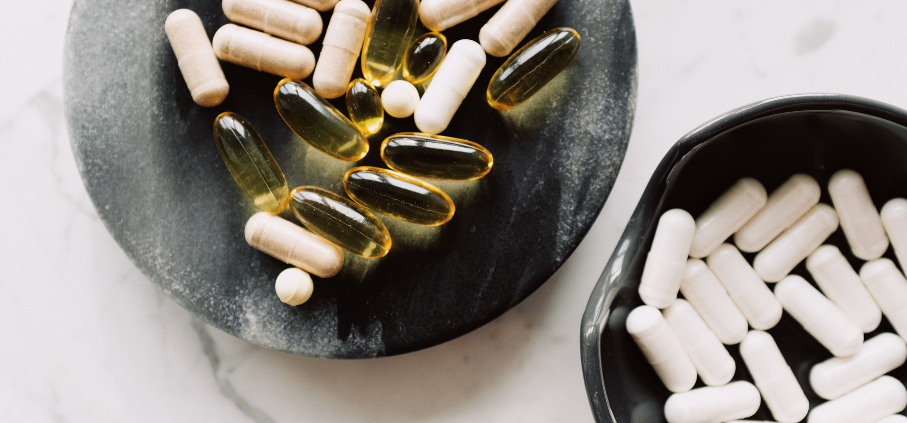
Omega-3
Beyond dietary choices, there is growing interest in the potential of nutritional supplements to further support joint health and mitigate osteoarthritis.
The future of osteoarthritis treatment may involve targeting inflammatory mediators, and one supplement shown to decrease inflammatory mediators is omega-3 fatty acids. Another study found that a specialized resolving mediator derived from omega-3 fatty acids, resolvin D1 (RvD1), yields promising therapeutic potential in joint inflammation. RvD1 is thought to protect chondrocytes from inflammatory damage and promote their proliferative and repair capabilities.
In studies involving human subjects, RvD1 has been shown to have a similar protective antioxidant effect on chondrocytes and lead to resolution of both acute and chronic joint inflammatory processes. By decreasing overall inflammation within the joint, RvD1 may preserve joint homeostasis and support long-term joint health.
For those with osteoarthritis, it is recommended to take 350-2400 mg of omega-3 supplementation per day for optimal relief of joint pain and improvement of joint function.
Omega-3 supplementation to increase RvD1 levels, combined with a low-inflammatory diet such as the Mediterranean diet, offer potential nutritional elements that could help lower systemic inflammation and promote optimal joint health. This diet and supplementation combination has potential impacts for those with osteoarthritis as well as joint pain related to rheumatoid arthritis.
Rheumatoid arthritis occurs when the immune system improperly creates inflammation and attacks the lining of joints, leading to pain and stiffness. A systematic review found that omega-3 fatty acids reduce rheumatoid arthritis activity by decreasing inflammation and oxidative stress, partly through gut microbiota benefits. Researchers advise combining the Mediterranean diet with at least twice a week consumption of oily fish (such as salmon) and/or two grams per day of omega-3 supplementation. To obtain recommendations specific to your needs, schedule a visit with a dietitian to optimize your dietary and supplementation needs.
Turmeric
Turmeric is another supplement commonly used to reduce joint pain. Turmeric is a medicinal herb that contains curcumin, which has been shown to reduce inflammation and pain at levels equivalent to pharmaceutical pain-relievers.
Numerous studies show that curcumin (which is found in turmeric) can be a great alternative for those intolerant to anti-inflammatory drugs. For example, this study showed that participants who took 1,500 mg per day of Curcuma domestica for four weeks experienced similar pain relief as those who took 1,200 mg of Ibuprofen, which sometimes has the side effect of abdominal discomfort. Another study showed 1,500 mg of curcumin per day offered equivalent pain relief to 100 mg of diclofenac, but with no side effects.
For those with osteoarthritis, it is recommended to take 1.5 grams (1,500 mg) per day of turmeric to reduce inflammation and offer joint pain relief. Also, taking piperine (black pepper) along with turmeric has been shown to potentially increase curcumin bioavailability, therefore increasing its efficacy. To obtain recommendations specific to your needs, schedule a visit with a dietitian to optimize your dietary and supplementation needs.
Sleep Factors to Reduce Arthritis Pain
Sleep variability and quality may be significant factors that can impact joint health. Research has shown that maintaining a regular sleep schedule is also important for quality sleep and reducing joint inflammation. Studies found that people who go to bed and wake up at regular times consistently reduce leukocyte platelet aggregates, a prominent mediator of joint inflammation that early research shows may contribute to multiple different types of inflammatory joint diseases.
Another important consideration is limiting sleep disturbances to improve sleep quality. Research suggests that joint inflammation, pain sensitivity, and rheumatoid arthritis disease progression may increase with consistent sleep disturbances. Poor sleep increases the production of proinflammatory marker NF-κB, which may further exacerbate symptoms of joint pain. For those who experience trouble sleeping, research has shown that established sleep interventions, such as cognitive behavioral therapy, may also be beneficial in reducing joint and back pain.
Lastly, lack of sleep impacts how people perceive pain, especially those with long-standing pain. However, it is important to note that restorative sleep can restore pain sensitivity back to normal. The amount of restorative sleep required to stabilize pain sensitivity depends on the duration of sleep deprivation, i.e. chronic sleep deprivation may require longer hours (more than 8 hours) of restorative sleep.
Movement to Reduce Arthritis Pain
While it may seem counterintuitive, movement can actually reduce joint pain, especially for those with osteoarthritis. Regular, low-impact physical activity helps maintain and improve the range of motion in affected joints by stimulating the production of synovial fluid, which lubricates the joints, reducing stiffness and pain.
To help understand this process, we can think of joints like hinges on a door. Over time, without regular use and maintenance, hinges can become stiff and creaky, making it difficult for the door to open and close smoothly. Like door hinges, joints in the body can become stiff and creaky when they aren’t moved or lubricated.
We can think of synovial fluid as WD-40 for joints. Just like we lubricate door hinges with WD-4 to reduce friction and allow the door to move freely, regular movement produces and circulates synovial fluid, which acts as a natural lubricant in the joint. This fluid reduces friction between our bones, nourishes the cartilage, and helps keep your joints flexible and pain-free.
Strengthening the muscles around the joints is another crucial benefit of exercise for joint pain relief. Strong muscles provide better support and stability to the joints, reducing the load and stress placed on them. This muscular support helps prevent further joint damage and alleviates pain by distributing the forces exerted on the joints more evenly. Additionally, exercise encourages the release of endorphins, the body’s natural painkillers, which can help reduce pain perception and improve mood.
While certain exercises may worsen lower body joint pain, such as those that increase loads on a joint (e.g., high-impact activities like running or jumping), there are many options to modify or perform different movements. For example, if you have knee or hip pain with a squat, try reducing the depth of your squat. By doing this, you are reducing the overall load on those joints. Low-impact activities such as walking, swimming, biking, yoga, and the elliptical can be excellent options for those with lower body joint pain as they tend to induce low loads through the knee and hip joints.
If performing lower body exercises isn’t working for you on a given day, this is a great time to work out other body parts like your core, chest, back, and arms. Even simple things like working on range of motion can go a long way in helping reduce pain.
So, just like applying WD-40 keeps door hinges functioning smoothly, incorporating regular, gentle movement into your daily routine keeps your joints well-lubricated and operating efficiently, reducing stiffness and discomfort.
We all enjoy a healthy snack like nuts and fruits or a less nutritious option like chips and sweets between our main meals, but have you ever heard of an exercise snack?
“Exercise snacks are short bouts of movements, anywhere from 30 seconds to five minutes, that don’t require going to the gym or any prep work. They are snacks, not meals,” says Marily Oppezzo, PhD, certified personal trainer and head of Stanford Lifestyle Medicine Healthful Nutrition pillar. “They can be anything that gets your heart rate up to a vigorous level–like jogging up the stairs at work or doing 20 jumping jacks–and you can accumulate vigorous activity multiple times throughout the day.”
Exercise snacks are ideal for busy people. In our fast-paced lifestyle, it is challenging for many people to find the time to go to a gym and complete a formal workout. Exercise snacks offer an alternative way for busy folks to get their heart rate up and experience health benefits without changing their clothes or breaking a sweat.
Additionally, research shows that exercise snacks performed throughout the day may be more beneficial than a one-hour stint at the gym after sitting all day.
What Are Examples of Exercise Snacks?
If you have two minutes in your workday to get a snack from the refrigerator, you also have two minutes to do an exercise snack. Dr. Oppezzo explains, “Exercise snacks aren’t just a two-minute leisurely walk break. You’ll want the one-to-five-minute workout to elevate the heart rate to a point where it becomes hard to speak in complete sentences.”
Below are some examples of exercise snacks that Dr. Oppezzo recommends:
- Instead of taking the elevator or walking up the stairs at work, jog up the flights.
- Do 30 seconds of jumping jacks and 30 seconds of push-ups, repeating for two minutes while your food is warming up in the microwave.
- Do one minute of burpees in the middle of your workday. If you cannot jump due to joint pain, here are instructions for walking-back burpees: put your hands on the back of a chair, step back, do a push-up, step forward, come to a squat and then reach for the sky. Repeat.
- Do three minutes of the “Pet the Puppy” exercise. Instructions: stand up with feet hip-width distance, squat down, and pet an imaginary puppy; stand up, take a high knee step over the imaginary puppy with one leg followed by the other; squat down again and pet the puppy on the opposite side. Repeat petting and stepping (or jumping) over the puppy on the both sides.
- High-knee march or jog in place, driving also with your arms, while your coffee is brewing.
- Enjoy five minutes of Zumba on YouTube during your lunch break.
“With my clients, I’ve observed that becoming breathless with three or four exercise snacks throughout the day can sometimes be more stress-reducing than doing one longer workout and sitting the rest of the day,” says Dr. Oppezzo. “After raising your heart rate through exercise, your body has to kick into ‘calm down’ mode and exercise snacks give your body an opportunity to calm down multiple times throughout the day.”
Dr. Oppezzo is currently working on several exercise snack research studies. One is comparing breaks of walking and strength breaks throughout a sedentary day, and the other is helping identify the best ways to help people build exercise snacks as a habit.
Most people understand that many hours of sitting can be a health risk, but rather than focusing on total hours of sitting per day, Dr. Oppezzo recommends that we think about the number of hours we sit continuously without large muscle group movements. Therefore, she recommends a two-minute exercise snack every few hours of sitting. “We don’t know the optimal cadence of taking a break–every hour is easy to remember, but it’s not practical for many people,” says Dr. Oppezzo. “I would aim for taking a break every couple of hours, and try to make a few of your breaks heart-pumping exercise snacks.”
What Are the Benefits of Exercise Snacks?
Exercise snacks offer numerous health benefits, including improved cardiovascular health, muscular strength, and cognitive enhancement. This review article of several studies on exercise snacks showed significant benefits on cardiorespiratory fitness, including decreased total cholesterol, increased oxygen consumption, and overall cardiovascular function. A prospective cohort study, which follows and measures people over a long period of time without giving them a particular intervention, found that participants who self-reported three-to-four minute incidental (or non-intentional) short bursts of physical activity throughout the day had a 31 percent reduced risk in physical-activity related cancer incidence, especially in adults who did not regularly exercise.
“People think they have to go to the gym and kill themselves every day to get a health benefit. They think you need to ‘go big or go home,’ but the research shows that 60 seconds of vigorous movement still counts,” says Dr. Oppezzo. “We make exercise too complicated, but it doesn’t have to be. Rather than seeing exercise as an obligation or a chore, we can use exercise as a tool to manage stress and feel better. We can keep it simple with exercise snacks.”
Key Takeaways:
Adults 50+ should choose exercises that promote these three aspects of fitness: strength, endurance, and balance.
Stanford researchers analyzed the benefits and risks of the following exercises:
- Pilates
- Martial Arts (e.g., Tai Chi, Karate, Taekwondo)
- Walking
- Running
- Masters Athletics (i.e., team sports for adults)
- Resistance Training (e.g., exercise machines, free weights, elastic bands)
- High-intensity Interval Training (HIIT)
It is well known that exercise is crucial for overall health; however, as we age, it’s essential to know which exercises are best to increase longevity and quality of life. For older adults (defined as 50 and above), the three main goals regarding physical activity are to build muscular strength, improve cardiorespiratory endurance, and increase flexibility and balance to reduce the risk of falling. Stanford researchers reviewed studies on several types of exercises to assess which were most suitable and effective for older adults to achieve these goals.
“It’s important to maintain a consistent exercise regimen in midlife and beyond,” says Matt Kaufman, MD, Stanford Physical Medicine and Rehabilitation resident and one of the authors of the review. “Many factors contribute to decreased activity as we age, whether it be pain, time constraints, complacency stating they haven’t done exercise recently. Sometimes, there is a fear of getting hurt or embarrassment when starting a new exercise routine, which can also be a major barrier for older adults to start exercising. With the various exercises we cover in this review, we hope readers will be inspired to choose one they enjoy and start moving.”
With so many types of exercises to choose from, it can be overwhelming to know where to begin. Reviewers assessed whether activities required equipment, were high or low impact, and if they were practiced in a social setting. The purpose of the review was to define the benefits, risks, and recommendations for these exercises that are popular among older adults: Pilates, martial arts, walking/jogging, running, Masters Athletics, resistance training, and high-intensity interval training (HIIT).
Low-Intensity Exercises for Adults 50+
Pilates
Given the social nature of group classes, Pilates has become a popular exercise for older adults. Joseph Pilates created the exercise in the 1920s, and it has been shown to improve dynamic balance, hip and lower black flexibility, lower extremity muscle strength, and cardiovascular fitness. Caution is advised for those with osteoporosis, osteopenia, or discogenic pain and those with Parkinson’s disease, baseline postural instability, or dysautonomia.
Recommendation: 40- to 50-minute mat or apparatus Pilates sessions, three to four times per week.
Martial Arts
Martial arts include a variety of mind-body exercises that improve flexibility, mobility, endurance, and balance.
Tai Chi
Tai Chi, which involves breathing exercises accompanied by slow body movements, has been shown to improve cardiorespiratory fitness, increase muscle strength and balance, and decrease frequency and fear of failing.
Recommendation: 45- to 60-minute Yang-style Tai Chi sessions, several days per week, over a minimum eight-week duration.
Traditional Japanese Karate
Traditional Japanese Karate, a mind-body exercise focusing on mindfulness and effective use of bare hands for combat or self-defense, showed improvements in walking speed, motor reaction time, strength, and balance.
Recommendation: 60-minute sessions, twice per week, for more than 10 months.
Hard Martial Arts
Hard martial arts, such as Taekwondo, involve contact of the body against another person. Along with the benefits seen in other martial arts (increased strength, endurance, mobility, flexibility, and balance), hard martial arts have been shown to decrease cognitive decline.
Recommendation: 60-minute sessions, twice per week, for more than 10 months.
Walking
For many, the most accessible exercise is walking outdoors, which offers benefits in balance, muscular strength and endurance, and cardiorespiratory fitness.
Recommendation: 30- to 60-minute brisk walking sessions several times per week.
High-Intensity Exercises for Adults 50+
Running
Like walking, running is easily accessible and improves balance, muscular strength and endurance, and cardiorespiratory fitness. However, because running has a higher impact than walking, it poses a greater risk of injury to the bones and joints of the lower body.
Recommendation: 30- to 60-minute running sessions several times per week.
Masters Athletics
Joining a team sport as an adult can have many benefits, such as improved balance, muscle strength and endurance, and cardiorespiratory fitness. Since this modality is a team sport, it also offers the opportunity for social engagement, which typically leads to greater adherence. The downside is that Masters Athletics are not as accessible as most exercises because they may be difficult to find or costly.
Recommendation: Join a local team for a sport you enjoy!
Resistance Training (i.e., exercise machines, free weights, elastic bands)
Extensive data suggest resistance training is the most effective exercise to improve skeletal muscle mass, strength, and physical function. Additional benefits of resistance training in older adults include gait speed, balance, cardiovascular fitness, and decreased fall risk.
Recommendation: 1-hour session twice per week. Consultation with a trainer may be appropriate to avoid injury.
High-Intensity Interval Training (HIIT)
HIIT, characterized by brief intermittent bouts of high-intensity aerobic exercise (such as sprinting during a walk or bike ride, or taking a HIIT group fitness class), has shown increased muscle building, power, and cardiorespiratory fitness. HIIT is a time-efficient exercise that considerably increases aerobic capacity despite its low time commitment. Since HIIT requires near-maximal effort in short bursts, it is recommended that HIIT be supervised to prevent injury.
Recommendation: 20- to 30-minute sessions twice per week. Each session should include six one-minute high-intensity bursts of effort.
“I often recommend some form of resistance training for my patients, whether in a gym or at home. These exercises can help build muscle and prevent falls,” says Dr. Kaufman. “I also recommend Masters Athletics since they have the added benefit of a sense of community that makes exercise more enjoyable and helps keep you accountable.”
Conclusion
Reviewers found similarities in fitness benefits depending on whether the exercise was low- or high-intensity. Lower-intensity exercises (Pilates, martial arts, and walking) significantly increased flexibility, balance, and endurance. Whereas, higher-intensity exercises (running, Masters Athletics, resistance training, and HIIT) showed greater improvements in cardiorespiratory fitness, muscle building, and strength.
“When creating an exercise regimen, I recommend engaging in both low- and high-intensity exercises every week. This could look like taking an hour walk every morning along with hiring a trainer at the gym for weekly weightlifting sessions, or taking a Pilates class every week along with your regular HIIT classes,” says Dr. Kaufman. “Ultimately, the best exercise regimen is something you will stick with. Whether it is one form or multiple forms of exercise, what is most important is that you are consistently active!”