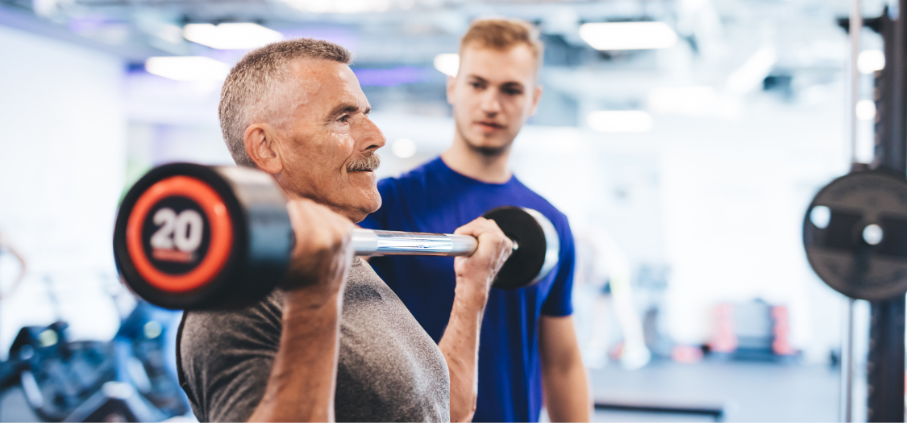
It is generally understood that exercise is good for our physical bodies, but did you know that exercise can also improve cognitive performance? One such benefit of aerobic exercise specifically is its ability to enhance our memory. There have been a multitude of studies designed to investigate the nuances of this exact phenomenon, including a recent systematic review and meta-analysis.

Aerobic Exercise Improved Performance on Memory Tests

The analysis reviewed nine different studies with patients aged 50 years old and older. Six of the studies used exercise regimens that follow the U.S. Department of Health & Human Services recommendations for aerobic physical activity. These guidelines suggest that all adults should engage in at least 150 minutes of moderate aerobic exercise (like brisk walking or cycling) or 75 minutes of vigorous aerobic exercise (like jogging or dancing) on a weekly basis. In the studies, the type of exercises varied from brisk walking to swimming, but all that met the U.S. guidelines reported “significant and large” effects. It is important to note that the duration of the studies ranged from three months to one year, each with its own unique breakdown of how to meet these total weekly minutes. 

In order to study the link between exercise and memory, there are several  memory tests that scientists can use to test the different aspects of our memory. While most of the included studies chose to observe changes in working and logical memory (important for reasoning and decision-making), some used tests to observe the changes in spatial and episodic memory (remembering information like names, places, and colors). The results of the overall meta-analysis concluded that there was a strong relationship between undergoing aerobic exercise and improvements in memory. 

What is BDNF?

Dr. Doug Noordsy, Head of Cognitive Enhancement at Stanford Lifestyle Medicine, hypothesizes that aerobic exercise improves memory by releasing Brain-Derived Neurotrophic Factor (BDNF), which was discussed in the analysis. BDNF is a protein that is released due to the widening of the blood vessels (systemic vasodilation) that occurs during physical activity. Once this protein reaches our brain through the bloodstream, it aids the longevity and growth of healthy neurons, which are vital for learning and memory processes. Also, exercise turns on specific genes that activate neurotrophic factors like BDNF, allowing us to create additional BDNF as we exercise throughout life. 

So, next time you catch yourself recalling an old story or trying to match a name to a face, remember to move your body and get your heart rate up!


By: Carly Smith, BS, MPH(c)


Sources:

  1. Hoffmann et al. Aerobic Physical Activity to Improve Memory and Executive Function in Sedentary Adults without Cognitive Impairment: A Systematic Review and Meta-analysis“. Journal of Preventative Medicine Reports. Sep. 2021.

Sleep, a fundamental element of human biology, plays a crucial role in various physiological processes. A good night’s sleep is essential for immune function, cognitive performance, emotional well-being, and overall physical health. Exercise is another critical lifestyle factor with tremendous potential to improve your health. Regular physical activity has numerous benefits, from reducing the risk of chronic diseases to improving mental health. However, could exercise improve your sleep?

Impact of Resistance Exercise on Sleep

A 2017 review found that “chronic resistance exercise improves all aspects of sleep, with the greatest benefit for sleep quality” in individuals with sleep problems. In this study, Kovacevic et al. employed a systematic review methodology by conducting an electronic database search of randomized controlled trials. Many studies fit the criteria, but three acute resistance exercise studies, seven chronic resistance exercise studies, and three combined aerobic and resistance exercise studies met the researchers’ inclusion criteria and were analyzed for sleep outcomes. The primary finding from this review was improvements in sleep from chronic exercise; these improvements were “moderate-to-large, and commonly affected overall sleep quality, sleep latency, sleep efficiency, mid-sleep disturbance, and daytime dysfunction”. In comparison, the primary medications prescribed to improve sleep quality had “only small-to-moderate effects on sleep quality” and instead have “adverse effects such as rebound insomnia, depression and anxiety, cognitive impairment, and an increased risk of falls, cancer, and overall mortality” if used in the long-term. Kovacevic et al. call for further research and more data on aerobic exercise but cites an earlier paper that noted how aerobic exercise could improve sleep quality.

Furthermore, their work highlighted how “higher intensity and greater frequency of training offer greater sleep benefits”. More specifically, the chronic resistance exercises studied that had the most benefits included machine-based resistance exercise, circuit training, and resistance bands for an average duration of 14 weeks total with approximately 60 minutes per session. Studies with high exercise intensity as compared to low-to-moderate intensity, and with a frequency of 3 days/week as compared to 1-2 days/week, had a larger beneficial effect on sleep quality.

The review presented another pathway by which exercise could improve sleep; exercise improves levels of anxiety and depression, both of which deeply affect sleep — “notably, exercise has been shown to be an effective treatment for major depression and sleep disturbance is one of the core symptoms of depressive illness” and “the majority of chronic studies included in this review reported significant improvements in neuropsychological outcomes”.

Impact of Aerobic Exercise on Sleep

Additional research has also shown the further benefits of aerobic exercise for people with established sleep disorders. One study showcased how “4 months of aerobic exercise training in a sample of older adults with insomnia significantly improved sleep quality while also reducing daytime sleepiness and depressive symptoms”. Another study found that “12 weeks of moderate-intensity aerobic and resistance exercise resulted in a 25% reduction in OSA [obstructive sleep apnea] severity”. Lastly, studies have even shown that the circadian rhythms disrupted in neurodegenerative disease can be improved with exercise — “exercise has proven to be a low risk and beneficial intervention to improve overall health and sleep disorders in AD [Alzheimer’s disease] and PD [Parkinson’s Disease]”. In particular, “physical activity, even at low intensities, has been reported to improve sleep quality, reduce time to fall asleep, and increase the duration of sleep in the elderly… evidence indicates that exercise increases total sleep time and slow-wave sleep”.

We all strive for better sleep even if we do not have a known sleep disorder, and it could be within our grasp through a novel route. Exercising for an hour three times a week at high intensity with machine-based resistance exercise, circuit training, or resistance bands can improve your sleep quality and decrease issues in the day. Even once a week at a lesser intensity for 40 minutes showed beneficial effects! Sleep and exercise are significant pillars in lifestyle medicine, and it is fascinating how one affects the other. Rather than relying on medications that can have adverse effects, research suggest exercise is a natural way we can improve our sleep. While further research is needed, recognizing the interconnectedness of exercise and sleep as critical components of a healthy lifestyle is crucial.

By: Keshav Saigal, BS(c)


Sources:

  1. Kline, Christopher E. The bidirectional relationship between exercise and sleep: Implications for exercise adherence and sleep improvement.” American Journal of Lifestyle Medicine. 2014 August
  2. Kline, Christopher E et al. “The effect of exercise training on obstructive sleep apnea and sleep quality: a randomized controlled trial.” Sleep. 2011 December
  3. Kovacevic, Ana et al. “The effect of resistance exercise on sleep: A systematic review of randomized controlled trials.” Sleep Medicine Reviews. 2018 June
  4. Memon, Adeel A et al. “Effects of exercise on sleep in neurodegenerative disease.” Neurobiology of Disease. 2020 July
  5. Reid, Kathryn J et al. “Aerobic exercise improves self-reported sleep and quality of life in older adults with insomnia.” Sleep Medicine. 2010 October
  6. Yang, Pei-Yu et al. “Exercise training improves sleep quality in middle-aged and older adults with sleep problems: a systematic review.” Journal of physiotherapy. 2012 September

By Carly Smith, BS & Stacy Sims, MSc, PhD

Perimenopause is the three-to-five years of a woman’s life, leading into menopause, marking many changes in female body composition. Recent research has determined that the loss of lean, quality muscle, and fat gain are two common physical changes that many women face during this time. Our team highlights the importance of integrating regular strength and resistance training exercises to offset some of the physiologic changes of menopause. This is based on the vast body of research suggesting that maintaining muscle is critical for successful aging of the body and reducing the risk of injury as we get older.

As for what people should be doing during this period of life, there may be more benefits specifically for muscle composition from strength training than long, endurance exercise. One way to begin integrating this change is to prioritize lifting heavy – whatever heavy means to you. You should always remember to do what feels safe for you while still challenging your body and trying exercises that spread force throughout your body. To maximize the benefits for your muscles, research indicates that individuals that lift weights heavy enough to near failure in 4-6 reps see the largest gains in muscle strength when the exercise is maintained for 3-5 sets.  For women new to strength training, this type of training regimen may require some getting used to, so it is okay to gradually work toward this goal over time, and prioritize safety at first.

Dr. Stacy Sims, a member of the Stanford Lifestyle Medicine movement & exercise and nutrition pillars, advocates for this training regimen and encourages women to emphasize lifting heavy to reap the most benefits throughout the menopause transition.

“Overall, [we are] breaking the stigma that women need to prioritize long, endurance exercises and exclusively body weight work because they offer little benefits for body composition or lean mass during this time. Instead, lifting heavy (whatever that means to you) will help most during this transitional period,” says Stacy Sims, PhD, MSc, Exercise Physiologist.

Sources:

  1. Greendale et al. Changes in body composition and weight during the menopause transition. JCI Insight. 2019 March
  2. Schoenfeld et al. Strength and Hypertrophy Adaptations Between Low- vs. High-Load Resistance Training: A Systematic Review and Meta-analysis. Journal of Strength and Conditioning Research.  2017 December

Recently published in the Journal of Medicine & Science in Sports & Exercise, this randomized crossover study looked at the dose-response behavior in middle-and older-aged adults to prescribed walking during long periods of sitting.

The findings suggest that breaking up sitting time with 5-minute light-intensity walks every half hour can counteract the harmful effects of prolonged sitting.

While there is no specific amount of time spent sitting that puts you in harm’s way, we know that sitting more is worse for you. Thus, it is no surprise that getting up even for a light walk down the hallway every 30 minutes can be much more beneficial to your health. But how does this work? Compared to a controlled trial, walking for 5 minutes after every 30 minutes of sitting a day significantly reduced blood glucose levels. Similarly, systolic BP significantly decreased with 5-minute walks for every 30 minutes sitting & 1-minute walks for every 60 minutes. Along with glycemic and systolic BP responses, fatigue, mood, and cognitive performance all improved with the increases in walking time. Participants, overall, benefitted from more time spent walking. However, any walking break during periods of prolonged sitting is better than nothing!

Overall, this study highlights the importance of finding ways to become more active throughout the entire day, even if it is just for a few moments. There has been a rise in “actively sedentary” lifestyles, which involve engaging in approximately an hour of intense physical activity but spending the rest of the day sitting. However, both daily physical activity and moving throughout the day are essential for maintaining overall health. 

By: Carly Mae Smith, BS


Sources:

  1. Breaking Up Prolonged Sitting to Improve Cardiometabolic Risk: Dose–Response Analysis of a Randomized Crossover Trial

A recent study found that standing on one leg for 10 seconds was independently associated with survival and that those unable to perform this test had double the usual risk of premature death. This relationship is an association and not causal – meaning, the test cannot predict when someone will die. It does, however, highlight the importance of monitoring and maintaining balance as we age. Good balance later in life can lower fall risk and help maintain independence, mobility, functional abilities, and overall quality of life.

According to Corey Rovzar, an expert in balance a postdoctoral fellow at the Stanford Prevention Research Center in the School of Medicine, balance is often overlooked in most people’s exercise regimes and is not regularly included in routine health checks for middle-aged and older adults. This study highlights the importance of monitoring and maintaining balance as you age since balance tends to decline most rapidly beginning in your 60s – and this decline can lead to faulty biomechanics and/or falls. The good news is that you can improve your balance through training! This could be as simple as standing on one leg while you brush your teeth, performing single-leg exercises, or engaging in activities such as tai chi and yoga. Strength training is also important, especially for the lower body, because stronger muscles allow you to have greater stability as you move and to move at an ideal speed. The key to any exercise program is consistency – find something that you enjoy and stick with it!

By: Corey Rovzar, PhD & Maya Shetty, BS


Sources:

  1. Successful 10-second one-legged stance performance predicts survival in middle-aged and older individuals

Artwork

By: Sarita Khemani, MD

As a physician specializing in peri-operative medicine, I have witnessed firsthand the detrimental impact of muscle loss on patients. Whether it is individuals presenting with hip or spine fractures, or those who have suffered from bleeding in their brain following a fall, many of these acute conditions have a hidden underlying cause: the loss of muscle mass.

Although losing muscle may not seem like a significant concern, it can be a silent yet deadly issue that progressively drains our vitality and strength, leading us to become frail and dependent.

In this blog, we will explore the latest scientific research on the trajectory of muscle loss as we age and discuss practical steps that we can take to prevent or alleviate its effects.

Understanding Skeletal Muscle: Composition and Function

Skeletal muscle is the type of muscle tissue that we can control voluntarily, such as when we intentionally flex our biceps or perform other movements. It is composed of many smaller bundles of muscle fibers, each containing hundreds to thousands of individual fibers. These fibers are primarily made up of two proteins: myosin and actin, which work together to facilitate muscle contraction.

The muscle fibers themselves are arranged in a specific pattern, extending the muscle’s length between the tendinous ends, and are bundled together and wrapped in connective tissue. This arrangement allows the muscle to generate force and produce movement when it contracts.

In terms of composition, muscle tissue is approximately 70% water and 30% protein. The body synthesizes muscle protein from the amino acids that are present in the protein we consume through our diet.

Image credit: University of Miami: https://www.bio.miami.edu/dana/360/360F18_15.html


As we age, the gradual decline in muscle mass and strength worsens with each passing decade. This decline can be attributed to several factors, including reduced dietary protein intake, decreased physical activity, a decline in hormone levels, chronic inflammation, muscle denervation, mitochondrial dysfunction, infiltration of fat into muscle, and insulin resistance.

Research suggests that the rate of loss of muscle strength is greater than the loss of muscle mass and plays a crucial role in healthy aging. When low muscle mass and function, including strength and physical performance, occur with aging, it is known as sarcopenia. The term “sarcopenia” originates from the Greek words “sarx,” meaning flesh, and “penia,” meaning loss.

Sarcopenia can be classified into two categories: primary sarcopenia, which is the cumulative result of various factors leading to muscle loss with aging, and secondary sarcopenia, which is caused by a specific insult, such as surgery, hospitalization, or injury. By understanding these categories, we can better diagnose and manage sarcopenia in older adults.

The trajectory of age-related muscle loss

The loss of muscle strength with age can be surprising to many people, as it can start as early as age 30. As numerous research studies have shown, the rate of decline for muscle mass with age worsens with each decade.

Age Percent loss of muscle mass/decade
50s 0.5-2%
60s 4-5%
70s 7-8%

The decline in muscle strength is more dramatic and can be 2-5 times greater than decline in muscle mass.

Age Percent loss of muscle strength/decade
50s 3-4%
60s 9-10%
70s 11-12%

A study found that there was muscle loss of between 35% and 40% occurring between the ages of 20 and 80. Additionally, studies of nursing home residents have found that sarcopenia, affects 30-40% of individuals. Mobility aids, such as canes, walkers, or wheelchairs, are commonly used by older adults, with 24% of those aged 65 years and older relying on such aids. Alarmingly, the death rate from falls is projected to rise sharply in the coming years, as shown in the graph below.

Image Credit: CDC:

Skeletal muscle mass is shown to be an independent predictor of death, highlighting its crucial effect on longevity.

These statistics don’t consider the sudden health events that can accelerate muscle loss. A rapid decline in muscle mass and health occurs with hospitalizations and illnesses. In addition to the lack of activity during hospital stays, other factors like increased levels of pro-inflammatory agents and cortisol can have a compounding effect. For older adults, this loss of muscle mass and function can lead to permanent disability or even death.

Connection between muscle health and dementia

Dementia affects more than 55 million people worldwide, and physical inactivity is one of the modifiable risk factors for the condition. There is a well-established link between low muscle mass, low physical activity, and cognitive impairment in old age.

Exercise releases myokines from the muscle, which crosses the blood-brain barrier and helps regulate BDNF, a protein that supports the survival and growth of neurons in the brain. Furthermore, the lower an individual’s muscle mass, the more significant their cognitive decline, suggesting a dose-dependent effect.

Steps to preserving muscle health and function.

Protecting your muscle mass is like increasing your savings: the greater the savings, the more comfortable you will be as you age.. While we might develop pharmacological treatments for muscle loss in the future, currently, the best way to preserve muscle function is to put in work upfront.

1. Strength training, “the medicine”

Resistance training activates our DNA to respond to stress, leading cells to produce increased muscle protein.

Initially, we may see an improvement in strength but not much muscle hypertrophy because of an increase in muscle protein breakdown. However, this slows down after about six weeks, and we start seeing an increase in muscle size.

Strength training can counteract the accumulation of fat in the muscle, improve the health of neuromuscular junctions, improve muscle quality, and reduce inflammatory markers.

People who do regular resistance training have a 20-year advantage. For example, 85-year-old weightlifters showed similar power and muscle features as 65-year-olds who did not engage in regular training in studies.

To achieve optimum improvement in muscle mass and strength, we should engage in resistance training 2-3 times per week per muscle group in addition to any aerobic exercises.

Resistance exercises that involve increasing load and speed should be done under supervision to ensure proper form and avoid injury.

2. Protein intake

Studies have shown that higher protein intake is associated with greater muscle mass and lower risk of developing frailty in older adults.

Protein intake should be individualized based on age, sex, activity level, and health status, but generally range from 1.6-2.2 grams per kilogram of body weight per day.

A systematic review and meta-analysis published in the British Journal of Nutrition in 2020 found that plant-based protein sources can be just as effective as animal-based sources for improving muscle health. It’s best to mix and match various plant-based sources of protein for optimum effect.

Consuming more than 35-50 grams of protein at one time does not provide any additional benefit for muscle growth, as excess protein is used for energy production. Therefore, it is best to spread protein intake out throughout the day rather than consuming the whole day’s amount in one sitting.

3. Supplements: Please see an excellent blog by Dr. Kaufman on this website to gain more knowledge about the safe use of supplements.

4. We all know to get good sleep and stay hydrated—more on these topics in future blog posts.

What Does Grip Strength Indicate About Your Health?

Your future lies in the palm of your hand… kind of. A popular topic in longevity and exercise science involves the association between grip strength and life span, but what exactly are people talking about? Two recent studies describing the relevance of grip strength in the field have started to analyze what information one’s grip strength actually provides. “Grip strength is inversely associates with DNA methylation age acceleration” covers cross-sectional and longitudinal associations between hand grip strength and three different clock models to describe the pace of one’s aging in American adults over the age of 50 years old. Essentially, these three different clocks take in information from a DNA methylation sample, and output a relative estimate of how quickly someone is aging based on the different health outcome risk biomarkers they are entrained on. As it pertains to grip strength, the three age-acceleration clocks looked at in the study found significant associations to suggest that greater grip strength can help one protect their body from physically aging faster. These clocks could be useful tools in future clinical applications to begin to better understand the needs of different patients later in life. However, there is still work left to be done as the sample of this study may not be representative of the diverse middle and older aged populations in the larger United States or on a global scale. When reading information from the study above, it can also be easy to believe that increasing the amount of grip-strength exercises you’re doing will help you slow down how fast you’re aging and live longer, which is not exactly the case. Another study from the Journal for Clinical Interventions in Aging, reviews the literature to suggest how grip strength’s relevance to aging science may be due to its associations with total body strength, bone density, reduced risk of falls and fractures, etc. Knowing that there is ample research on the protective effects of these measurements on later-in-life life expectancy, grip strength may be a starting place to begin to clinically understand risks the potential mobility and functionality risks for some patients.


To read the full article from the Journal of Cachexia, Sarcopenia, and Muscle, follow this link: https://doi.org/10.1002/jcsm.13110

To read the full article from the Journal for Clinical Interventions in Aging, follow this link: https://www.ncbi.nlm.nih.gov/pmc/articles/PMC6778477/.


By: Carly Mae Smith

By Maya Shetty

By now, we have all heard that exercise is good for us. But why is this? And if it’s so beneficial, why is it so hard to get up and do it? Nearly 80% of US adults are not meeting The Center for Disease Control(CDC) exercise guidelines, which call for a minimum of 150 minutes a week, or 21 minutes a day. To understand the disconnect between exercises’ necessity and our difficulty doing it, we can refer to evolution and why humans evolved to do it in the first place.

The first humans emerged around 200,000 years ago and, unsurprisingly, their lives looked very different from our lives today. While we complain about having to take the escalators instead of the stairs or when Uber Eats takes too long, our ancestors were running from predators and hunting for prey. In fact, humans survived through hunting and gathering practices for 95% of human history. This means the majority of our evolution was spent living as nomadic hunter-gatherers. Therefore, our bodies and behaviors are adapted to this lifestyle.

An Evolutionary PerspectiveNow, you may be wondering how this translates to exercise in today’s society. Well, as hunter-gatherers, our ancestors’ main advantage was endurance. We are not the strongest or fastest animals out there, so survival was dependent on our ability to outrun our predators and prey. Evolutionarily, we are endurance athletes adapted for consistent, long bouts of physical activity. If this is the case, then why does the average American spend most of their time relatively immobile? This is because we are also adapted for inactivity and energy conservation whenever possible. Thinking again about the hunter-gatherer lifestyle, our ancestors were constantly trying to maintain their energy balance – food intake vs. energy expenditure. It made sense to exercise only when necessary for survival, and conserve energy whenever possible. In today’s society, however, this biological tendency no longer serves us, as our environment has been engineered for an extremely positive energy balance: excess food with little energy expenditure. Now we must go against our biological tendencies and make the decision to exercise, even when our body is telling us not to, in order to maintain good health. 

We can see just how much our physical activity differs from our hunter-gatherer ancestors by studying the few modern day hunter-gatherer communities. These populations are often used as models in public health due to their remarkably low rates of chronic disease and disability with age, a stark difference from modern day America. Researchers analyze the behaviors of these populations to have a better understanding of the evolutionary causes of chronic diseases – Why are they so common now vs. then? The most commonly studied population is the Hadza, a hunter-gatherer population in Tanzania. Decades of research has quantified their daily physical activity and how it changes throughout the lifetime. Most notably, the Hadza people average 15,800 steps, about 6 to 9 miles, per day. Meanwhile, Americans average less than 4,800 steps, about 2 miles, per day – about ⅓ the steps of modern hunter-gatherers. On top of this, the average American reduces the amount of steps they take per day by about half between the ages of 40 to 70. The Hadza people, on the other hand, barely change their physical activity levels with age. These behaviors have measurable effects on our physiology. In hunter-gatherer populations, the functional losses of aging, such as declining muscle mass and cardiovascular function, are seen at a significantly lesser rate, if at all, when compare to the American population. This aligns with the theory of disuse and aging brought forth by Walter Bortz II, a former Stanford professor of Medicine and one of America’s most distinguished scientific experts on aging and longevity. Dr. Bortz theorizes the changes commonly associated with aging, such as loss of muscle mass and decreased VO2max, are due to disuse with age, rather than aging itself. The differences in physical capabilities with age seen between the modern American and the Hadza people suggest our sedentary lifestyle may contribute to accelerated aging. By being sedentary, we oppose the evolutionary history encoded in our genes for periodic activity, leading to accelerated physiologic loss with age due to disuse. 

 Regular physical activity stimulates our body to allocate energy toward repair and maintenance, slowing cellular senescence and aging. It has also been seen to have dose dependent effects on the risk of several chronic conditions and other health problems. 

These include:

-Cardiovascular disease and hypertension

-Type 2 diabetes

-Arthritis 

-Osteoporosis

-Stroke

-Lung disease

-Many cancers

-Alzheimer’s disease and dementia of any type

We as humans are adapted for lifelong physical activity. However, the necessity of exercise is as encoded into our genes as the drive to not exercise. The world around us was built for convenience rather than health. And for this reason, it is understandable that the majority of people live a predominately sedentary life. For better lifelong health, we need to make the purposeful decision every day to walk more, sit less, and be physically active. Remember, something is better than nothing, so find something that brings you enjoyment and is able to make a habit of it! Whether it be running, dancing, boxing, walking, or just taking the stairs at work, be proud of yourself for putting in the effort. Your health will thank you later.

This study examined whether progressive overload via increasing weight or increasing repetitions elicited similar muscular adaptations. Progressive overload is the continual increase of workload over time throughout a training regimen, which is necessary to stimulate ongoing muscular adaptation and is traditionally accomplished through increases in load (weight). This study investigated using continual increases in repetitions as compared to weight to progressively increase workload and the resulting outcomes for muscular strength, hypertrophy, and endurance.

Overall, there were improvements in all three variables in both groups that were similar between the groups. Strength (measured by 1RM back squat) increased in both groups and slightly favored the load group with an effect size of 2kg but a wide confidence interval. Muscle endurance increased in both groups and slightly favored the reps group by 2%. Hypertrophy improved similarly in both groups with the exception of one muscle (of 4 tested), the rectus femoris, which slightly favored the reps group.

 A few caveats to note: this study started with quite a high rep range for both groups (8-12 reps as a starting point), and the reps group increased from there. This is quite a high rep range even at the starting point, and the practicality of implementing an increasing rep scheme from that baseline and maintaining good adherence to training might be difficult. Along these lines, the authors noted that the reps group seemed to have a harder time training to actual failure likely due to “greater metabolic acidosis and discomfort” (translation: it was difficult and painful). In addition, this study population was young people with prior weight training experience, and the results may not be generalizable to other groups. The authors attempted to control for dietary factors with self-reported food diaries, but the accuracy of this is questionable and there could be dietary related differences between the groups. Finally, this protocol included training to failure, which when implemented in the real world may increase risks (greater fatigue, injury) and may not be necessary to achieve substantial improvements in the desired outcomes.

Overall, this study suggests that progressive overload in strength training can likely be achieved with either increases in load or reps assuming sufficient training stimulus (effort). Further research is needed to determine if there are benefits for one protocol or the other for relative improvements in strength, hypertrophy, or endurance. Future study should also evaluate practicality/adherence and generalizability to other groups.

By: Sarah DeParis, MD


Journal Reference:

  1. Plotkin D, Coleman M, Van Every D, Maldonado J, Oberlin D, Israetel M, Feather J, Alto A, Vigotsky AD, Schoenfeld BJ. Progressive overload without progressing load? The effects of load or repetition progression on muscular adaptations. PeerJ. 2022 Sep 30;10:e14142. doi: 10.7717/peerj.14142. PMID: 36199287; PMCID: PMC9528903.