Posts
By Nicole Molumphy

Many of you are familiar with the 10,000-steps-a-day walking trend, but you may not know where it originated. The idea of walking 10,000 steps per day did not come from scientific research; rather, it came from a marketing campaign for a pedometer ahead of the 1964 Tokyo Olympics. Since the Japanese symbol for 10,000 looks somewhat similar to a person walking (see image below), the pedometer was named Manpo-kei or 10,000 steps meter, and the 10,000-step-a-day walking trend was born.

We know walking is good for us, but what do researchers have to say about this 10,000 number? Is this the right number of steps? What are the health benefits of reaching this number?
A 2023 research study showed 8,000 to be the sufficient number of steps to yield significant health benefits. In this study, participants who took 8,000 steps or more on one or two days during the week showed substantially lower cardiovascular and all-cause mortality risk.
Stanford Lifestyle Medicine Movement and Exercise pillar member Corey Rovzar, PhD, DPT, puts the 8 and 10 thousand numbers into perspective. “What is more important than hitting an exact number is that you’re moving more throughout the day,” says Dr. Rovzar. “If looking at a pedometer and trying to hit 8,000 steps will help you move more, then it’s a great tool, but rather than fixating on an exact step count, I recommend you think about your day and envision opportunities to move.”
Rather than walking all 8,000 steps in one go, which would take about 80 minutes at three miles per hour, Dr. Rovzar recommends walking the 8,000 steps throughout the day, such as in the morning and evening and after each meal. For example, you could split the 8,000 steps (80 minutes of walking) into four, 20-minute walks. If you stick to the 10,000-step goal (100 minutes of walking), that breaks down to five, 20-minute walks. This recommendation is good news for those who sit at a desk since taking several short walks during the workday is a perfect way to take a break. “It is important to note that all steps count! Even a few steps to the bathroom or to another room contributes to this overall count,” says Dr. Rovzar.
Ideas on How to Meet Your 10,000 Steps Goal:
- Take the stairs instead of the elevator.
- Walk more during errands by parking your car farther away from your destination or getting off the bus or train a stop early.
- Walk more during your work day by taking a “walking meeting” or walking while on the phone.
- Walking after each meal can help with digestion, blood sugar management, and cardiovascular health.
- Walk every morning, evening, and during your lunch break. Even 10 to 15 minutes of walking can add up to 1,000 steps.
- Catch up with a friend by going on a walk instead of meeting for coffee.
- Use a step tracker to help you stay motivated and track your progress.
How to Get More Out of Your 10,000 Steps
If you’re already walking 8 to 10 thousand steps daily, you may be ready to take your walking to the next level. If so, Dr. Rovzar recommends adding modifiers to your walking routine to help you meet additional fitness goals, such as improving balance or building muscle.
Here are a few of Dr. Rovzar’s recommendations for intensifying your daily stroll and gaining more health benefits:
1) Cardiovascular (Endurance) Modifier:
Interval walking
Interval walking involves alternating fast and slow walking cycles. Researchers recommend five intervals of fast and slow phases, each lasting roughly three minutes. The effort expended should be 40 percent of your maximum effort for the slow phase and 70 percent for the fast phase.
2) Muscular Strength Modifiers:
Walk up and down hills or stairs multiple times
If you are looking for strength benefits, hills may become your new best friend. Walking hills or stairs not only has excellent aerobic benefits but also serves as a great form of strength training.
Add ankle and wrist weights or wear a weighted backpack
Another strength training modification is adding weight to your walk, either with ankle or wrist weights or by rucking. The term rucking originated during boot camp training and involves using weighted vests or backpacks while hiking or walking.
3) Balance Modifiers:
Take side steps
March (i.e., lift your knees as you walk)
Walk backwards
It is essential to perform balancing exercises as we age. Implementing side steps, marching, or walking backward are great ways to train your body to handle non-forward-facing movements, enhance joint mobility, and improve flexibility. Balance training is also an effective way to strengthen different muscle groups. For example, side steps engage your abductors, which are hip muscles involved in getting out of your car and transitioning out of bed in the morning.
4) Cognition Modifier:
Dual-task training
Cognition may also be enhanced with walking practices, like dual-task training. This practice involves performing a mental task while walking, such as talking to someone while walking, keeping step time to a metronome, or counting backward from 100. Combining the mental task with the physical action of walking forces the walker to increase concentration, which sharpens the mind and improves balance and stability.
Whole Body Health Benefits
In addition to the physical benefits walking offers, Dr. Rovzar says that walking improves mental clarity and well-being. Taking a step away from work and going on an outdoor walk can help you overcome mental roadblocks. Studies have found mental health benefits from walking outside in nature, including decreased cortisol levels, diastolic and systolic blood pressure, and pulse rate. While using a treadmill may be a great way to multitask and get in extra movement, there are considerable mental health benefits from taking a break outside, getting fresh air, and stopping to smell roses and pet dogs on your walk.
“We often strive to maximize our time working, but in reality, you might not be saving yourself time by omitting the breaks,” says Dr. Rovzar. “I recommend getting out of your work environment and going for an outdoor walk every couple of hours during the workday, even if it’s just five-minutes of movement to get your blood flowing.”
Practice of the Month:
Walk 5 Days per Week for 30 minutes with a Modifier
The US guideline for moderate physical activity is 150 minutes per week (which breaks down to five 30-minute brisk walks with a modifier per week). To ensure you’re improving muscle strength, balance, endurance, and cognition every week, Dr. Rovzar recommends assigning different modifiers to different days.
Sample Walking Routine (30 minutes per walk):
Monday: Walking up and down hills on Mondays (endurance)
Tuesday: Rucking (strength)
Wednesday: Incorporating intervals of side-stepping, marching, and walking backward (balance)
Thursday: Interval walking (endurance)
Friday: Adding ankle and wrist weights (strength) while counting backward from 100 with each step (cognition)
If a 30-minute walk seems too daunting, Dr. Rovzar suggests starting with 10 minutes of walking and incrementally working your way up to 30 minutes daily. “Much of this comes down to goal setting,” she says. “If you set too lofty of a goal, it becomes unachievable, but if you break your goal down to an amount that seems feasible and perhaps try it just for a week, it becomes more likely you will remain consistent in attaining it.”

We all enjoy a healthy snack like nuts and fruits or a less nutritious option like chips and sweets between our main meals, but have you ever heard of an exercise snack?
“Exercise snacks are short bouts of movements, anywhere from 30 seconds to five minutes, that don’t require going to the gym or any prep work. They are snacks, not meals,” says Marily Oppezzo, PhD, certified personal trainer and head of Stanford Lifestyle Medicine Healthful Nutrition pillar. “They can be anything that gets your heart rate up to a vigorous level–like jogging up the stairs at work or doing 20 jumping jacks–and you can accumulate vigorous activity multiple times throughout the day.”
Exercise snacks are ideal for busy people. In our fast-paced lifestyle, it is challenging for many people to find the time to go to a gym and complete a formal workout. Exercise snacks offer an alternative way for busy folks to get their heart rate up and experience health benefits without changing their clothes or breaking a sweat.
Additionally, research shows that exercise snacks performed throughout the day may be more beneficial than a one-hour stint at the gym after sitting all day.
What Are Examples of Exercise Snacks?
If you have two minutes in your workday to get a snack from the refrigerator, you also have two minutes to do an exercise snack. Dr. Oppezzo explains, “Exercise snacks aren’t just a two-minute leisurely walk break. You’ll want the one-to-five-minute workout to elevate the heart rate to a point where it becomes hard to speak in complete sentences.”
Below are some examples of exercise snacks that Dr. Oppezzo recommends:
- Instead of taking the elevator or walking up the stairs at work, jog up the flights.
- Do 30 seconds of jumping jacks and 30 seconds of push-ups, repeating for two minutes while your food is warming up in the microwave.
- Do one minute of burpees in the middle of your workday. If you cannot jump due to joint pain, here are instructions for walking-back burpees: put your hands on the back of a chair, step back, do a push-up, step forward, come to a squat and then reach for the sky. Repeat.
- Do three minutes of the “Pet the Puppy” exercise. Instructions: stand up with feet hip-width distance, squat down, and pet an imaginary puppy; stand up, take a high knee step over the imaginary puppy with one leg followed by the other; squat down again and pet the puppy on the opposite side. Repeat petting and stepping (or jumping) over the puppy on the both sides.
- High-knee march or jog in place, driving also with your arms, while your coffee is brewing.
- Enjoy five minutes of Zumba on YouTube during your lunch break.
“With my clients, I’ve observed that becoming breathless with three or four exercise snacks throughout the day can sometimes be more stress-reducing than doing one longer workout and sitting the rest of the day,” says Dr. Oppezzo. “After raising your heart rate through exercise, your body has to kick into ‘calm down’ mode and exercise snacks give your body an opportunity to calm down multiple times throughout the day.”
Dr. Oppezzo is currently working on several exercise snack research studies. One is comparing breaks of walking and strength breaks throughout a sedentary day, and the other is helping identify the best ways to help people build exercise snacks as a habit.
Most people understand that many hours of sitting can be a health risk, but rather than focusing on total hours of sitting per day, Dr. Oppezzo recommends that we think about the number of hours we sit continuously without large muscle group movements. Therefore, she recommends a two-minute exercise snack every few hours of sitting. “We don’t know the optimal cadence of taking a break–every hour is easy to remember, but it’s not practical for many people,” says Dr. Oppezzo. “I would aim for taking a break every couple of hours, and try to make a few of your breaks heart-pumping exercise snacks.”
What Are the Benefits of Exercise Snacks?
Exercise snacks offer numerous health benefits, including improved cardiovascular health, muscular strength, and cognitive enhancement. This review article of several studies on exercise snacks showed significant benefits on cardiorespiratory fitness, including decreased total cholesterol, increased oxygen consumption, and overall cardiovascular function. A prospective cohort study, which follows and measures people over a long period of time without giving them a particular intervention, found that participants who self-reported three-to-four minute incidental (or non-intentional) short bursts of physical activity throughout the day had a 31 percent reduced risk in physical-activity related cancer incidence, especially in adults who did not regularly exercise.
“People think they have to go to the gym and kill themselves every day to get a health benefit. They think you need to ‘go big or go home,’ but the research shows that 60 seconds of vigorous movement still counts,” says Dr. Oppezzo. “We make exercise too complicated, but it doesn’t have to be. Rather than seeing exercise as an obligation or a chore, we can use exercise as a tool to manage stress and feel better. We can keep it simple with exercise snacks.”

Key Takeaways:
Adults 50+ should choose exercises that promote these three aspects of fitness: strength, endurance, and balance.
Stanford researchers analyzed the benefits and risks of the following exercises:
- Pilates
- Martial Arts (e.g., Tai Chi, Karate, Taekwondo)
- Walking
- Running
- Masters Athletics (i.e., team sports for adults)
- Resistance Training (e.g., exercise machines, free weights, elastic bands)
- High-intensity Interval Training (HIIT)
It is well known that exercise is crucial for overall health; however, as we age, it’s essential to know which exercises are best to increase longevity and quality of life. For older adults (defined as 50 and above), the three main goals regarding physical activity are to build muscular strength, improve cardiorespiratory endurance, and increase flexibility and balance to reduce the risk of falling. Stanford researchers reviewed studies on several types of exercises to assess which were most suitable and effective for older adults to achieve these goals.
“It’s important to maintain a consistent exercise regimen in midlife and beyond,” says Matt Kaufman, MD, Stanford Physical Medicine and Rehabilitation resident and one of the authors of the review. “Many factors contribute to decreased activity as we age, whether it be pain, time constraints, complacency stating they haven’t done exercise recently. Sometimes, there is a fear of getting hurt or embarrassment when starting a new exercise routine, which can also be a major barrier for older adults to start exercising. With the various exercises we cover in this review, we hope readers will be inspired to choose one they enjoy and start moving.”
With so many types of exercises to choose from, it can be overwhelming to know where to begin. Reviewers assessed whether activities required equipment, were high or low impact, and if they were practiced in a social setting. The purpose of the review was to define the benefits, risks, and recommendations for these exercises that are popular among older adults: Pilates, martial arts, walking/jogging, running, Masters Athletics, resistance training, and high-intensity interval training (HIIT).
Low-Intensity Exercises for Adults 50+
Pilates
Given the social nature of group classes, Pilates has become a popular exercise for older adults. Joseph Pilates created the exercise in the 1920s, and it has been shown to improve dynamic balance, hip and lower black flexibility, lower extremity muscle strength, and cardiovascular fitness. Caution is advised for those with osteoporosis, osteopenia, or discogenic pain and those with Parkinson’s disease, baseline postural instability, or dysautonomia.
Recommendation: 40- to 50-minute mat or apparatus Pilates sessions, three to four times per week.
Martial Arts
Martial arts include a variety of mind-body exercises that improve flexibility, mobility, endurance, and balance.
Tai Chi
Tai Chi, which involves breathing exercises accompanied by slow body movements, has been shown to improve cardiorespiratory fitness, increase muscle strength and balance, and decrease frequency and fear of failing.
Recommendation: 45- to 60-minute Yang-style Tai Chi sessions, several days per week, over a minimum eight-week duration.
Traditional Japanese Karate
Traditional Japanese Karate, a mind-body exercise focusing on mindfulness and effective use of bare hands for combat or self-defense, showed improvements in walking speed, motor reaction time, strength, and balance.
Recommendation: 60-minute sessions, twice per week, for more than 10 months.
Hard Martial Arts
Hard martial arts, such as Taekwondo, involve contact of the body against another person. Along with the benefits seen in other martial arts (increased strength, endurance, mobility, flexibility, and balance), hard martial arts have been shown to decrease cognitive decline.
Recommendation: 60-minute sessions, twice per week, for more than 10 months.
Walking
For many, the most accessible exercise is walking outdoors, which offers benefits in balance, muscular strength and endurance, and cardiorespiratory fitness.
Recommendation: 30- to 60-minute brisk walking sessions several times per week.
High-Intensity Exercises for Adults 50+
Running
Like walking, running is easily accessible and improves balance, muscular strength and endurance, and cardiorespiratory fitness. However, because running has a higher impact than walking, it poses a greater risk of injury to the bones and joints of the lower body.
Recommendation: 30- to 60-minute running sessions several times per week.
Masters Athletics
Joining a team sport as an adult can have many benefits, such as improved balance, muscle strength and endurance, and cardiorespiratory fitness. Since this modality is a team sport, it also offers the opportunity for social engagement, which typically leads to greater adherence. The downside is that Masters Athletics are not as accessible as most exercises because they may be difficult to find or costly.
Recommendation: Join a local team for a sport you enjoy!
Resistance Training (i.e., exercise machines, free weights, elastic bands)
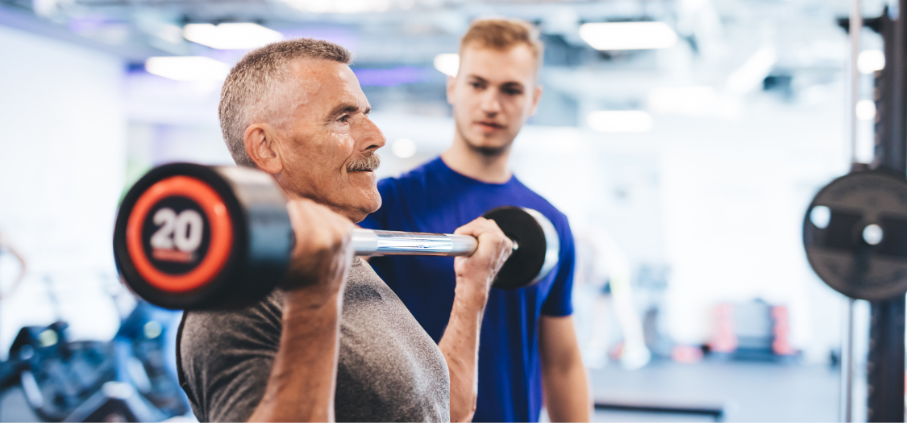
Extensive data suggest resistance training is the most effective exercise to improve skeletal muscle mass, strength, and physical function. Additional benefits of resistance training in older adults include gait speed, balance, cardiovascular fitness, and decreased fall risk.
Recommendation: 1-hour session twice per week. Consultation with a trainer may be appropriate to avoid injury.
High-Intensity Interval Training (HIIT)
HIIT, characterized by brief intermittent bouts of high-intensity aerobic exercise (such as sprinting during a walk or bike ride, or taking a HIIT group fitness class), has shown increased muscle building, power, and cardiorespiratory fitness. HIIT is a time-efficient exercise that considerably increases aerobic capacity despite its low time commitment. Since HIIT requires near-maximal effort in short bursts, it is recommended that HIIT be supervised to prevent injury.
Recommendation: 20- to 30-minute sessions twice per week. Each session should include six one-minute high-intensity bursts of effort.
“I often recommend some form of resistance training for my patients, whether in a gym or at home. These exercises can help build muscle and prevent falls,” says Dr. Kaufman. “I also recommend Masters Athletics since they have the added benefit of a sense of community that makes exercise more enjoyable and helps keep you accountable.”
Conclusion
Reviewers found similarities in fitness benefits depending on whether the exercise was low- or high-intensity. Lower-intensity exercises (Pilates, martial arts, and walking) significantly increased flexibility, balance, and endurance. Whereas, higher-intensity exercises (running, Masters Athletics, resistance training, and HIIT) showed greater improvements in cardiorespiratory fitness, muscle building, and strength.
“When creating an exercise regimen, I recommend engaging in both low- and high-intensity exercises every week. This could look like taking an hour walk every morning along with hiring a trainer at the gym for weekly weightlifting sessions, or taking a Pilates class every week along with your regular HIIT classes,” says Dr. Kaufman. “Ultimately, the best exercise regimen is something you will stick with. Whether it is one form or multiple forms of exercise, what is most important is that you are consistently active!”
By Tanya Thakur, MBBS

Alzheimer’s disease (AD) is one of the most devastating illnesses among older adults. The disease not only degrades memories but also affects one’s independence and takes a toll on family members.
AD is a progressive neurodegenerative disorder caused by the accumulation of abnormal misfolded protein deposits in the brain, including beta-amyloid plaques, tau tangles, and Hirano bodies. These deposits disrupt normal neuronal function, leading to the gradual loss of memory, cognitive skills, and, eventually, the ability to carry out daily activities.
AD is the most common cause of dementia, accounting for approximately 60 to 80 percent of cases. Presently, an estimated 6.7 million individuals in the U.S. have AD. In 2019, Alzheimer’s was ranked as the sixth leading cause of mortality among individuals aged 65 and above. Notably, between 2000 and 2019, while fatalities from stroke, heart disease, and HIV declined, deaths related to Alzheimer’s increased by more than 140 percent.
Even though scientists are working toward curing AD, we can take preventative measures by incorporating healthy habits, such as regular exercise, into our routine.
“It is a common misconception that we have minimal control over our risk of developing Alzheimer’s disease. However, nearly half of the Alzheimer’s cases could have been prevented or delayed by modifiable factors, including lifestyle changes,” says Sarita Khemani, MD, Clinical Associate Professor of Medicine and Neurosurgery Hospitalist at Stanford University. “Therefore, we should do everything in our power to incorporate healthy lifestyle habits as early as possible.”
The Link Between Exercise and Alzheimer’s Disease
There are many things we can do to reduce our risk of developing dementia. Several research studies have concluded that physical activity is one of the best ways to reduce risk significantly. For example, after analyzing 16 studies on exercise and dementia, the Alzheimer’s Society found that regular exercise reduces the risk of developing dementia by 28 percent and, specifically, AD by 45 percent.
The connection between the brain and aerobic exercise is likely due to neuroplasticity, which is the brain’s ability to adapt and form new neural connections or strengthen the existing ones. During aerobic exercise, our brain expresses cAMP response element binding (CREB) proteins that influence the transcription of synaptic genes, including those encoding for brain-derived neurotrophic factor (BDNF). BDNF supports neurogenesis (the formation of new neuron cells), neuroprotection, and angiogenesis (the formation of new blood vessels). BDNF also increases the volume of gray matter and the hippocampus (the site of memory in the brain).
Physical activity also serves as a potent modulator of other health risk factors, including hypertension, hypercholesterolemia, and insulin resistance, all of which increase the risk of developing dementia. Vascular damage caused by atherosclerosis can accelerate the cognitive decline associated with AD due to reduced blood and oxygen flow to the brain, leading to hypoxia of neural cells.
“Brain changes associated with Alzheimer’s begin approximately 20 years before symptoms appear,” says Dr. Khemani. “Exercise stands out as one of the most effective strategies for prevention, offering a low-cost, non-pharmacological, and low-risk option accessible to everyone.”
The Best Exercises to Prevent Alzheimer’s
While aerobic exercise increases BDNF levels, resistance exercises, such as lifting weights, are thought to have a greater influence on insulin-like growth factor-1 (IGF-1) levels. IGF-1 is a hormone that manages the effects of growth hormone in the body and is essential for promoting cognitive abilities.
Because aerobic and resistance exercises elicit different neurophysiological changes, studies have indicated that combining both modalities can enhance exercise-induced neuroplasticity to a greater extent than either modality alone.
For example, one study compared the effects of combined aerobic and strength training, aerobic exercise alone, and no exercise on cognitive function among dementia patients. After nine weeks, the combined exercise regimen yielded the most pronounced results across cognitive domains. Also, the observed gains in both motor and cognitive areas regressed towards baseline levels more than two months post-intervention, meaning it is essential to exercise regularly to sustain its neurological benefits.
Regarding the type of aerobic exercise most effective for AD prevention, Dr. Khemani recommends incorporating sprint intervals into our workouts. “We encourage our patients to engage in moderate-intensity exercises incorporating some high-intensity interval training, if possible, as these activities have been shown to be more impactful for Alzheimer’s prevention than light exercise alone,” she says.
By Mary Grace Descourouez, MS, NBC-HWC

The human gastrointestinal tract is home to trillions of microorganisms that create the gut microbiome. The gut is where the body digests and absorbs nutrients from our food and, therefore, where we get our energy to perform daily human functions. Microbiota are microorganisms in the gut microbiome that help the body harvest energy, fight pathogens, and regulate immunity. Having a high diversity of microbiota helps us to process food effectively, providing the substrates and nutrients needed to keep us going throughout the day. Therefore, it is crucial to make lifestyle choices that promote a healthy and diverse microbiome.
Many people know that a nutrient-rich diet contributes to a healthy microbiome, however, research shows that movement and exercise may also have a positive effect, and, inversely, a healthy microbiome may improve athletic performance.
“It is a relatively new field, but available studies suggest a bidirectional relationship between performance and the health of the microbiome,” says Anne Friedlander, PhD, Exercise Physiologist and Assistant Director of Stanford Lifestyle Medicine. “People who are more active have a healthier and more diverse microbiome, and that, in turn, provides the person with the nutrients required to enhance physical and cognitive performance. It is a mutually beneficial relationship.”
How Exercise Improves the Microbiome
Movement and exercise have many benefits on our overall health, including positive effects on the microbiome. Studies show that athletes have a more diverse microbiome composition than non-athletes. Microbiome diversity is important because it helps make our food’s nutrients more bioavailable for optimal functioning of the body.
Another study found that active women were associated with high microbiome diversity compared to sedentary women. Specifically, researchers found that consistent physical activity increased the amount of 11 genera of “good” bacteria, including Bifidobacterium spp, Roseburia hominis, Akkermansia muciniphila, and Faecalibacterium prausnitzii.
How the Microbiome Improves Athletic Performance
Just as exercise positively impacts the microbiome, emerging research shows that microbiome health may also play a part in enhancing exercise performance.
For example, a 2019 study showed that a specific gut microbiota in marathon runners may have enhanced their athletic performance on race day. In this study, researchers collected fecal samples from the runners before and after the marathon and compared them to microbiota of non-runners. The “good” bacteria Veillonella emerged as the most common in the runners, especially post marathon. Veillonella is a bacterial strain that converts exercise-induced lactate into propionate, which is a natural enzymatic process known to enhance athletic performance.
Researchers then put the Veillonella bacteria from the marathon runners into lab mice who underwent a treadmill exertion test to investigate the hypothesis that this bacterial strain enhances athletic performance. The results showed the mice improved performance by 13 percent after inoculation. This study is one of the first to infer that a healthy microbiome could enhance athletic performance.
“We have a long way to go to fully understand the complex system that involves the microbiome and athletic performance, but the early data look promising regarding gut health and exercise,” says Dr. Friedlander. “Exercise, along with eating fermented foods and fiber, is a great place to start if you want to improve your gut health and overall health.”

This blog is part of our Supplements newsletter. If you like this content, sign up to receive our monthly newsletter!
A recent analysis done by members of the Stanford Lifestyle Medicine team on how different supplements impact sports performance, highlighted creatine since it has been vastly researched and shown to improve muscle strength.
“What many do not realize is that supplements, like creatine, can be beneficial for more than just professional athletes and bodybuilders,” says Matthew Kaufman, MD, member of the Stanford Lifestyle Medicine Exercise and Movement research team and lead author of “The Impact of Supplements on Sports Performance for the Trained Athlete: A Critical Analysis.”
What is Creatine?
So, what is creatine? Creatine is a natural amino acid that people can gain in their diet with foods high in protein or through supplementation. Mechanistically, creatine supports powerful muscle contractions, which is why it is popular among bodybuilders. After digestion, creatine-phosphate is stored in skeletal muscle until the onset of quick, intense physical activity. Once activity is initiated, it is used to rapidly phosphorylate ADP into ATP, which drives fast-twitch muscle contractions, the primary drivers of quick, forceful exercise movements like weight lifting and sprinting.
According to the analysis, athletes that also depend on fast, powerful movements and mobility, like soccer and basketball players, may also benefit from increasing their creatine intake. Its ability to heighten muscle performance is continuing to be tested and is being used by many to increase the size and strength of their muscles.
“What’s nice about creatine, especially compared to other supplements, is how much it has been studied. It has robust, promising data that shows it can really improve athletic performance and muscle composition,” says Dr. Kaufman. “Plus, it can help muscle growth and performance for all different types of people.”
Creatine Is Not Just for Bodybuilders!
Creatine may also be a good supplement for plant-based athletes. The analysis found evidence that vegetarian athletes improved more than omnivorous athletes with creatine supplementation in terms of muscle power output and lean muscle mass, therefore plant-based athletes could consider supplementation to support their athletic performance.
Creatine is also recommended for older individuals to support muscle sarcopenia. With age, many people experience a loss of muscle vitality, which heightens risk of falling and injury. Research published in the Journal of Clinical Medicine indicates that creatine supplementation may help older adults maintain muscle vitality. It suggests that there could be significant benefits from supplementing their diets with creatine for an “anti-aging” effect for the body.
How Much Creatine Do I Need?
Whether taking creatine supplements for athletic performance or daily functioning, it is important to know what the International Society of Sports Nutrition’s (ISSN) recommended dosing strategy is. Their recommendation begins with all individuals taking 5 grams of creatine, four times per day (20 g total per day) for about a week. This first week is called the loading stage, which helps many people adjust to the supplement before experiencing any physical changes. Next, ISSN recommends maintaining a dose between 3-5 grams daily. Males and larger athletes may need 5-10 grams daily to maintain their body’s creatine stores.
People considering taking creatine should be aware of some potential side effects. Studies report the possible side effects of increased water retention and airway sensitivity in elite athletes, the latter suggesting the need for further research on how creatine affects those with asthma. We recommend consulting with your physician ahead of time so they can tailor the ISSN’s dosing recommendations for your specific needs.
Overall, creatine supplementation may be promising for many individuals, bodybuilders or not, looking to improve the power of their muscles.

One of the hardest parts about exercising is finding the motivation to do it. Especially if you’re new to working out, motivation can be fleeting and dependent upon your daily mood or energy level. Even though we know that exercise greatly benefits our health, it may require weeks of effort and dedication before seeing significant results.
So how do we stay motivated? Stanford Lifestyle Medicine Assistant Director and Exercise Physiology expert, Anne Friedlander, PhD, recommends three ways to incorporate exercise into our daily routine and establish a habit of exercise that remains consistent in the long run.
Bundle Your Activities
Bundling your activities is a version of multitasking where you combine a pleasurable activity that provides instant gratification with an activity that involves delayed benefits, such as watching your favorite television show or listening to an audiobook on the treadmill. This type of multitasking, also known as “temptation bundling,” is a promising method to create and maintain an exercise habit. When your exercise is combined with a specific tv show, audiobook, or playlist each time, there is the incentive to exercise especially if you only allow yourself to partake in the engaging media while exercising. It creates an association between entertainment and physical activity, which allows you to benefit from exercise in the moment, rather than weeks or months later.
While this approach may bypass the mind-body connections that exercise can offer, temptation bundling is a great way to create a new exercise habit or get back into a routine. After you’re confident in your ability to maintain your exercise routine, you can let go of the television show and focus on optimizing your mind-body connection while exercising which can enhance the cognitive and mood benefits of exercise.
Research has been conducted on whether temptation bundling can improve motivation to exercise. In this study, researchers provided free audiobooks during workouts and measured the frequency in which people exercised. The results showed that not only were participants more likely to exercise compared to those not offered the audiobooks, they were more likely to keep up the habit after the study was over. The study also showed that the media needed to be enjoyable to the participants to increase incentive to exercise, meaning when the audiobook covered a topic that was particularly engaging for the participant, their motivation increased.
So, if you’re having trouble starting or maintaining an exercise program, listen to an interesting audiobook while out on a jog or watch your favorite television show while cycling indoors to get you moving towards your health goals.
“It is amazing how powerful temptation bundling can be if you find a good story or podcast and you only let yourself listen while doing your physical activity. You may actually look forward to your next workout!” says Dr. Friedlander. “Eventually physical activity may become its own reward, but in the meantime, lace up your shoes and queue up that mystery thriller.”
Find a Workout Buddy
Working out with a partner, friend, or family member creates a two-way street of accountability and makes you more likely to show up for your goals. While the presence of your workout partner nudges you to stay on your goal, your presence also motivates them to do the same. Skipping a solo workout may require very little thought or work, but skipping a partner workout requires more work and requires you to explain to the other person your reason for skipping. This process helps avoid the fleeting temptations that would deter you from exercising based on mood or energy levels.
Having someone to match your level of commitment also introduces a link between social connections and physical activity in the creation of a more healthy lifestyle. The pillars of our lives are interconnected, and strong habits often involve behaviors that embrace multiple aspects of our health.
A workout buddy can be more than someone that helps you stick to your program. They can also be someone to offer and receive encouragement and support, talk about goals,discuss overcoming obstacles, and form memories and relationships. By making the habit a more involved aspect of your social life, you open yourself to broader potential benefits.
“I am not a morning person, but I have a puppy who loves his playdates,” says Dr. Friedlander. “Every morning at 7 am I meet friends for a walk and puppy playtime. The group definitely helps me get out the door because I don’t want to disappoint either my human or puppy companions”.
Choose an Exercise You Enjoy Doing
Just because exercise is something that you should do, doesn’t mean that you cannot enjoy it. There is a certain level of discipline that is required to maintain an exercise routine over time, but you will be more motivated to stick to your routine if you like the type of exercise you are doing. If you enjoy team sports, you may enjoy achieving your exercise goals by joining a pickleball league, swim club, or soccer team. Alternatively, you may enjoy attending dance or yoga classes with friends or carving out a specific time in your schedule to lift weights at the gym. Even moderate-to-low intensity exercises, like going out for a walk every night after dinner, is beneficial for your health.
The best exercise for you is one that you know you will actually show up for time and time again. An added bonus is that you do not have to spend hours exercising to impact your health. The United States Department of Health and Human Services says that no matter the amount of exercise you are able to achieve, most efforts to overcome sedentary lifestyles have a positive impact on all-cause mortality. This means that even incorporating small bouts of moderate-to-vigorous exercises can increase your relative life expectancy. Thus, shifting your focus to do activities that you enjoy and will do daily or weekly may give yourself the best odds for success in the long-run.
“If you’re having trouble finding motivation, start small,” says Dr. Friedlander. “Following exercise guidelines is optimal, but doing any level of physical activity is better than nothing and can improve your health and mood, especially if kept consistent.”

The foundation of longevity science exists in a balance of healthy physical, mental, and emotional aging. In the past, researchers have studied these aspects of health as independent subjects, but now scientists emphasize that every aspect of our health is intertwined. One of the major motivations behind the Stanford Lifestyle Medicine movement is to increase awareness of how total health is dependent upon the interactions between the pillars of our lives.
Recently, members of the Stanford Lifestyle Medicine team collaborated to conduct a systematic review of existing research on “The Role of Physical Exercise in Cognitive Preservation.” The article, which was published in the American Journal of Lifestyle Medicine, responds to a call for more scientific investigations to focus on the prevention of cognitive disabilities associated with old age, such as dementia.
“After conducting this review, a major takeaway is that we should be motivated beyond physical improvements to continue moving our bodies to promote long-term cognitive benefits,” says Matthew Kaufman, MD, lead author of the review article.
Exercise and the Brain
Both aerobic exercise and strength training are widely researched lifestyle interventions for quality health improvement.The US Department of Health and Human Services (USDHHS) recommends weekly exercise of at least 150 minutes of moderate-intensity aerobic exercise and two days of strength training for improving physical and mental health.
There are multiple proposed mechanisms that define how regular physical activity combats cognitive decay. As you exercise, your heart increases the amount of blood that it pumps out to the rest of the body to compensate for the increased workload. This increase in cardiac output also increases cerebral blood flow, which is linked to heightened neural activity and reduced oxidative stress (or an improved ability to detoxify agents in the body). Another proposed mechanism is the increase in trophic factors (proteins that aid cell survival and growth), such as BDNF, VEGF, and IGF-1. These trophic factors support neuroplasticity (the structural reorganization of the brain to support learning) and angiogenesis (the growth of new blood vessels). Therefore, it is reasonable to promote exercise as a lifelong tool for optimizing brain health.
“It is important to understand the physiology of this relationship in order to maximize exercise regimens for prolonged cognitive benefits and goal setting,” says Dr. Kaufman, current Stanford Physical Medicine and Rehabilitation Resident.
Key Takeaways from the Systematic Review
After reviewing over 1,600 total studies, 17 met the team’s final criteria for further analytical evaluation. To be included in the final review, studies must have been a randomized controlled trial published after 2000, excluded cognitive impairments more severe than moderate diagnoses, and included at least one physical activity intervention that lasted for 12 weeks or more and followed the USDHHS recommended guidelines. For this review, both aerobic exercise and strength training were included as exercise interventions. The final 17 studies selected for “qualitative synthesis” looked at the relationships of exercise and global cognition, exercise and memory, and exercise and executive function.
The review team found the largest consensus in the research for improvements in memory for individuals with moderate, mild, or no cognitive impairments following the 12-week exercise interventions. For individuals with mild cognitive impairments, exercise was shown to improve cognition. Although weaker, there was also evidence found for relationships between regular exercise and improved global cognition and executive functioning. Some studies also found significant associations between improvements in physical and cognitive fitness and increases in regional brain volume or blood flow.
However, included studies that analyzed the lasting effects of exercise following the study indicated a need for continued exercise. Improvements in memory and cognitive health were not always maintained once regular exercise stopped. This suggests the importance of exercise as a long-term principle of lifestyle medicine for adequate prevention of late-stage diseases.
“Given that our review demonstrates that people did not see lasting benefits after stopping their exercise, the importance of routine exercise to continue reaping benefits is suggested,” says Dr. Kaufman. “It also strengthens our association that exercise interventions can, in fact, improve cognition.”