By Sharon Brock, MEd, MS

This blog is part of our Nutrition newsletter. If you like this content, sign up to receive our monthly newsletter!


Key Takeaways

  • For adults aged 50+, we recommend consuming 1.2  – 1.6 grams of protein/kg of body weight per day (0.54 – 0.72 grams/pound body weight per day). For a 165-pound adult, this translates to roughly 90 – 120 grams of protein per day.
  • To build muscle past the age of 50, we need to eat enough protein AND do weight training, and consume 30 – 35 grams of protein within two hours of the workout.
  • Due to anabolic resistance, which increases as we age, it’s recommended to increase protein intake per meal to roughly 30 – 35 grams.
  • Here is a detailed list of the protein content of various foods.

While looking at the menu at your favorite café and deciding whether to add salmon to your salad, it’s important to remember that we should strive to eat protein with every meal for optimal health. Protein is found in animal products, such as meat, fish, eggs, and dairy, as well as beans, tofu, nuts, and many vegetables. In your daily life, protein is the milk in your coffee, the eggs and cheese in your omelet, the chicken and beans in your burrito, and the handful of almonds as your afternoon snack.

Protein is essential for a multitude of functions in the body. Not only does protein support the building of our muscle mass, it helps the body repair tissues and cells, makes immunoglobulins and antibodies to fight infection, and drives metabolic reactions like digestion for energy production. It also makes up hormones, like insulin, provides structure in the body, such as bone and collagen, balances fluids and pH, as well as transports nutrients throughout the body, like blood sugar and cholesterol.

“It’s important to learn about protein and make sure we are eating enough because it’s a major building block of our bodies,” said Marily Oppezzo, PhD, MS, RDN, DipACLM, Nutrition Scientist and Head of the Stanford Lifestyle Medicine Nutrition Pillar. “We need to eat enough protein every single day to get the essential nutrients necessary for optimal health and functioning.”

How Much Protein Do You Need Every Day?

The federal guideline for individuals aged 19 and older is 0.8 grams of protein per kilogram of body weight. For a 165-pound adult, this translates to roughly 60 grams of protein per day (equivalent to consuming an 8oz salmon fillet and a handful of almonds). Many nutrition experts, however, believe this amount is too low, especially for those over 50.

“There is a growing body of evidence, particularly by researcher Stuart Phillips, that shows health benefits of consuming higher amounts of protein as we age, including slowing down age-related loss of muscle mass,” says Dr. Oppezzo. “There’s a difference between just surviving and thriving. For those over 50, I’d recommend between 1.2 grams / kg of body weight to 1.6 grams / kg of body weight, which is roughly double the federal recommendation.”

A recent study recommended that adults aged 18 to 30 consume 0.8 – 0.93 grams of protein per kilogram of body weight, with an increase of 0.85 to 0.96 grams / kg after the age of 30. For those over 65, another study recommended 1.2 – 2.0 grams / kg of body weight per day.

Dr. Oppezzo says that eating protein is not sufficient for building muscle—we must also strength train as we age. Researchers from this study recommend a protein intake higher than 1.6 grams / kg of body weight per day combined with resistance training to improve muscle strength. “Protein is important, but strength training is THE most important way to prevent age-related muscle loss, and it’s important to consume around 30 grams of protein within a couple of hours after working out,” she says. “First, give your body a reason to get stronger and build muscle (lifting weights), then give it enough materials (consuming protein) to build.”

Why Do We Need More Protein as We Age?

Starting around age 30, our body goes into maintenance mode, and our muscle mass starts to decline roughly one to two percent per year. And, as we age, the rate of decline increases by three to 10 percent per decade. Once we reach our 60s and beyond, the accumulated decline of muscle mass can increase the risk of falling, bone fractures, hospitalization, and earlier death, making the topic of protein consumption relevant to longevity.

“As we get older, we move less, and we eat less, and if we are not paying attention to our activity level and protein consumption, we can become frail,” says Dr. Oppezzo. “This becomes more important as we age because we become more anabolic resistant. Anabolic resistance is basically a reduced stimulation of muscle protein synthesis to a given dose of protein—it’s like you need to speak louder (more protein) for your muscles to hear (grow).”

Over the last ten years, there have been many studies on anabolic resistance. One study measured the amount of muscle synthesis between men aged ~22 and men aged ~71. The researchers gave each group a meal containing 20 grams of protein and then tested the degree of muscle synthesis. In the same sitting, both groups ate an additional 20 grams of protein, followed by a second test of muscle synthesis.

For the ~22 aged men, there was no difference in muscle synthesis between eating 20 or 40 grams of protein in one sitting. But for the ~71 aged men, their muscles were unresponsive to 20 grams of protein; they needed 40 grams. Specifically, the ~71-year-old group needed 0.4 grams / kg of body weight per meal, whereas the ~22  year-old-group only needed 0.2 grams / kg of body weight.

“The men in their 70s needed more than 20 grams of protein at a time to get their muscles to listen,” says Dr. Oppezzo. “Though they didn’t do this same elegant study in women, I imagine it is the same.”

Since protein consumption supports just about every function in the body, the body will utilize the amino acids where they are needed, such as the functioning of the brain, liver, immune system, or gastrointestinal tract. Unfortunately, maintaining muscle strength can be last on that list. Therefore, individuals over 50 need to consume enough protein to maintain the healthy functioning of their organs and keep their muscles strong.

“Within a meal, we must eat enough protein to wake up our muscles and say, ‘you have enough protein and calories to build,’ but in older adults, maybe the body is instead going to use that protein for energy or to support another function,” says Dr. Oppezzo. “I think muscle growth is a bit like remodeling your kitchen. You don’t remodel your kitchen if you can’t afford your utility bill. And, I think—as we age—the remodelers require more up-front cash.”

How Much Protein Do We Need Per Meal?

One study shows that there is no “upper limit” to the amount of protein we should eat in terms of our muscles’ ability to utilize it. However, Dr. Oppezzo suggests that we still spread out our protein throughout three meals a day.

Eating 20 grams of protein per meal might be enough if you’re 25 years old, but for those aged 50 or above, Dr. Oppezzo recommends 0.4 grams / kg of body weight per meal (which translates to 30 grams of protein per meal for a person who is 165 pounds).

Dr. Oppezzo says there are occasions when individuals may need to eat more towards the 1.6 grams / kg of body weight end of the range, such as competitive athletes or those recovering from an infection, hospitalization, or surgery. She also urges people who are intermittent fasting or on a very low-calorie or restrictive diet to make sure they are still consuming adequate protein.

“If we don’t eat enough protein during the day, where do we get our amino acids from? From our muscles!” exclaims Dr. Oppezzo. “I wouldn’t panic about a single day, but it’s not a great long-term plan.”

What are the Best Sources of Protein?

Luckily, every food has some protein in it! And most would agree that getting protein from a whole food source is always better than getting it from a powder. Whole foods have many other nutrients that are part of the package, and since we chew, swallow, and digest whole food at a specific rate, protein-rich foods enter the body more naturally than powders.

If you need to supplement with a protein powder, Dr. Oppezzo recommends whey protein or pea protein (vegan option). The most important amino acid needed to build muscle is leucine, which is found in high quantities in whey and milk. Researchers from this study found that leucine enhanced muscle protein synthesis in women aged 65 to 75, suggesting that older women should ensure that leucine is part of their protein intake.

“Although my mom, who is in her 70s, exercises every day, I’ve tried to supplement her activity by emphasizing eating enough protein every day and lifting weights weekly to keep her strong,” says Dr. Oppezzo. “I’m passionate about getting this information out there. It can help many people in their 50s and beyond maintain optimal health and live their best lives as they age.”


By Carly Smith, BS, MPH(c) 

This blog is part of our Nutrition newsletter. If you like this content, sign up to receive our monthly newsletter!

Making a bowl that has a mix of veggies, protein, grains, and fats can ensure you’re eating a meal that has balanced nutrition. While the specific ingredients can be changed to fit your personal preferences, below is the basic structure Nutrition Scientist Marily Oppezzo, PhD uses to create her own bowls:

1. Make your bowl half vegetables:

  • Either raw or cooked, make vegetables the base of your bowl. While the exact measurement will depend on the size of your bowl, you can aim for roughly 1 – 2 cups of veggies.

2. Add your preferred protein:

  • On top of your vegetables, add about ½ cup chicken, fish, tofu, or beans of choice.

3. Throw in some salad greens:

  • In addition to your vegetables, throw in about 2 – 3 cups of your favorite leafy greens. This is a great way to increase the volume of your bowl without losing control of the total amount of calories.

4. Be wary of dressings:

  • Limit dressings and vinaigrettes to only 2 – 3 tablespoons as the primary ingredient is often sugar. As an alternative to traditional dressing, try adding some salsa or a drizzle of olive oil with some lemon.

5. Personalize your bowl:

  • This is the fun part! You can control the flavor of your bowl by topping it with fresh herbs, fruit, whole grains, avocado, and/or a handful of nuts and seeds. You may also want to add a scoop of pickled veggies or 1-2 hard-boiled eggs.

With time, creating your favorite bowl mixtures will become intuitive. Until then, we have prepared a graphic that you can screenshot or print to help you plan your bowls.

How to Enter: “Make Your Own Balanced Bowl” Contest!

-> Create your own Balanced Bowl

-> Write the title of your bowl (which includes your name, like “Sharon’s Super Salmon Bowl”) on an index card

-> Take a birds-eye-view photo of your bowl and title

-> Post the photo to your Instagram and/or Facebook page or story

-> Tag your photo @StanfordLifestyleMedicine

(Alternatively, you may email the photo to lifestylemedicine@stanford.edu to enter the       contest)

-> We will feature all the bowls on our Instagram and Facebook stories and select the BEST BOWL during the week leading up to the Super Bowl!


By Carly Smith, BS, MPH(c) 

This blog is part of our Nutrition newsletter. If you like this content, sign up to receive our monthly newsletter!

MOVE! is a weight management program offered to veterans by the U.S. Department of Veterans Affairs (VA). The program includes science-backed curriculum and practices adapted from the VA’s Whole Health program, an interdisciplinary and patient-centered program that empowers veterans to take control of their own health and wellbeing. 

“Research shows that nutrition is often more influential for weight loss than exercise,” says Stanford Lifestyle Medicine expert Robert Oh, MD, MPH, and Chief, Well-being Officer (CWO) at the Palo Alto VA. “A lot of things matter for weight loss and two big influences are diet and stress management, which is why we include the Whole Health educational model into our MOVE! program.”

“People may come for weight loss, but they stay when they realize how involved and influential the program can be for them to change their whole life,” says Michelle Truong-Leikauf, MS, RD, and MOVE! Program Coordinator. 

A Holistic Weight-Management Program

“Although the program is designed for weight loss, we look at the person holistically and focus on the aspects of health and weight loss that people can actually control and what they want to focus on,” says Dr. Oh, at the Palo Alto VA.

The MOVE! Program offers nutrition, fitness, and lifestyle medicine courses to veterans (both in-person and virtually) for comprehensive weight management. The program coordinates with health coaches and physicians to meet with veterans individually and in small groups to address their specific health needs.

“The program is really complex operationally, but the quality of care offered benefits from our team of experts all dedicated to one mission: giving people the best shot at success at reaching their goals,” says Truong-Leikauf. “Removing judgment and creating an environment that encourages people to talk about their concerns, their power, and the actions they have the power to take gives us the ability to meet people where they are at.”

The MOVE! program utilizes a tailored, person-centered approach that prioritizes sustainable lifestyle changes, giving the veterans a sense of control in their own health plan. While weight is the main measurement, healthy behaviors and goal setting are emphasized to produce continuous results in people’s lives and diets. 

“MOVE! emphasizes the same pillars of health as Stanford Lifestyle Medicine for people to focus on,” says Dr. Oh. “Weight is our measurement, but our health coach team works with the veterans to keep their actions going. So, even if people are not seeing results on the scale, they can see real changes in their diets and other established healthy habits to be proud of.”

Resources Available for Everyone

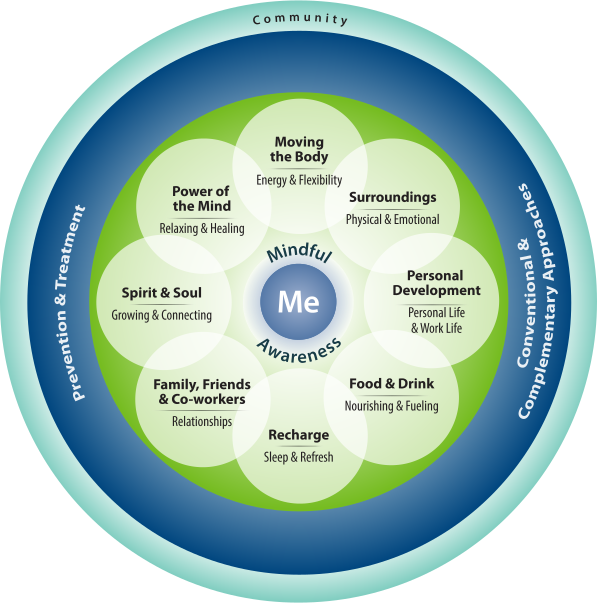
Although the MOVE! program is only available for veterans receiving care at the VA, their website has an abundance of resources freely available to all. Resources include episodes of the Fresh Focus Podcast, which discusses nutrition for veterans; the MOVE!11 Getting Started Questionnaire, which helps summarize one’s current health status; guided recipe videos and cookbooks approved by the VA Nutrition team, and much more. There are also educational resources to learn more about Whole Health’s “Circle of Health” model and testimonies from veterans describing how the MOVE! Program helped guide their weight loss journeys.

Circle of Health

Veteran Testimonials

On the MOVE! program website, people are greeted with hundreds of success stories and testimonials from Veterans that have chosen to share how the program impacted their lives. Dennis Pecorella shared that after years of trying different diet methods, he was matched with a MOVE! program dietician who made nutrition information easier to understand and incorporate into his life. With her help, he was able to create his own sustainable diet plan.

“MOVE! has not only led me to weight loss, but better health overall,” says Pecorella. “I take less medication, try to walk two miles every day, and always eat my vegetables!” 

Peter Johnke’s primary goal in the MOVE! program was to make eating and dieting a more mindful activity. With the help of the MOVE! team, Peter learned to consistently track his food and beverage intake for an entire year and continues to do so. This helped him gain more control over his diet and learn when to best incorporate healthier options. 

“If you are in a place that you need to change…the MOVE! program will help you to help yourself!” says Johnke. “Do your due diligence! Take care of yourself!” 


By Carly Smith, BS, MPH(c) 

This blog is part of our Nutrition newsletter. If you like this content, sign up to receive our monthly newsletter!

So, you want to start meal prepping in 2024? Perhaps this is related to a larger goal to lose weight, eat cleaner, or meet your nutritional goals. To set yourself up for success, you have bought a container for each day of the week and started to plan your week-by-week meals. Maybe you’re planning to make the Sunday morning farmers market and subsequent wash, chop, and prep of your vegetables part of this new-you routine?

Once we begin to break down this resolution, we can see that it is composed of many smaller action steps, which many people may not have the time to do. Busy schedules often do not mix well with New Year’s resolutions that require a lot of time and effort.

Stanford Lifestyle Medicine’s head of the Healthful Nutrition pillar, Marily Oppezzo, PhD, MS shares that you only need to make a few adjustments to your meal prep plans to set you up for success!

“For the New Years’ resolutions, you can have your aspirational goal, but start with the side quests that lead up to that lofty goal in the end,” says Dr. Oppezzo. “Even if your first goal is to eat just one vegetable today, you are learning consistency and making progress. Incorporating one healthy habit a day based on your situation helps you feel successful and see that little accomplishments build up with time.”

3 Meal Prep Tips

“Realistically, not everyone has three hours every Sunday to dedicate to meal prep,” says Dr. Oppezzo, Registered Dietitian with 20+ years of experience in nutritional coaching. “If you have the time, that is great, but I encourage people to always have a back-up plan for when they don’t. Instead of ditching your resolution, rely on pre-cut vegetables, frozen vegetables, and bagged salads and add them wherever you can during the week.”

1. Frozen IS Fresh

Many of us succumb to the belief that frozen fruit and vegetables are not fresh, but oftentimes they are just as fresh, if not more, than those bought in the produce aisle or at the farmer’s market. You may prefer to buy fresh produce, but frozen produce is a great option when trying to make healthy meals in a pinch. Since these fruits and vegetables are frozen and preserved upon harvest, they will still maintain their day-one freshness once cooked.

2. Drawers of Doom

Dr. Oppezzo recommends avoiding the “drawer of doom”, or the drawer in the refrigerator that you toss all your veggies in. It is common to forget about these items once they are discarded into a drawer, especially during a busy morning or when you’re tired after a long day at the office. Instead, Dr. Oppezzo recommends keeping your healthy options on display so that they can help remind you of your nutrition goals. Throw your fruits and veggies into transparent containers and keep them within view on the shelf, rather than the drawer of doom. You can put all your less-than-healthy options in this drawer since you’ll grab for these items anyways.

3. You Know You

Perhaps the most important part of your meal-prep regimen is to be realistic with yourself. You know your schedule, abilities, and preferences the best. Your meal prep practices can adjust to match the time that you have available each week. If you have a free Sunday, you can spend more time preparing your meals for the busy week ahead. If you’re catching up on life on Sunday, perhaps you could opt for making a larger batch of quinoa or brown rice between activities to have on hand throughout the next few days. If you only have time for a quick trip to the grocery store on Sunday, shopping for convenient but still healthy options is just as good of an option if it helps you stick to your nutrition goals.

Dr. Oppezzo recommends grabbing a few microwavable grains and your preferred pre-cut, frozen produce to greatly cut down on cook time. Having these convenient staples can help keep healthy meals a viable option when spending an hour to cook a healthy meal is not realistic. The goal is to make meal prep easy, convenient, and consistent, rather than being overly repetitive or overly strict and giving up by the end of February.

“It is not so much about how psychologically committed you are, but more about what your life is like right now,” says Dr. Oppezzo. “Once you have mapped out your availability, you know how to best adjust your behaviors to keep with your resolutions using the time that you actually have.”


By Carly Smith, BS, MPH(c) 

One of the hardest parts about exercising is finding the motivation to do it. Especially if you’re new to working out, motivation can be fleeting and dependent upon your daily mood or energy level. Even though we know that exercise greatly benefits our health, it may require weeks of effort and dedication before seeing significant results. 

So how do we stay motivated? Stanford Lifestyle Medicine Assistant Director and Exercise Physiology expert, Anne Friedlander, PhD, recommends three ways to incorporate exercise into our daily routine and establish a habit of exercise that remains consistent in the long run. 

Bundle Your Activities

Bundling your activities is a version of multitasking where you combine a pleasurable activity that provides instant gratification with an activity that involves delayed benefits, such as watching your favorite television show or listening to an audiobook on the treadmill. This type of multitasking, also known as “temptation bundling,” is a promising method to create and maintain an exercise habit. When your exercise is combined with a specific tv show, audiobook, or playlist each time, there is the incentive to exercise especially if you only allow yourself to partake in the engaging media while exercising. It creates an association between entertainment and physical activity, which allows you to benefit from exercise in the moment, rather than weeks or months later. 

While this approach may bypass the mind-body connections that exercise can offer, temptation bundling is a great way to create a new exercise habit or get back into a routine. After you’re confident in your ability to maintain your exercise routine, you can let go of the television show and focus on optimizing your mind-body connection while exercising which can enhance the cognitive and mood benefits of exercise. 

Research has been conducted on whether temptation bundling can improve motivation to exercise. In this study, researchers provided free audiobooks during workouts and measured the frequency in which people exercised. The results showed that not only were participants more likely to exercise compared to those not offered the audiobooks, they were more likely to keep up the habit after the study was over. The study also showed that the media needed to be enjoyable to the participants to increase incentive to exercise, meaning when the audiobook covered a topic that was particularly engaging for the participant, their motivation increased. 

So, if you’re having trouble starting or maintaining an exercise program, listen to an interesting audiobook while out on a jog or watch your favorite television show while cycling indoors to get you moving towards your health goals.  

“It is amazing how powerful temptation bundling can be if you find a good story or podcast and you only let yourself listen while doing your physical activity.  You may actually look forward to your next workout!” says Dr. Friedlander. “Eventually physical activity may become its own reward, but in the meantime, lace up your shoes and queue up that mystery thriller.”

Find a Workout Buddy

Working out with a partner, friend, or family member creates a two-way street of accountability and makes you more likely to show up for your goals. While the presence of your workout partner nudges you to stay on your goal, your presence also motivates them to do the same. Skipping a solo workout may require very little thought or work, but skipping a partner workout requires more work and requires you to explain to the other person your reason for skipping. This process helps avoid the fleeting temptations that would deter you from exercising based on mood or energy levels. 

Having someone to match your level of commitment also introduces a link between social connections and physical activity in the creation of a more healthy lifestyle. The pillars of our lives are interconnected, and strong habits often involve behaviors that embrace multiple aspects of our health. 

A workout buddy can be more than someone that helps you stick to your program. They can also be someone to offer and receive encouragement and support, talk about goals,discuss overcoming obstacles, and form memories and relationships. By making the habit a more involved aspect of your social life, you open yourself to broader potential benefits. 

“I am not a morning person, but I have a puppy who loves his playdates,” says Dr. Friedlander. “Every morning at 7 am I meet friends for a walk and puppy playtime. The group definitely helps me get out the door because I don’t want to disappoint either my human or puppy companions”.  

Choose an Exercise You Enjoy Doing

Just because exercise is something that you should do, doesn’t mean that you cannot enjoy it. There is a certain level of discipline that is required to maintain an exercise routine over time, but you will be more motivated to stick to your routine if you like the type of exercise you are doing. If you enjoy team sports, you may enjoy achieving your exercise goals by joining a pickleball league, swim club, or soccer team. Alternatively, you may enjoy attending dance or yoga classes with friends or carving out a specific time in your schedule to lift weights at the gym. Even moderate-to-low intensity exercises, like going out for a walk every night after dinner, is beneficial for your health. 

The best exercise for you is one that you know you will actually show up for time and time again. An added bonus is that you do not have to spend hours exercising to impact your health. The United States Department of Health and Human Services says that no matter the amount of exercise you are able to achieve, most efforts to overcome sedentary lifestyles have a positive impact on all-cause mortality. This means that even incorporating small bouts of moderate-to-vigorous exercises can increase your relative life expectancy. Thus, shifting your focus to do activities that you enjoy and will do daily or weekly may give yourself the best odds for success in the long-run. 

“If you’re having trouble finding motivation, start small,” says Dr. Friedlander. “Following exercise guidelines is optimal, but doing any level of physical activity is better than nothing and can improve your health and mood, especially if kept consistent.”


By Carly Smith, BS, MPH(c) 

The foundation of longevity science exists in a balance of healthy physical, mental, and emotional aging. In the past, researchers have studied these aspects of health as independent subjects, but now scientists emphasize that every aspect of our health is intertwined. One of the major motivations behind the Stanford Lifestyle Medicine movement is to increase awareness of how total health is dependent upon the interactions between the pillars of our lives. 

Recently, members of the Stanford Lifestyle Medicine team collaborated to conduct a systematic review of existing research on “The Role of Physical Exercise in Cognitive Preservation.” The article, which was published in the American Journal of Lifestyle Medicine, responds to a call for more scientific investigations to focus on the prevention of cognitive disabilities associated with old age, such as dementia. 

“After conducting this review, a major takeaway is that we should be motivated beyond physical improvements to continue moving our bodies to promote long-term cognitive benefits,” says Matthew Kaufman, MD, lead author of the review article.

Exercise and the Brain

Both aerobic exercise and strength training are widely researched lifestyle interventions for quality health improvement.The US Department of Health and Human Services (USDHHS) recommends weekly exercise of at least ​​150 minutes of moderate-intensity aerobic exercise and two days of strength training for improving physical and mental health. 

There are multiple proposed mechanisms that define how regular physical activity combats cognitive decay. As you exercise, your heart increases the amount of blood that it pumps out to the rest of the body to compensate for the increased workload. This increase in cardiac output also increases cerebral blood flow, which is linked to heightened neural activity and reduced oxidative stress (or an improved ability to detoxify agents in the body). Another proposed mechanism is the increase in trophic factors (proteins that aid cell survival and growth), such as BDNF, VEGF, and IGF-1. These trophic factors support neuroplasticity (the structural reorganization of the brain to support learning) and angiogenesis (the growth of new blood vessels). Therefore, it is reasonable to promote exercise as a lifelong tool for optimizing brain health.

“It is important to understand the physiology of this relationship in order to maximize exercise regimens for prolonged cognitive benefits and goal setting,” says Dr. Kaufman, current Stanford Physical Medicine and Rehabilitation Resident.  

Key Takeaways from the Systematic Review

After reviewing over 1,600 total studies, 17 met the team’s final criteria for further analytical evaluation. To be included in the final review, studies must have been a randomized controlled trial published after 2000, excluded cognitive impairments more severe than moderate diagnoses, and included at least one physical activity intervention that lasted for 12 weeks or more and followed the USDHHS recommended guidelines. For this review, both aerobic exercise and strength training were included as exercise interventions. The final 17 studies selected for “qualitative synthesis” looked at the relationships of exercise and global cognition, exercise and memory, and exercise and executive function. 

The review team found the largest consensus in the research for improvements in memory for individuals with moderate, mild, or no cognitive impairments following the 12-week exercise interventions. For individuals with mild cognitive impairments, exercise was shown to improve cognition. Although weaker, there was also evidence found for relationships between regular exercise and improved global cognition and executive functioning. Some studies also found significant associations between improvements in physical and cognitive fitness and increases in regional brain volume or blood flow. 

However, included studies that analyzed the lasting effects of exercise following the study indicated a need for continued exercise. Improvements in memory and cognitive health were not always maintained once regular exercise stopped. This suggests the importance of exercise as a long-term principle of lifestyle medicine for adequate prevention of late-stage diseases. 

“Given that our review demonstrates that people did not see lasting benefits after stopping their exercise, the importance of routine exercise to continue reaping benefits is suggested,” says Dr. Kaufman. “It also strengthens our association that exercise interventions can, in fact, improve cognition.”

By Cindy Kin, MD, MS, FACS

Our TeamDr. Cindy Kin is a colorectal surgeon, Associate Professor of Surgery at Stanford University, and a member of the Stanford Lifestyle Medicine Healthful Nutrition Pillar. She is also an active researcher focusing on the role of prehabilitation in mitigating surgery complications and exploring the application of “wearables” in both pre- and post-operative recovery. After completing her undergraduate education at Harvard University, she received her medical school degree at Columbia. She subsequently attended Stanford University for general surgery residency training and Cleveland Clinic for her colon and rectal surgery residency training. Following this, she returned to Stanford University to complete a master’s degree in health services research. Dr. Kin is passionate about increasing awareness of the profound influence of lifestyle medicine on surgical outcomes and actively advocates for its seamless integration into patient care.

As a colorectal surgeon, I’ve witnessed firsthand the undeniable connection between a well-balanced diet and overall health. In my clinic, the dietary patterns of my patients are pivotal factors impacting both their recovery from colorectal issues and the prevention of future complications. This commitment to balanced nutrition not only shapes my professional perspective but also influences how I approach nourishment within my own household. As a working mom of two young kids, I am always looking for simple, flexible, and healthy meals that allow the kids to exercise some choice. In this blog, I will share some of my favorites.

Breakfast: Overnight Oats

  1. Overnight oats have endless variations. The basic formula is 1 part oats + 1.5 parts water or milk of choice (I use soy or almond milk). You can also use yogurt for a portion of the liquid.
  2. Toss in a spoonful of chia seeds and a bit of sweetener like honey or agave, if desired. 
  3. Shake it up and leave it covered overnight in the fridge.
  4. The next morning, you can add whatever toppings you happen to have–fruit, seeds, nuts, nut butter, cocoa powder, chocolate chips, coconut shreds. I have found that if the kids get to pick their toppings, they’re more likely to eat them! (Also, whatever they don’t eat for breakfast is included in their snack box for school).

Low-Prep Lunch: Yuba Noodle Salad

  1. To create this quick and easy lunch, cut the yuba (tofu skin) into strips, and voilà, you have high-protein, high-fiber noodles that you don’t have to cook, but are delicious when lightly sautéed. 
  2. Make a sauce using whatever is in the fridge. I usually use a combination of tahini, miso, peanut butter, and rice vinegar. 
  3. Toss everything together with some veggies, such as cucumbers and carrots.

More-Prep Lunch: Chickpea Salad Sandwich

The garden veggie chickpea salad sandwich recipe from Peas and Crayons is a game-changer! For a slightly healthier twist, I swapped out the mayo for tahini dressing and it was delicious. 

Dinner: Rainbow Wraps (or as my kids call it, “Rainbow Dinner”)

  1. Mix a couple spoons of black rice (“forbidden rice”) into brown rice, and it comes out a lovely purple hue. 
  2. Cut up some red peppers, orange carrots, and green zucchini.
  3. Make crispy tofu yellow by tearing up chunks of firm tofu and tossing with turmeric, arrowroot starch, nutritional yeast, and garlic powder. Air fry the tofu for 10 minutes at 390oF.
  4. Blue is the hardest color to make, but for those rainbow purists out there, steep some butterfly pea flower tea and pour a bit of it over firm tofu strips while sautéeing them.
  5. Place the rainbow of prepared ingredients onto nori seaweed sheets and let everyone make their own wrap.
  6. Serve with dipping sauce such as miso or ponzu sauce, or whatever you have around!

Dessert: Brownies (high fiber and no added sugar–no way!)

I love this simple brownie mousse cake recipe from Feasting on Fruit that uses a few simple ingredients, such as dates, almond butter, and cacao powder– I make just the brownie cake part, without the mousse layer–it’s good on its own and super easy! 

For more information about the influence of diet on colorectal health, read our blog post titled The Impact of the Western Diet on Diverticulitis.